“You’re good, but you could be better” [S. Sontag]
Download Complete PDF / Descargar
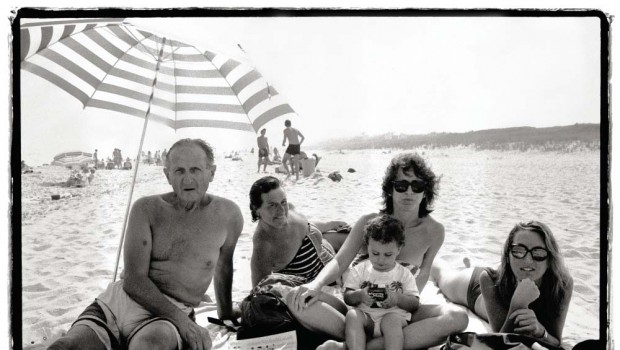
The personal photographs
It’s my most important work. It’s the most intimate. It tells the best story, and I care about it. I found myself totally taken over by the personal work. I thought it was so strong and so moving.
Photographing her family
Photography was always family-based for me. My mother and father made eight-millimeter films when we were kids. And my mother made sure that there was an official family portrait every few years.
On why she became a photographer
I wasn’t one of those people who always wanted to be a photographer and started when they were twelve. For me it came from wanting to do art, which is something I became aware of when I was at the San Francisco Art Institute in the 1960s. There was something wonderful about the whole process—the immediacy of taking pictures, and the license it gave you to go out in the world.
The influence of other photographers
The first book that made me realize what it meant to be a photographer was The World of Henri Cartier- Bresson. Robert Frank and Cartier-Bresson were the chief influences at the San Francisco Art Institute when I was there. Their style of personal reportage—taken in a graphic, very composed way—was what we were taught to emulate. Another of my favorite photography books was Jacques-Henri Lartigue’s Diary of a Century. Lartigue photographed his life through his family. It’s all there. Then after I started working for Rolling Stone I became much more conscious of what was being done in magazines. The strongest graphic work was in the fashion magazines—Vogue, Harper’s Bazaar. That’s where the conceptual work was. And I started looking at Richard Avedon’s portraits. Avedon was a very important photographer in my life, a powerful example. He managed to ride both horses. He worked for magazines and he still did his own work. He was a stunning portrait photographer—a great artist. Irving Penn also. I admire and respect Penn so much. Barbara Morgan’s dance pictures fascinated me. Her collaboration with Martha Graham was extraordinary. As far as magazine photography goes, W. Eugene Smith’s photo essays for Life magazine can’t be topped. Helmut Newton is a great example of how what you’re made of affects the work and feeds into it. A lot of photographers try to emulate Helmut but they can never look like him. Nan Goldin was very important to me also. Her work reminded me that color could be relaxed.
The Susan Sontag’s influence on her work
I think she came into my life at the right time. I wanted to do better things, take photographs that matter. She told me, “you’re good, but you could be better.”
Capturing the essence of a subject
What I’m doing as a photographer is getting a little tiny slice of them. Life is so much more complicated than this one-dimensional moment.
On being called a “celebrity” photographer
That’s so strange to me. I hate the word “celebrity.” I’ve always been more interested in what people do than who they are, and I hope that my photographs reflect that. I have the opportunity to work with people who are the best actors, and writers, and athletes, and dancers— a broad spectrum. I feel like I’m photographing people who matter, in one way or another. I’m photographing my time.
“Eres buena, pero podrías ser mejor” [S. Sontag]
Download Complete PDF / Descargar
Fotografías personales
Es mi trabajo más importante. Es el más íntimo. Cuenta la mejor historia y eso es lo que me importa. Me encontré totalmente arrobada por el trabajo personal. Pensé que era fuerte y conmovedor.
Fotografía de su familia
La fotografía para mí siempre estuvo asentada en la familia. Cuando éramos niños, mis padres filmaban con cámaras de ocho milímetros. Mi madre siempre se aseguraba de que hubiera una fotografía ofi cial de la familia uno que otro año.
Sobre el por qué ella se volvió fotógrafa
Nunca fui una de esas personas que siempre quisieron ser fotógrafos y empezaron su carrera a los 12 años. Para mí la fotografía llegó deseando hacer arte, de lo cual me volví consciente cuando atendía al Instituto de Arte de San Francisco en los años sesenta. Había algo fascinante de todo el proceso —de la inmediatez de tomar fotos y la licencia que ésta te daba para salir al mundo.
Influencias de otros fotógrafos
El primer libro que hizo darme cuenta de lo que significaba ser fotógrafo fue El mundo de Henri Cartier-Bresson. Robert Frank y Cartier-Bresson fueron mis influencias más importantes mientras estudiaba en el Instituto de Arte de San Francisco. Su estilo personal para el reportaje —tomado de un modo gráfi co y una manera muy serena— fue lo que se nos enseñó a emular. Otro de mis libros de fotografía favoritos fue el de Jacques- Henri Lartigue: Diario de un siglo. Lartigue fotografi ó su vida a través de su familia. Todo está allí. Después de haber empezado a trabajar para la revista Rolling Stone me volví más consciente de la labor realizada en revistas. El trabajo gráfi co más fuerte se estaba haciendo en publicaciones de moda: Vogue, Harper’s Bazaar. Allí estaba el trabajo conceptual. Comencé a ver los retratos de Richard Avedon. Él fue un fotógrafo muy importante en mi vida, un ejemplo muy poderoso. Trabajaba para otras revistas y hacía la propia. Se las arreglaba muy bien para manejar ambas empresas. Fue un retratista impresionante —un gran artista. También Irving Penn. Lo admiro y lo respeto. Las fotografías de danza de Barbara Morgan me fascinaban. Su trabajo en colaboración con Martha Graham era extraordinario. Por lo que respecta a la fotografía de revista, los foto-ensayos de W. Eugene Smith para Life son inmejorables. Helmut Newton es un gran ejemplo de cómo afecta de lo que estás hecho y cómo eso nutre tu trabajo. Muchos fotógrafos tratan de emular a Helmut pero jamás se podrán ver como él. Nan Goldin fue también muy importante para mí. Su trabajo me recordaba que el color puede ser relajado.
La influencia de Susan Sontang en su trabajo
Pienso que llegó a mi vida justo en el momento perfecto. Quería mejorar, tomar fotografías que fueran importantes. Ella me dijo: “eres buena, pero podrías ser mejor”.
Captar la esencia del sujeto
Lo que hago como fotógrafa es tomar una pequeña rebanada de ellos. La vida es mucho más complicada que este momento unidimensional.
Fotógrafa de “celebridades”
Es tan ajeno a mí. Odio la palabra “celebridad”. Siempre he estado más interesada en lo que la gente hace que en lo que son, y espero que mis fotografías reflejen eso. He tenido la oportunidad de trabajar con un amplio espectro de personas que son los mejores actores, escritores, atletas y bailarines. Siento que de un modo u otro estoy fotografiando a la gente que en realidad importa. Estoy fotografiando mis tiempos.



Thank you for sharing superb informations. Your site is so cool.