

Can You Keep a Secret? Well, Translators Can’t
Tanya Huntington

In fact, that is pretty much what we do: take the best-kept secrets of a literary tradition and reveal them to readers of other languages –generally, our own native tongues.
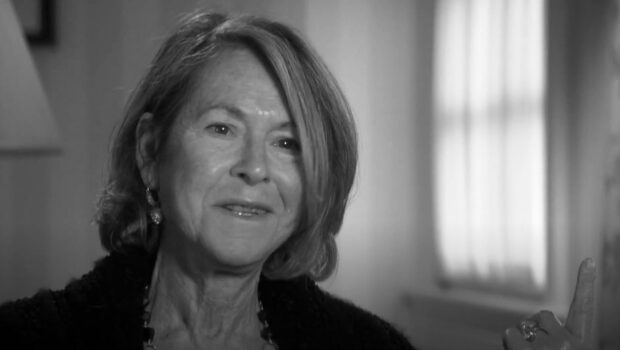
Tedi López Mills is one such secret. Because despite her being bilingual, and of hybrid nationality–her father was Mexican and her mother, from the United States–none of her own books has yet been translated into English (although as I write this, two of them are in very capable hands).
This is where the translator in me thinks, “A-ha, monolingual readers of English! Your loss is my gain. Here is my chance to dole
Tedi López Mills out to you.” For though ours is generally a thankless profession as far as personal gain or credit are concerned, we do get to briefly experience a power rush as Decipherers of a Foreign Canon.
Then the moment subsides, and we set about the difficult task of trying to put ourselves in another’s shoes by interpreting his or her texts.
Translation demands that we truly identify with other writers, performing perhaps the only form of mimicry that can never be construed as mockery. As a translator, I have donned authorships that would have been impossible for me to fashion on my own, temporarily channeling an assortment of voices that range from a gay poet expressing his ardent sexual desire to a mature political columnist attempting to define 20th Century ideological obsessions, from an Argentinean exile of Jewish heritage exploring her lyrical nostalgia to an angry young author spewing out cutting-edge detective fiction (with emphasis on the “cutting”). Or, in this case, the admirable and profound explorations of identity written by a close friend.
Born in Mexico City in 1959, Tedi López Mills has published ten books of poetry, the most recent of which, an exercise in narrative verse called Death on the Rua Augusta, merited in 2009 the Villaurrutia Prize, an award highly coveted in Mexico because it is given “to authors by authors,” as its motto proclaims. In other words, she is a well-established and highly regarded contemporary author. Yet, I found myself reluctant to write a review of her recent book of essays edited by Almadía, one of the best independent publishing houses in the Spanish speaking world and probably one of the better designed catalogues I have ever seen, thanks to the artistic genius of cover designer Alejandro Magallanes. I say reluctant, because my friendship with Tedi and my interest in her career meant there could be no skirting around the thorny issue of objectivity, one that is, moreover, riddled with pretense in literary circles as reduced in circumference as they tend to be in countries like Mexico. On the other hand, it seemed to me that the point of writing a review in Spanish was moot, given that this particular title had already received wide acclaim in the media, having been positioned near the top of many of the “must-read” lists for last year.
And so, I chose instead to express my enthusiasm as a translator, rather than a reader, by divulging an excerpt of chapter five, in which Tedi (I use her first name simply because it feels absurd to refer to her more formally as “López Mills”) describes the sensation of Weltschmerz in a self-critical fashion –her heavily ironic stance acting as a common thread in this series of essays.
The title is The Book of Explanations, and her dedication reads more like a disclaimer than an invitation: (There are thirteen: nobody asked for them). In this volume, Tedi follows the example of the ancient Greek philosophers, who required that we lead an examined life, by focusing on multiple facets of her own existence that range from the serious–her family background, her calling as a writer, her decision not to have children–to the comical–the problems that arise from her unusual name, or the kind of sexual awakening that results from sharing a living room floor for the night with several other teenage couples.
Tedi can be devastatingly definitive–I don’t believe much remains of Cioran after she has finished with him–and just as devastatingly inconclusive– in the end, she remains perplexed by the ethical dilemma that a beggar’s request for alms presents in Mexico where, despite modern advances, no solution to poverty has been found.
Fascinated by being able to gain access to what Harold Bloom has defined as the panacea of any reading buff, a mind more original than mine, I underlined some of Tedi’s imagery as I went along, searching for an excerpt that would meet the space requirements for Literal. For example, on the passage of time, she notes in passing that our reflections in the bathroom of a hotel “confirm, once again, that no two mirrors are alike.” Or in another chapter playfully organized as the ABC of reminiscence, under the letter X: “Today, memorystopped short. The last thing I saw was a plaza with a clown surrounded by children. I was somewhere in the vicinity.” Or in the essay dedicated to Good and Bad, which opens with the memorable phrase, “I am not a good person,” she hypothesizes: “Perhaps there is in poetry an incorruptible bottom line that no poem can endanger.” And as for Cioran: “How curious that he should insist on writing, on communicating something that, in reality, annulled the very meaning of communication.”
Those are only a few tidbits. As for the rest of The Book of Explanations, it continues to be a marvelous secret, one that the Spanishspeaking world will have to keep for now.
 Tanya Huntington is a contributing writer at Literal. Follow her on Twitter at @TanyaHuntington.
Posted: July 9, 2013 at 7:46 pm