
Chilean Poet
Greg Walklin

Chilean Poet
Alejandro Zambra
Translated by Megan McDowell
Published by Viking
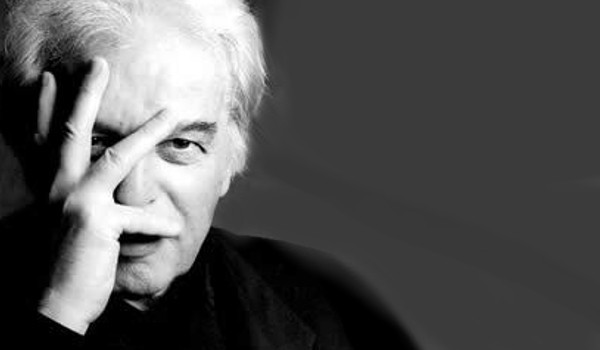
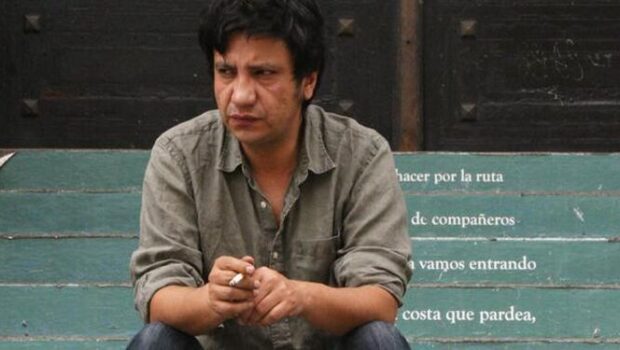
If you Google Alejandro Zambra, the first thing that comes up, beneath his name and next to a picture of him looking pensive and away from the photographer, is a caption: “Chilean poet.” “Chilean Poet” is also noted in his Wikipedia profile, although it provides a bit more detail—Zambra, the encyclopedia states, is also a “short story writer and novelist.”
It thus seems obvious to read his new novel, Chilean Poet, autobiographically. Certainly his last, Ways of Going Home (Spanish: Formas de volver a casa) interspersed fiction with reality and drew from his childhood during the Pinochet regime. Thanks to that novel, and the excellent short story collection “My Documents”—both translated by the impeccable Megan McDowell—Zambra seems best known in the United States, at least, for his fiction. And yet Google’s algorithm disagrees.
Chilean Poet owes less to Zambra’s other work and more to fellow countryman Roberto Bolaño—a kind of obfuscating drama, masquerading as auto fiction, which prompts you to see the author in multiple characters. (One also recalls how the Spanish writer Javier Marías wrote a novel where the two main character, Javier and Maria, engage romantically.) In this novel, it’s the pessimistic Gonzalo (a failed poet) and the optimistic Vincente (an aspiring poet) who seem to be avatars, in their own ways, of Zambra.
As the book begins, Gonzalo is a horny teenager living in Maipú suburb of Santiago. He and his girlfriend, Carla, surreptitiously attend to their hormones underneath a large blanket, parents hovering nearby. Carla is beautiful, and—as his friends quickly tell him—Gonzalo is not. He “had not won Carla over with poems, but he had fallen in love with her and with poetry almost simultaneously, and it was hard for him to separate them.” They break up. But nine years later, they chance upon each other in a club; Carla ends up staying over, and another relationship—this one with much longer consequences—results. Gonzalo hadn’t quite given up on poetry, either.
In the intervening years Carla, as it turned out, had married, divorced, and had a son, Vincente. Eventually Gonzalo moves in with her and establishes himself as stepfather. Several years later, a lost American writer, Pru, happens upon Vincente—himself now a devoted reader and aspiring poet—and eventually begins an article about Chilean poetry. Thus the middle of the book resembles “Savage Detectives”: Pru interviews just about every Chilean poet she can meet, from obscure ones to Nicanor Parra. (Google calls Bolaño, by the way, a “Chilean novelist,” while Parra is a “Chilean poet,” even if he referred to himself as an “anti-poet.”)
Besides shares a memorable surname (Rojas) with the memorable teacher from a story in “My Documents,” Gonzalo is forced to come up with a pen name, since there is already a Cervantes prize-winning poet named Gonzalo Rojas. It doesn’t much matter, though, as Gonzalo is mostly a failure—he publishes only one book with a small press, and nobody purchases or reads the book (as it turns out, almost nobody). “[M]ost Chilean poets do write about failure,” Zambra writes, “so one might say that there are Chilean poets who write about failure and succeed, and there are Chilean poets who write about failure and fail.” In Chile, one minor poet tells Pru, poetry is something like a national calling:
“In Chile we have beautiful views and good wine, but for me personally, the best is the poetry,” says Pato. “It’s the only really good thing in Chile. The only thing we would win the World Cup in—two world cups, actually, two Nobel prizes. We’re two-time world champions of poetry, it’s the only thing we win at.”
These funny, spirited, and self-effacing interlocutions are some of the most enjoyable parts of the novel; one can tell Zambra would defend to the death the very thing he lampoons. Fittingly, the novel also quotes many Chilean poems, from writers such as Rosamel del Valle and Enrique Lihn. Neruda, perhaps the most famous of all Chilean poets—outside at least, of Chile—is infrequently mentioned and never quoted. As one poet remarks to Pru: “Neruda? Better to write about other poets, no one here is interested in Neruda.” One recalls the trashing of Octavio Paz “The Savage Detectives.”
Perhaps Zambra’s writing process is not easy, but his fiction reads as if it was simply plucked from his mind and put on the paper, wholesale—in a good way. Effortless storytelling, in other words, abounds, and nothing is forced, nothing is contrived, as the events unfold. Only a certain kind of genius makes such a thing look easy, and it’s obvious that Zambra has it. The smoothness of the English is also a testament to McDowell’s translation; Zambra’s sentences are fluid and loose. Compared to some of his other works, the structure here is traditional. There are only a few twists: Zambra breaks the fourth wall a few times to acknowledge explicitly steering the narrative, such as, at one point late in the novel, away from New York, because “there are about a million novelists writing about New York.” Rarely has a such an explicit narrative choice in a novel made such a good case for applause.
New York proves to be a fracturing point of the novel’s story, which is as much about fatherhood and its meaning as it is about poetry. The arc of the relationship of Gonzalo and Vincente—one a failed poet and the other an aspiring one—is where the heart of this novel is located. Although one wishes the book had better and deeper female characters, Zambra deftly dramatizes the way the father/son relationship seems to dangle on the edge of a precipice, and how both Gonzalo and Vincente wade through their own male baggage in forging a connection (The pejorative nature of the Spanish word for stepfather, “padrasto,” probably plays into this.) This kind of thing is not easy to show, movingly, in a story; so when Zambra notes that Gonzalo, despite their issues, “would have donated a lung to Vincente, a kidney, his liver too, of course he would,” it’s obviousness is all that more meaningful.
During Vincente’s childhood, when he was forced to repeat a grade, Gonzalo writes him a heartfelt letter. On Carla’s recommendation, though, he does not give it to him; the letter is poetic but would be way over the kid’s head. It’s a shame, though, in some ways, because the letter is as beautiful as any poem of Gonzalo’s: “We have won the freedom of playing the same game until we’ve had enough and are drunk with happiness,” he writes, “using the same words as always, we put together poems no one will ever understand, not even us, but we read them out loud a thousand times and a thousand times we experience the same sober delight.” There is so much delight in Chilean Poet, and even more love.
 Greg Walklin is an attorney and writer living in Lincoln, Nebraska. His book reviews have appeared in The Millions, Necessary Fiction, The Colorado Review, and the Lincoln Journal-Star, among other publications. He has also published several pieces of short fiction. Twitter: @gwalklin
©Literal Publishing. Queda prohibida la reproducción total o parcial de esta publicación. Toda forma de utilización no autorizada será perseguida con lo establecido en la ley federal del derecho de autor.
Las opiniones expresadas por nuestros colaboradores y columnistas son responsabilidad de sus autores y no reflejan necesariamente los puntos de vista de esta revista ni de sus editores, aunque sí refrendamos y respaldamos su derecho a expresarlas en toda su pluralidad. / Our contributors and columnists are solely responsible for the opinions expressed here, which do not necessarily reflect the point of view of this magazine or its editors. However, we do reaffirm and support their right to voice said opinions with full plurality.
Posted: July 27, 2022 at 10:43 pm