
Rain of Gold
Victor Villaseñor

It all started in the barrio of Carlsbad, California, when I used to walk to my grandmother’s home behind my parents’ pool hall. My grandmother on my mother’s side, Doña Guadalupe, would sit me on her lap and give me sweet bread and yerba buena tea and tell me stories of the past, of Mexico, of the Revolution and of how my mother Lupe had been just a little girl when the troops of Francisco Villa and Carranza had come fighting into their box canyon in the mountains of Chihuahua.
My father, Juan Salvador, also a great storyteller, would tell me of his own family and how he and his mother and sisters had escaped from Los Altos de Jalisco during the Revolution and how they’d come north to the Texas border. He told me of the horrible times that they’d endured on each side of the border, and how these horrible times had actually—in some strange way—become good, because they’d taught them so much about love and life and united them closer and stronger as a family. Often during these talks, my father, a big strong man, would cry and cry and hold me in his arms and tell me how much he still loved his poor old dead mother, and how there wasn’t a night that passed that he didn’t dream of her, the greatest woman who had ever lived.
Reaching my teens, the stories of my parents’ past grew distant and less important as I became more and more Anglicized. And in my twenties, I reached the point where, regrettably, I didn’t want to hear about our past because I couldn’t really believe in my parents’ stories anymore.
Then, turning thirty and finding the woman that I wished to marry and have my children with, I suddenly realized how empty I’d feel if I couldn’t tell my own children about our ancestral roots.
The year was 1975 when I began to interview my father and mother in earnest. I bought a Sony tape recorder and looked up my aunts and uncles and godparents. I accumulated well over two hundred hours of taped conversations over the next three years.
But, still, some of the things that my parents and relatives told me were just too foreign, too fantastic, for my modern mind to accept. For instance, the gold mine where my mother was born had been purchased by a man who’d skinned out a steer—because the hide was more valuable than the meat—and he’d run the naked animal up the mountainside to pay the Indians off. My God, I couldn’t write that down with conviction. First, it was too barbaric and, secondly, I didn’t think it was possible. But my relatives kept insisting that it was absolutely true. I grew to doubt all their stories and began to think that they only spoke in metaphors, at best.
Then with the birth of our first child, I decided to make the big leap. I went down into Mexico with the exclusive mission of researching my parents’ past, of questioning everything that I’d been told—and see if, once and for all, it was possible for me to believe enough in my ancestral past so I could write about it.
I went by plane, by bus, by truck, by burro, by foot. It took me two days to climb the mountains of La Barranca del Cobre where my mother was born. One morning, I saw Indians so shy that when I waved hello to them they froze like deer, then ran away from me with the agility and speed of young antelope. I saw swarms of butterflies so vast that they filled the entire sky like a dancing tapestry. I saw skies so clear and full of stars that I felt close to God. I spoke with a local rancher who butchered cattle for a living and I asked him if it was possible to skin out a steer alive and run him up a mountain. He said, “Sure. You knock the animal out with a sledge and four good men could have him skinned before he came to. Then, believe me, he’d run like hell for a couple of miles before he died.”
I took a big breath and, little by little, I began to see that maybe one person’s reality was, indeed, another’s fantasy—especially if their childhood perceptions of the world were so different. I came to understand why my father had always told me that it was easy to call another’s religion superstitious.
For the next five years, I wrote and rewrote, first in Spanish in my head, then in English on paper. I wrote my father’s story in the first person, just as it came from his mouth. I wrote my mother’s story in the third person because more of her relatives were alive and I could verify situations from different points of view.
But then as I kept writing and rewriting, another problem presented itself. Both of my parents used the words “miracle,” “greatness,” “devil” and “God” so often that when I translated these words into English, the whole story just didn’t sound right or believable. And, also—to add to my problems—my parents and relatives kept telling me how they’d grown up feeling so close to the Almighty that they’d spoken to Him on a daily basis as one would speak to a friend and how, now and then, God had actually spoken back to them in the form of miracles. I was stumped. I thought if I wrote this down, I’d look totally foolish.
But as the years passed and I recorded their stories and listened more and more to my parents and relatives, I began to see that, yes indeed, they had lived in a world engulfed by God’s spirit.
Or, as my grandmother Doña Margarita once told my father, “Do you really think God stopped talking to us, His people, with the Jews and the Bible. Oh, no, mi hijito, God lives and He still loves to talk, I tell you. All you have to do is look around and open your eyes and you’ll see His greatness everywhere, the miracles of life, la vida.”
And so I kept going—feeling inspired—and got up most mornings at 4:30 AM and worked until late at night, writing and rewriting and checking with my parents and relatives to make sure that I had it right.
This, then, isn’t fiction. This is a history of a people—a tribal heritage, if you will—of my Indian-European culture as handed down to me by my parents, aunts, uncles and godparents. The people in this story are real. The places are true. And the incidents did actually happen. Thank you.
Con gusto,
Rancho Villaseñor
Oceanside, CA
Spring, 1990
*Foreword is reprinted with permission from the publisher of Rain of Gold by Victor Villaseñor (©1991 Arte Público Press – University of Houston).
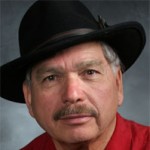 VICTOR VILLASEÑOR is a novelist and screenwriter. He is the author of Burrio Genius: A Memoir (Rayo, 2004), Thirteen Senses: A Memoir (Harper Collins, 2001), Wild Steps of Heaven (Delta Books, 1995), and a collection of stories for young adults, Walking Stars: Stories of Magic and Power (Arte Público Press, 2003). Villaseñor lives in Oceanside, California, where he continues to write.
Posted: September 15, 2015 at 9:56 pm