
Soledad O’Brien: “In America” Education is the Great Equalizer
Rose Mary Salum, David D. Medina

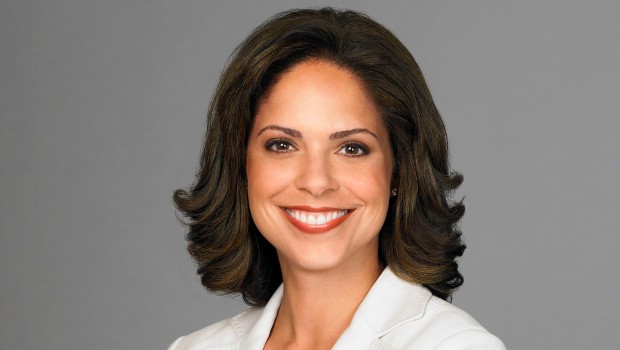
Soledad O´Brien, CNN anchor and special correspondent recently debuted the latest installment of her “In America” series. We had the opportunity to talk to her about Mass Media and Latinos in the US in 2012.
* * *
In your experience, how do you see Latino representation in the Media in 2012?
I think the demographic shifts are going to lead to a lot of things. They often bring money and focus, but it’s not everything. I’m hopeful that they will make people pay attention and think “This is a big audience, shouldn’t we tell stories that resonate and reach out to them?” I think that happens with CNN español, but in mainstream TV, it has not been the case yet. So, I believe that’s going to change. I think people who think the changes will be massive are wrong, I think we’ll see a small start to the change, but because this is an election year people are going to analyze communities, slicing and dicing them, trying to fi gure out how they think in the context of an election. I don’t think we will encounter a sea change despite the dramatic growth of the impact of Latinos in the country. The change won’t match the growth.
Why don’t you see more Latino journalists?
Well, there’s a very numerous community of Latinos who have gained a lot of power in society with congressional seats and representation, and so you ask, why aren’t there more reporters? Because they don’t exist yet. When people quote the census speaking of the importance of Latinos, I think it’s true. There’s tremendous growth in Texas because of it, but you won’t yet see the corresponding level of power for Latinos. I don’t think it’ll happen in 2012. For political leaders, you can’t just think in terms of demograhics, you have to figure out how to lead. I think Latino leaders need to do that too and say “here’s what we’re articulating for the community” and not just think that they have the numbers or growth figures.
This is your second documentary on Latinos. What major trends do you see in the community now?
I think we’re seeing political power. Lots of people I see are people who don’t speak Spanish, and we’re all learning, because we see the value in reconnecting to your roots. I think there’s a potential for political clout and impacting communities in terms of role models. A lot of potential.
I’ve heard that Latinos have a lot of potential but there’s still a gap.
That’s education. Look at the percentage of Latinos who graduate, who have PhDs, who sit on corporate boards. Those are small numbers. That’s a measure of actual clout and impact. It can’t just be the number of people, it has to be increasing the number of Phd’s or members of corporate boards. That’s actual impact. It can’t just be a numbers game, and right now it’s a numbers game. The census shows that we’re the fastest growing demographic.
Houston is a very diverse city but the power structure hasn’t changed.
You’re not leveraging those demographics then. You need to spend this time creating leaders like Marlen, the Castro brothers in San Antonio, and they have to have actual ideas for leadership and they have to change the world. If I’m a reporter and a diverse woman, who has the power to tell stories about a lot of communities, but I don’t use my resources, then it doesn’t matter that I’m multicultural and diverse.
So you have to go back to education.
Education is the great equalizer. That is what changes the game.
Do you have any idea of how to stop the dropout rate?
There’s a man who’s working on that in Houston. I’m not too well informed, but it’s not a high school issue, it’s a middle school issue. It’s a k-5 issue. That’s when they get tracked to fail. They might not do it until 9th grade, but that’s when it starts. The key is to figure out how to engage kids. I like after-school programs that connect children, but I’m not an expert. We do have to figure out how to support the kids who are interested in academic achievement and support the kids who might need some guidance. If you’re in a community that hasn’t had that much education, how do you guide your kids? It’s so hard. Sometimes I look at my daughter’s 5th grade homework and I found it very hard despite my college background! So imagine if you hadn’t gone to college, you will have no idea as to how to advise your child to be successful.
Do you plan to work on more documentaries about Latinos?
I’m sure we will. That’s a hard question to answer, because that’s really a funding question.
Posted: May 21, 2012 at 10:21 pm