
What Gloria Steinem and Ms. helped me see
Adriana Pacheco
|
Getting your Trinity Audio player ready...
|

There is something special in writing about Gloria Steinem in a magazine, because it was through a magazine that she changed the world. This is my tribute to Gloria Steinem in LiteralMagazine.
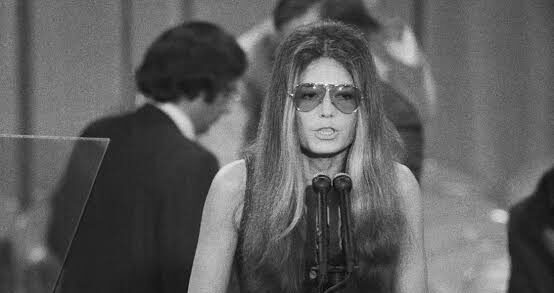
Gloria Steinem’s death on September 2, at the age of 92, made me remember that I was very young when I discovered her and the magazine she cofounded —Ms.— at a time when I was still beginning to understand the word feminism, and was trying to work out what it meant, beyond the arguments it seemed to cause. Finding her was a revelation. Here was this woman, strong, tenacious, and strategic, that was key to the “Women Liberation Movement”.
Gloria Steinem was born in Toledo, Ohio. She spent part of her childhood traveling with her family. After her parents separated, she took care of her mother, whose mental illness had greatly restricted her life. Later she traveled to India. There she understood the power that grassroots organizations can have to influence the political scene, and for her, journalism was the path to join that conversation.
Many movies and pieces on TV have told us about her life and trajectory. A Bunny’s Tale (1985) covers the famous assignment she had as a Playboy bunny to investigate the working conditions at the Playboy Club. She went undercover for Show magazine, and she exposed the exhausting, demeaning and poorly paid labor beneath the fantasy. That assignment changed her view about writing about politics.
The Glorias (2020) is a movie based on Steinem’s memoir My Life on the Road. Watching it you see there were many Glorias: the girl in Toledo, the young woman in India, the undercover reporter, the reluctant public speaker, the editor, the organizer, and the celebrity who learned how to convert celebrity into attention for a cause.
Recently, the documentary Dear Ms.: A Revolution in Print (2025) focuses on the magazine; the iconic covers; the team of brilliant women collaborators; Letty Cottin Pogrebin, Patricia Carbine, and Dorothy Pitman Hughes, cofounders of the magazine; the journey they had to take to survive criticism, censorship and opposition.
Ms. was founded when feminist ideas and activism were already there. This is the time when Betty Friedan published The Feminine Mystique (1963) and had already challenged the promise that domestic life should fulfill every woman. It is when the National Organization for Women(1966) —the famous NOW— was established, hoping to enforce workplace protections, political representation and to defend reproductive rights. This is the time of Kate Millett’s book Sexual Politics (1970) that offered another powerful way to examine relations between women and men.
But what was missing was a magazine for women, by women, and about women that could reach readers nationally and address these issues. So, in 1971, Ms. —a title that joined the titles Mrs.and Miss— was published as a preview insert in New York Magazine. The magazine’s preview copies sold out in eight days and in the following weeks the editors got more than 20,000 letters and 26,000 subscription orders. The letters clearly showed the need for a long-awaitedconversation among women who had often believed that they were alone.
After the overwhelming response, the first regular issue came out in 1972 featuring a now famous cover by artist Miriam Wosk picturing a modern, many-armed woman trying to manage a baby, a telephone, an iron, groceries, cooking, and a typewriter. She looked intimately familiar to hundreds of women. And with this publication, the world changed.
Ms. was the first national American magazine to place domestic violence on its cover. It published articles such as “The Truth About Battered Wives” or “Sexual Harassment on the Job and How to Stop It.” It brought attention to rape, workplace discrimination, reproductive rights, and the ways advertisers influence journalism. It also published black writers and organizers such as Johnnie Tillmon, Alice Walker, Angela Davis, and Shirley Chisholm, connecting discrimination against women with race, labor, welfare, and economic power.
Thanks to the magazine and how it made a hidden problem visible, several laws were passed, like the Education Amendments Act, the Equal Credit Opportunity Act and the Pregnancy Discrimination Act. The magazine provided what was missing: a visual language clearly linked to the problems it covered, and a vocabulary which made it impossible for lawmakers to continue ignoring them and forced them to recognize what was happening in homes and offices everywhere.
Ms. helped create public awareness of the need for protections against domestic violence and workplace discrimination. It gave activists arguments they could carry into courts, companies, legislatures, and their own communities. The magazine did not merely report on a changingsociety, it was itself an agent of change that opened a forum where the silence was broken. Women could now talk about an abusive husband, discrimination at work, abortion, or the exhaustion of carrying a household alone. And the most incredible thing was that women learned that other women, in other places, were living almost their same situations. They saw their stories change from individual failures to social problems.
And when silence is broken, secrets come out. Ms. made many brave women talk about their secrets. Like when they published the declaration “We Have Had Abortions,” inspired by a declaration signed by women in France. The magazine published the names of 53 prominent American women calling for the repeal of laws criminalizing abortion. Some women on that list had undergone abortions, while others signed just in solidarity. Some names on that list were Billie Jean King, Anaïs Nin, Lee Grant, Ann Sexton and Susan Sontag.
Yes, Gloria Steinem was a mastermind, but Ms. was never the creation of one woman. It was staffed from the beginning by other exceptional women such as Dorothy Pitman Hughes, a Black community organizer and an experienced speaker who became Gloria’s partner on speaking tours. Hughes helped her develop confidence before an audience. The women working at Ms.created a community among themselves and created another with and among their readers. The boundary between the two was unusually open. Readers corrected the editors, disagreed with them, thanked them, and told stories that became the basis for future reporting. A conversation was opened with no apparent hierarchy.
Gloria and her team many times protested on the streets against other terrible events like the Vietnam War. She, herself, helped raise money for the farmworkers organizing with César Chávez, because she was solidary with the Latino community in the United States. Over the years, the magazine traveled to Latin America and influenced the feminist movement in several countries. The fight of Latin American women against violence eventually found its way to the pages of Ms., like in the article “From Roe v. Wade to the Green Wave in Latin America” published January 22, 2021 by Vivian Waisman
The journey was never easy. The women’s liberation movement had opponents, including many women. Conservative activists argued that feminism endangered the family, marriage, religious values, and the protections traditionally offered to wives and mothers. The struggle was never simply women against men. There were also controversies within feminism as well. Women disagreed about race, class, motherhood, sexuality, pornography, political alliances, and whose experiences received the most attention. A conversation never requires unanimity consensus. It requires a safe space. That is what Ms. was and what Gloria Steinem understood.
Now that I am editing a book with and about women writers that were born in the 1960s and grew up in the 1970s, I can see how much we owe to these trailblazer women born before. It wastheir creativity, humor, strategic intelligence, diplomatic skill, and persistence that helped us open our eyes, showed us how change happens and encouraged us to do our part.
I clearly remember how happy I was when President Barack Obama awarded Gloria Steinem the Presidential Medal of Freedom in 2013. In this public recognition of decades of work, he said “Gloria Steinem also changed how women thought about themselves”. Indeed, she changed how I thought about myself, she gave me the confidence and the courage to be a young feminist, one that was later determined to create a safe space where women could talk and share their stories: Hablemos, escritoras.
I write about Gloria Steinem in Literal Magazine, another magazine directed by a woman, Rose Mary Salum, who leads a wonderful team of committed women. That feels like part of the story too: one magazine speaking to another across time, one woman reading the work of other and then adding her own words to the conversation. Ms. is still alive and here for us. The best tribute we can give to Gloria Steinem is to do what Kathy Spillar says in the most recent issue of the magazine: “Gloria Steinem changed the story women were permitted to tell about themselves. Now it is our responsibility to keep telling the truth.”
Once they are old enough to understand, I will tell my granddaughters about Gloria Steinem and how she helped me see things in a different light.
Photo AP Photo, File
 Adriana Pacheco , PhD. es investigadora y es escritora. Fundadora del Proyecto Escritoras Mexicanas Contemporáneas y la fundadora y conductora de la página web y podcast Hablemos, Escritoras. Es coordinadora de los libros Romper con la palabra, violencia y género en la obra de escritoras mexicanas contemporáneas y Rompiendo de otras maneras, cineastas, periodistas, dramaturgas y performers. Es investigadora afiliada de LLILAS, University of Texas, Austin, miembro del Advisory Board del Texas Book Festival y fue miembro y presidente del International Board of Advisors en la Universidad de Texas, Austin. Su Twitter es @adrianaXIX_XXI
©Editorial Literal. Queda prohibida la reproducción total o parcial de esta publicación. Toda forma de utilización no autorizada será perseguida con lo establecido en la ley federal del derecho de autor.
Las opiniones expresadas por nuestros colaboradores y columnistas son responsabilidad de sus autores y no reflejan necesariamente los puntos de vista de esta revista ni de sus editores, aunque sí refrendamos y respaldamos su derecho a expresarlas en toda su pluralidad. / Nuestros colaboradores y columnistas son los únicos responsables de las opiniones aquí expresadas, las cuales no necesariamente reflejan el punto de vista de esta revista o sus editores. Sin embargo, sí reafirmamos y apoyamos su derecho a expresar dichas opiniones con plena pluralidad.
Posted: September 6, 2026 at 7:45 pm