
Britishness, or How my Mother Became Mexican
Alejandro González Ormerod

My mother moved to Mexico before I was born. My father, a Mexican, seems to have implied that they would eventually move back to the UK, sooner rather than later. I was born a year later in Mexico City, and they never moved back. It can’t have been easy for her. I remember sifting through my grandmother’s old letters and stumbling across one from my mother. It was 1994. Mexico was flush with cash; that massive inflation meant you might as well have thrown your worthless money down the toilet. Britishly, she put a good face on a bad situation. We’re spending all our savings rather than waiting for them to disappear on their own. For my part, I don’t remember ever needing for anything; a fortunate statistical quirk in a country home to as many people under the poverty line as there are in the whole United Kingdom.
My experience was also somewhat skewed demographically by my mother. She, or rather we, come from a family that many consider to be the epitome of Britishness. The sort of people who say drawing room, elevenses, and larder. It didn’t take too long for me to realise that that wasn’t quite real. It was all so Downton Abbey. A dying and incomplete still-image standing tenuously on the ever–shifting sands of Britishness. Growing up I wasn’t quite sure what box in the national census I ticked best, so I opted to sit on the fence calling myself mixed race, mestizo, Anglo–Mexican. Selfishly, I never stopped to wonder what identity crises my mother might have been undergoing. I blame my lack of empathy on her. She was always British in my eyes. Her accent was thick with Received Pronunciation, even in Spanish. The friendly, knife–wielding taco men on street corners called her güerita. What was more, she bent over backwards to bring Britain to us. She gave us her language, customs, Marmite, marmalade, Beatrix and Harry Potter, an appreciation for brisk walks on Boxing Day. She didn’t let us have tea. We weren’t allowed it. Back then it was difficult to get the proper stuff in Mexico, so it sat in a forbidding metal tin: out sight and out of mind.
Lots of clever people claim that Britain is about its institutions. It is about being able to vote for your leaders, the NHS, fair play, good old British values. If so, as electoral laws would have it, my mum quit a part of being British the moment she upped sticks and left the country for over five years. I think most people would not be as quick to strip her of her Britishness for having committed the crime of emigrating. Indeed, the problem with these definitions is that they come from British people in Britain. The problem being that if one is eyeballs deep in one’s identity, you are probably unable to see what’s distinctive. What my Mexican friends would consider to be ‘British’ to the British is just ‘normal’. For instance, I can just about get over the fact that nobody seems to mind that the Queen being the head of both the state and its official religion, technically makes her a theocrat. However, there is no excuse in the twenty–first century for having separate taps of untouchably scorching and untouchably freezing water. I’d argue that my mother became British the day she left Britain’s green and pleasant land. Abroad, in Mexico, where normal became weird, and weird started to feel more like home.
***
The drought gave no signs of assuaging, but people continued going about their business anyway. Tractors bumbled over hard, sun–cracked earth. Mothers shielded their children from rays that threatened to bake their skin as well. Sandra looked down her nose to see the peeling flakes now revealed tender pink flesh where before there had been vivid red. Despite its rainlessness, her hopes of any swift return to greener pastures on the other side of the sea had been washed away by this land. Parched desert, lush forest, icy peaks, and an endless ocean sat between her and it. Sandra did a lot less pining for home when her husband was around, but he was away for work. Moreover, she had perhaps too efficiently done all of hers ahead of time, but felt too intimidated by newness of the place to actively get out there and make friends. Luckily, the option of lounging around the house aimlessly was taken away from her by a knock on the door.
The whirlwind of the next few days consisted in meeting neighbouring families who invited her for meal after delicious meal. Her Spanish was not very good, but the people kindly made themselves understood. They were lovely distractions, but at night, as the single sheet floated down onto her body, all she could think about was how much she missed home.
It was a few days into settling into this new rhythm that she decided to recreate a Sunday roast in the remote Mexican state of Oaxaca. The first hurdle presented itself swiftly.
“Why? Why would you want to make British food? Are our moles, our tortillas, and guisados not bland enough for you?” they asked, half teasingly.
It wasn’t like that, explained Sandra, as she laid out all the ingredients on the table. “So, you’re going to make your traditional meal with this?”
Sandra nodded proudly as they rustled through her shopping, sniffing suspiciously at the produce.
“You know this sheep’s leg was raised, slaughtered, and frozen in New Zealand, right? And what’s more, potatoes are Peruvian, this tea was grown in and is originally from India, and I needn’t tell you where chocolate comes from… You can’t just take other peoples’ goods and call them your own, ¿sabes?”
Sandra would not be put off. Her mind was set. Anyway, Sunday lunch was not about the sum of its parts, it was about tradition, and a certain… She cringed with self–awareness at the fact that there was no English expression equivalent to Je ne sais quoi.
That night, as the Kiwi joint of lamb silently dripped and cracked on the windowsill, Sandra flipped through the cookery section of her copy of Mrs. Beeton’s Book of Household Management.1 Sandra´s mother had handed the weighty tome to her on her wedding day. Sandra found reading Mrs. Beeton rather like listening to an archaic version of her already quite old—fashioned mother.
She had nevertheless lugged the over 2000, hardback–bound, pages of it across the Atlantic Ocean and from coast to Mexican coast. It was a rather large bit of home away from home. Its pages held the language, manners, scents, and tastes of the world she left behind. A world she still hoped to cling to one way or another.
The fat book lay open, spine loose from overindulgence, on a dusty wooden table. A perfectly good light bulb dangled overhead, and yet Sandra had opted for a candle under whose light, flickering in the breeze, she struggled to read. Next to that lay a pile of loose Post Its at the ready, so as to mark the necessary pages. A glass of wine sat next to that. She dabbed her finger on her tongue and used it to swipe the pages —some greasy and crinkled, most of them still glossy— in search of the right one.
Sandra skimmed past Chapter 3. It was the section on how to correctly hire and fire household servants. She had never really had the need to resort to anything like Chapter 3, until she’d moved to Mexico where the hiring or firing of a housekeeper seemed to be the done thing. The whole thing made her uncomfortable, but when in Rome. Come to think of it, Mrs. Beeton seemed a lot better suited to Oaxacan life than she did to Britain nowadays. The boy Sandra had seen carrying an air rifle a few hours prior that very day would not have batted an eyelid at the first step in one of Mrs. Beeton’s many recipes for game. First, catch your hare, states the first line simply, uttered sternly by the grand old lady across the centuries and onto pages lugged halfway around the world. Sandra was sure that the skilful chap would have been back from el monte in no time, hare in hand.
On went the search for her Sunday recipe. Fingers flicked past The Natural History of Fishes, past the carefully noted Observations on Quadrupeds. She snorted loudly at the thought of how seriously Mrs. Beeton must have taken herself. Another chortling snort erupted from her as she had a little laughing fit all by herself. How strong is this wine…? was the last thing she thought before her head plonked into Mrs Beeton’s hard–bound bosom and fell softly to sleep.
The next morning, the joint was gone. Sandra had slept solidly through the night and a pack of stray dogs had had New Zealand lamb for supper. Tear dabbing and tantrums ensued, but once had run their course new ingredients were procured and a fresh meal concocted. Mrs. Beeton dictated from afar and the kind people of a little town in the south of Mexico helped make it…
“And, they were wonderful, mummy! They all chipped in to make it.” “What is it you made again, darling?” enquired the voice through the phone. “Rabbit soup.”
“Oh,” crackled the voice quizzically on the other side, “I don’t think we’ve ever had rabbit soup here before.”
“Yes, we jolly‐well have!” came a muffled cry on Sandra’s mother’s side. “My mother made it every other month! With a snip in the kitchen garden and a BANG (Sandra jumped) in Jenkins’s empty field! It was the special recipe they used to have down in her village, you know!” lectured the shouting voice —Gran was deaf, and unable to speak unless she could hear herself. Sandra giggled, shouting, “Hello, granny!” into the receiver, though she knew she could not hear her.
Sandra ended the conversation as she stroked the no longer virginal gloss of the page entitled Meat, poultry, and game soups. Leftover stew for breakfast awaited her. She had barely put down the phone before she had awkwardly tried to pour soup directly out of the ladle into her mouth.
“Bienvenida a casa, señora Beeton,” whispered Sandra as she turned onto the next recipe.
***
Explain Wilkie Collins’ use of an epistolary format to critique Victorian society. If you like, use specific references to each of the writing characters’ segments.
“What?!”
“Yes! Of course! It’s obvious, isn’t it?”
“How is it obvious?!”
His face hovered incredulously on the screen as Sandra giggled away. She repeated the question for effect.
“How is it not obvious, Leo?” she probed. Her son was clever enough. He had got into a good university and could understand all the words his English Literature degree threw at him. However, some things were just out of his grasp. Subtleties, little quirks he had never quite got his head around from growing up abroad. She stared at a version of her younger self, etched in laggy pixels on the screen. They both did sound and look awfully like each other. Sipping at her tea and leaning back onto her comfy sofa, Sandra cheekily smiled at her son’s struggle. The speakers squealed as his voice cracked in frustration,“But, it says if you like!”
He was getting desperate, so she softened her approach. The best thing now was to assure him that he would pick little things like that up. She was confident he would, and she was happy for him. He was in a new place, starting a new life in a different culture. Getting to grips with the novelty of University in Britain would hopefully help Leo discover more about himself. He was really very lucky. Rarely does one get to dissect and question every fibre of one’s beliefs, and test out their pliancy in completely new contexts…
“Fuck!” shouted Sandra as she swerved around incoming cars that honked furiously as she zoomed past.
“Sorry…! Sorry…! Terribly sorry!” she could be heard shouting mutely from inside the car.
Flashing blue and red lights ordered her to stop. Tiny Leo gurgled in the back, strapped into his travel seat. Sandra smiled at him through her rear-view mirror, and then threw a grimace at her side mirror as the scene waiting to inevitably unfold approached rapidly. A rather large fellow wobbled off his motorbike, hoisting his trousers up by his belt as he strutted towards her. The policeman then proceeded to stick his smiling face into the car and explain why he had stopped Sandra. He punctuated his officious monologue with a knowing; “So, what are we going to do, Miss?”
“I don’t know,” replied Sandra almost too sincerely.
The officer was caught off guard. It seemed that the poor woman did not understand how it worked. As things stood, this interaction should have been simple enough. The policeman had gleefully caught her committing a grievous traffic offense; attempting to go around about a roundabout. Clearly this foreigner had yet to grasp to the fact that in this country roundabouts were for the most part, purely aesthetic. One, as every Mexican driver knew, was to virtually ignore their existence by swerving around on whatever side was most convenient. Left, right, it did not matter, so long everyone’s car kept going forward without so much as acknowledging the fountain, grassy knoll or statue in the middle of the road. He repeated the question, hoping against hope that the woman had been unable to understand the words themselves, rather than what they implied.
“¿Cómo le vamos a hacer?” he insisted. Sandra was dazed and more than a little nervous, but she asserted herself outwardly with a cool calmness. She just needed to be methodical about this.
“Is there a form or procedure I need to go through? I’m new here and I wouldn’t like to get anyone in trouble by screwing up any of the necessary protocols. I’m really very sorry for what I did. You just tell me what we need to do, I am completely ready to comply.”
The man’s moustache twitched nervously. He was growing concerned that this woman was actually oblivious to what he was inferring. He repeated his question a third time, but to no avail. He inquired if there was anyone she could get in contact with to help translate.
“I am perfectly capable of speaking Spanish,” she shot back in less than perfect Spanish. “No, Miss, I think we would all benefit from getting someone to help us understand each other better.” He leant heavily on these last words through fastened teeth. His winning smile was beginning to fail him as sweat flowed profusely down his curvaceous body. He was approaching the end of his capacity to make himself understood.
“No, no, I’m sure we’re understanding each other,” Sandra smiled back. Leo agreed in by letting off a delighted squeal in the back. Their game of suggestion squash went on for a while longer, as each whack struck by the policeman was met by the apparently solid wall of ignorance on Sandra’s side. Eventually, after feeling satisfied with his awkward writhing, she agreed to contact her husband. The officer happily lent her some change as she span the numbers on the nearest payphone.
“Of course I knew he wanted a bribe!” Sandra said indignantly as her husband drove her home, “I just thought I’d give the charade a new spin.”
“No one likes a condescending foreigner, Sandra,” stressed her husband. “What new spin would you have given sitting in a cell down in delegación?”
“I know nobody likes it, but luckily I don’t think they quite get it when I’m being sarcastic here,” she turned in her seat and mock–frowning at him. “Anyway, did I not just get you out of paying a hefty bribe?” Sandra’s husband was forced to agree. He had never seen a policeman so happy to see another of his countrymen. In the end, the poor chap had made do with a plain milk chocolate bar. But not any old chocolate bar; “Es un Cadbury’s, es una marca muy prestigiosa que sólo venden en Inglaterra.”
”…”
“Mum?” Sandra shook her head dozily as she emerged from her memories. She leapt right back on topic.
“I know it says ‘if you like’, but that’s just British for ‘absolutely do this’. It’s like when granny says ‘Would you mind terribly…?’ when she’s ordering you to do something or when I finish a letter with ‘Regards’ when I really mean ‘Please die in a fiery pit, alongside everything you love and cherish’. You know; passive-aggressive understatement. So next time you read a question like that, remember it’s really saying: Explain Wilkie Collins’ use of an epistolary format to critique British Victorian society. There is absolutely zero per cent, no way in hell that you’re getting a good mark on this essay unless you use specific references to each of the writing characters’ segments.”
The Internet slowed and the image of the screen deformed Leo into a pixel Picasso. “You’re breaking up, Mum,” he said.
“Oh dear, well… Oh! Wait, before you cut off, remember to give out all those lemon–squeezers we got as Christmas presents for everyone. Don’t forget to get one to Granny!” She managed to shout just as the screen cut to black.
***
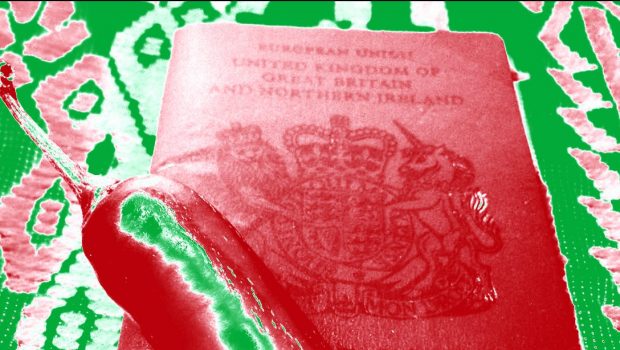
Not very long after that, two important events shook my mother’s life. The second was that she became a Mexican national. I remember liking how calm she was about it. She must have had some internal struggles about the decision. Questioning, even if she did keep her British passport, whether she was actually rescinding part of who she was. However, it had become increasingly clear after twenty–something years abroad, that she had managed to build a sort of home away from home. And perhaps most importantly, she had decided that once she became a Mexican, she could finally get on with being British. The first important event had been the discovery of a local shop that sold freshly imported black tea on wholesale.
NOTES
1 Better known by those in the know under its proper title: The Book of Household Management, comprising information for the Mistress, Housekeeper, Cook, Kitchen-Maid, Butler, Footman, Coachman, Valet, Upper and Under House—Maids, Lady’s-Maid, Maid‐of‐all-Work, Laundry-Maid, Nurse and Nurse-Maid, Monthly Wet and Sick Nurses, etc. etc.—also Sanitary, Medical, & Legal Memoranda: with a History of the Origin, Properties, and Uses of all Things Connected with Home Life and Comfort. Amen.
 Alejandro González Ormerod is an Anglomexican historian and writer. His most recent publications can be found in Letras Libres and Nexos. He also co-authored and edited Octavio Paz y el Reino Unido (FCE, 2015). Currently editor-in-chief at El Equilibrista, a Mexico City-based publishing house. His Twitter is @alexgonzor
©Literal Publishing
Posted: January 18, 2018 at 10:20 pm