
Musical Forms & Creolization in Alejo Carpentier’s Concierto Barroco
José Negroni Cicerchia
|
Getting your Trinity Audio player ready...
|

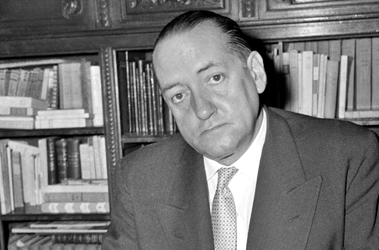
Alejo Carpentier (1904–1980) is among the most talented Latin American authors of all time. The complexity of his ideas, the wide range of his themes, the richness of his language, together make him a unique voice in the Latin American literary map. All of his books, and especially The Rite of Spring, The Kingdom of this World, Explosion in the Cathedral, and The Lost Steps, have been crucial in both understanding Latin American history, politics, and art, as well as in defining the stereotypes usually attached to or demanded of Latin American literature. His work coincides in time with the emergence and global success of magical realism, but it does not quite belong in it, even though he was the first author to pen the idea of “el realismo maravilloso.” He is perhaps better situated alongside José Lezama Lima (1910–1976), Guillermo Cabrera Infante (1929–2005), and Emeterio Cerro (1952–1996), the latter an ambassador of the Baroque style, whose traits include contrast, exuberance, and color to produce a sense of aesthetic impression. In this, all these writers follow the example of the seventeenth-century Mexican nun Sor Juana Inés de la Cruz (1648–1695).
Alejo Carpentier wrote Concierto Barroco in 1974. This book presents the story of a Mexican aristocrat and his servant who, in traveling to Venice have an imaginary meeting with composers George Frideric Händel, Domenico Scarlatti, and Antonio Vivaldi, and encounter a Louis Armstrong performance in Paris. These scenes dramatize the relationships between Old and New World musical forms and imagine what might be possible if similarly disparate eras and genres of music were to converge outside the constraints of their respective times. For instance, the concerto grosso, which takes place at the Ospedale della Pietà becomes a collision of African, colonial Latin American, and Baroque music, and the final scene of the book shows Filomeno gaining a new sense of freedom as he takes in Louis Armstrong’s jazz concerto mashup. Throughout the novella, Filomeno’s musical sensibilities intermingle Afro-Cuban rhythms with the Baroque, and with European culture more broadly, ultimately forming a bridge between the Baroque and jazz.
In other words, Afro-Cuban creolization takes on a life of its own as Afro-Cuban servant Filomeno steps in to transform the concerto grosso of Händel, Scarlatti, and Vivaldi with Afro-Caribbean rhythms: “Filomeno had run off to the kitchen and returned with a battery of copper kettles of all sizes that he began to beat upon with spoons, skimmers, rolling pins, stirrers, feather-duster handles, and pokers with such prodigies of rhythm, syncopation, and complex patterns that he was given a thirty-two-bar chorus all to himself” (1974/1988, p. 80). The three great composers have to contend with Filomeno accompanying their concerto using household implements as his musical instruments. This scene, with its interchanges between the performers and Filomeno’s improvised percussion, is a nod to the jazz performance that will close the book.
Although rhythm was often important in the European compositions of the Baroque period, it did not manifest in the use of classical percussion instruments. Drums were not often used, and if they were, they typically functioned as punctuation rather than as an integral element of the piece. In contrast, drums and other percussion are “simply prodigious” in Afro-Cuban music, as Carpentier points out in Music in Cuba (1946/2001, p. 263).
The creolization of Baroque music is especially pronounced in this scene because of Filomeno’s choice of kitchen implements. His inventiveness and resourcefulness recall the rhythmic traditions of Western Africa. Once he has introduced the percussion, Filomeno moves on to chanting, which is a key feature of Afro-Cuban music. As the author says in Music in Cuba, “Afro-Cuban music dispenses with any melodymaking instruments. Pure singing over percussion … remains true to old African customs” (1946/2001, p. 264).
Afro-Cuban music emphasizes improvised rhythms layered on top of simple repeating themes; whereas Baroque music—though it certainly relied on rhythmic elements (as in a Bach fugue)—tended to emphasize melodic invention, complexity, and variety. The beat remained in the background to keep the listener’s focus on the melody. In the Baroque concerto grosso, intersecting melodies and polyphonic rhythms work in and out of each other.
Although Baroque music used very little percussion, rhythm was nonetheless “essential and important” in Western music, as Oswald Spengler explains in The Decline of the West (1989, p. 47). The types of instruments that were available in Europe in the 18th century made percussion superfluous. For example, in a harpsichord, its strings are plucked, and a piano’s strings are struck with a hammer. Thus, they have a percussive function. Because it relied on these instruments, Baroque music was typically contrapuntal. For two melodies to be simultaneous and intersecting, great attention to rhythm was crucial.
The meters and the mathematical patterns of Baroque compositions built upon the rhythmic foundations that were laid by Western African music. However, Western music that has co-opted African techniques can in turn be co-opted by new forms, such as Afro-Caribbean musical genres. Paul B. Miller describes “the history of musical development in Cuba [as] … a long testimony to a very real cultural hybridity … and the rhythmic modifications introduced by the Afro-Cubans who appropriated ‘white music’ during the nineteenth century” (2001, p. 31). Carpentier himself explains in his analysis of 19th-century Afro-Cuban performance that “blacks played and created white music, without enriching it further, except with their atavistic rhythmic sense, where they uniquely accentuated certain kinds of danceable compositions” (1946/2001, p. 163).
In Concierto Barroco, the description of Filomeno’s complex rhythmic patterns, mingling his Afro-Caribbean sensibilities with European music, introduces the creolization of the Baroque in the novella. Filomeno leads the audience at the Ospedale della Pietà around the space, moving in time with the ca-la-ba-són-són-són chant. The creole-Baroque mashup he creates produces music in which everyone can participate, a chant with an “accenting [of] the beat” (1974/1988, p. 83) that ultimately leads the concerto barroco to morph into a bacchanalia. There has been an undeniable infusion of creole culture. Of course, in the reality of 18th-century Europe, this never would have happened during a formal Baroque performance. Filomeno is injecting a kind of chaos into a performance of a musical genre that is often concerned with order. Yet Filomeno’s music is also actively working against chaos; the percussive rhythm brings synchronization, letting everyone join in a chant, and in turn accomplishes the same end as Baroque music, which also values order.
Filomeno’s contagious creolization includes everyone in the musical performance, as it operates outside any notions of class, presenting yet another contrast with the European culture of the time and its rigidly stratified society. The bacchanalian “snake dance” is “joined by the nuns on duty, the sister portress, the cooks, the scullery maids routed out of their beds, soon followed by the shop foreman, the market gardener, the flower gardener, the bell ringer, the boatman, and even the feebleminded girl” (1974/1988, p. 83).
The collaboration in this scene illuminates the way seemingly disparate musical traditions have influenced each other, and Carpentier thus invalidates the snobbery exhibited by the three great composers. While this scene is ultimately a commentary on the universality of music and rhythm, it’s also Carpentier’s indictment of tribalism. The inclusivity of Filomeno’s mashup ultimately underscores how creolization can be allowed to go only so far. In Carpentier’s words, “Filomeno, now standing beside the harpsichord with a goblet over the sounding board, added a rhythmic background to the dancing by scraping a key across a kitchen grater. ‘Black devil!’ exclaimed the Neapolitan. ‘When I want to carry a certain rhythm, he forces me to follow him. I’ll wind up here playing cannibal music!’ And with that, Domenico rose from the instrument, tossed a last tot down his gullet, took Margherita Double-Action Harp by the waist, and disappeared with her into the Ospedale della Pietà’s labyrinth of cells” (1974/1988, pp. 84–85).
Filomeno’s contribution to the music is all about rhythm and not about “trills” and “mordents.” Even the harpsichord, almost sacred to the Baroque composers, is meaningless to him. And so, Scarlatti abandons the composers’ “fantastic symphony,” hurling racist epithets, refusing to allow his own cultural values to be subverted. 1
Creolization’s power to equalize and integrate is strong enough to create only a brief interlude of free collaboration, after which everyone retreats to their usual places within the hierarchy, where they are comfortable.
Before Scarlatti reasserts the social and cultural boundaries, the performance-turned-bacchanalia bears some resemblance to a large-scale classical painting, or even to a work of performance art that takes over an entire space. There are even hints, right before Filomeno begins the chant, that a painting of Eve being tempted by the serpent has inspired him to lead the characters in moving about the room. A European viewer of this painting might be too familiar with its subject to be much struck by it. Filomeno, though, has no frame of reference for these images. He is totally free from the Western preoccupation with original sin, temptation, and Satan, just as the Baroque reverence for the harpsichord is lost on him. His reaction to the painting is a more primal one: fear of the snake. His chant, “Ca-la-ba-són-són,” is “an Afro-Cuban chant to kill a snake” (Bromberg, 2009, p. 11). 2
Carpentier has juxtaposed an Afro-Cuban cultural reference directly alongside a Western one, and the result is a sprawling tableau of figures as the characters forget their social distinctions. The creolized concerto grosso takes up space not only in sound, rhythm, and chanting, but also in its ability to propel the characters through space. The music becomes spatial, visual, and alive: “Music is usually considered a temporal medium rather than a spatial one, but not by Carpentier, who refuses to separate music from the plastic arts, or eliminate space from his consideration of sound” (Zamora, 2006, p. 162).
Concierto Barroco demonstrates how music, as a spatial art form, can erase boundaries, leaving the bacchanalian chanters free to intermingle regardless of class. As long as the music keeps playing, anything is possible. The boundaries in this scene are indeed historical ones. By calling Filomeno a “black devil,” Scarlatti has redrawn the lines of class; he leaves the scene, and suddenly Filomeno is otherized again. While they are playing music together, though, those lines are erased.
Music’s boundary-breaking power in Concierto Barroco can also be seen in the jazz performance at the end of the novella, when the narrative leaps forward in history to the early Jazz Age. The irony of the anachronism is that American jazz is, in a sense, much older than the Baroque, having inherited its improvisational nature and its freeness of form from pre-colonial Africa. The music-making techniques of African drum circles were preserved by slaves who were “born in captivity, remember[ing] legends and songs from Africa with extraordinary precision” (Carpentier, 2002, p. 258). Jazz is “the most culturally hybrid of U.S. musical forms and arguably the most Baroque in its dynamic structures of improvisation” (Zamora, 2006, p. 163). One can also argue that the value of jazz “consists primarily in the living sound, not in composition as such, this feature finds its parallel in the primacy of executio over inventio in the… Baroque style” (Schmitz, 1979, p. 78).
When Armstrong plays his trumpet, there are no limits to what he can do; there are no rules born out of old traditions, no particular notes he has to play. In this closing scene, Filomeno, a servant from eighteenth-century colonial Latin America, is empowered by the experience of Black American music.
As Zamora states, “Spengler addresses the overlapping structures of Baroque media in ways that Carpentier surely found suggestive: ‘if an art has boundaries at all—boundaries of its soul-become-form—they are historical and not technical or physiological boundaries’” (2006, p. 162).
Concierto Barroco confronts these boundaries as Carpentier eliminates the constraints of time on his story. By letting the characters move back and forth in history, Carpentier means to imply that music and rhythm are elemental forces that transcend race and class, and cultural distinctions among genres are merely social constructs. Jazz and Baroque music are tied together in the “infancy-youth-maturity-death cycles of cultures” (Chornik, 2011, p. 13). The Baroque period was the pinnacle of Western music. Jazz started out as Black music, independent from established Western music, but it was ultimately monetized, appropriated and co-opted by Western culture. In the world of Carpentier’s novella, the Baroque form of Western music has died and been revived again through jazz. Music has a cycle of life and death, but it is also eternal.
Even the complexity of Baroque music, such as in preludes and fugues, has a natural link to jazz. Baroque performances did sometimes involve improvisation; although Baroque composers wrote and planned almost every note, including embellishments. Baroque music is highly organized, symmetrical, and mathematical, yet “the plot of Concerto Barroco reflects Carpentier’s conception of the Baroque as a conjunto of asymmetrical signifiers generating one another, converging, diverging, moving on” (Zamora, 2006, p. 163).
On the other hand, commenting on Concierto Barroco, Kyle James Matthews places jazz as “the modern, syncretic, and transatlantic counterpart of the Baroque” (2017, p. 2). Culture permutates all throughout the novella; even Scarlatti can’t resist using Latin instead of Filomeno’s Afro-Cuban syllables when he joins the chant. Carpentier is signaling here how creole music can free Western music from its form. The three Baroque composers are freed by partaking in Filomeno’s transformation of their concierto. The novella shows that even if music evolves, as long as it works and is beautiful, musicians will be open to change; new ideas are the artist’s link to eternity. The jazz performance at the end of Concierto Barroco is distinctly American, yet it goes on to become popular in Paris and the world over; nevertheless, what is evident is that the “New World [has] recolonized the Old” (Carpentier, 1974/1988, p. 2). In the Baroque, everything creates everything. Without Western African music, we would have no thirty-two-measure melodic forms, no basso continuo.
Baroque compositions often begin and end with the same note, and despite successive key changes, they tend to resolve into the original key, so that they end at the same point from which they began. Roberto González Echevarría points out that jazz also reaches for the infinite: “Jazz is, at the end, the new beginning … it is the ‘impossible harmony,’ the baroque concert” (as cited in Strong, 2015, p. 33). At the end of Concierto Barroco, as Filomeno witnesses Louis Armstrong performing, we can feel that there is nothing but this moment, and this moment is eternal. The scene takes the reader into the chaotic unknowable depths of the soul. 3
Jazz is meant to connect the listener to an eternal force, and Louis Armstrong can do that for his audience only by letting go – a stark contrast with Baroque music, which prized the performer’s control and virtuosity. This is not to say that Armstrong wasn’t a virtuoso, but a virtuoso in the Baroque period was expected to compose first (and in detail) and embellish and improvise later, while playing. Jazz, on the other hand, knows no time, no rules, no form, only connection to this eternal force in Carpentier’s final scene. And while Baroque music seeks to achieve the same thing as it reaches toward timelessness, jazz promises this freedom now, despite the direct link between jazz and slavery. Out of the rigid systems of chattel slavery emerged a genre that offers freedom from the constraints of Baroque music. Bromberg explains that Carpentier saw a “‘symbiosis’ of [Creoles’] historic past and their cultural present” (2009, p. 7), and this is a main theme of Concierto Barroco as it explores the way music and history are intertwined while avoiding direct discussions of racism and colonialism. Miller observes that in Concierto Barroco, Carpentier “appears more interested in synthesis than separation” (2001, p. 41). Music, in the novella, has the potential to transcend the boundaries created by racial oppression and even by time.
Works Cited
Behr, C. (1983). T.S. Eliot: A chronology of his life and works. Macmillan.
Bromberg, S. J. (2009). Which way did he go? Identity, culture and nation in Alejo Carpentier’s Concierto Barroco. Latin American Review, 35(71), 5–23.
Carpentier, A. (1988). Concierto barroco (A. Zatz, Trans.). Council Oak Books. (Original work published 1974)
—. (2001). Music in Cuba ( T. Brennan, Ed.). (A. West-Durán, Trans.). University of Minnesota Press. (Original work published 1946)
Chornik, Katia Marcela. The Role of Music in Selected Novels and Associated Writings of Alejo Carpentier: Primeval Expression, Structural Analogies and Performance. 2011. The Open University, PhD thesis.
Matthews, K. J. (2017). Baroque jazz: Toward a new understanding of musical form in Carpentier’s Concierto Barroco. Latin American Literary Review, 44(87), 2–7.
Miller, P. B. (2001). Blancas y negras: Carpentier and the temporalities of mutual exclusion. Latin American Review, 29(58), 23–45.
Schmitz, H-P. (1979). Baroque music and jazz (D-R. de Lerma, Trans.). The Black Perspective in Music, 7(58), 75–80.
Spengler, O. (1989). The decline of the west. Alfred A. Knopf.
Strong III, F. W. (2015). Impossible harmonies: Music, race and nation in the neobaroque novel [Doctoral dissertation, University of Texas at Austin]. Texas ScholarWorks. https://repositories.lib.utexas.edu/items/7a3e0552-d9fe-4d90-a739-9b5d47c33422
Zamora, L. P. (2006). The inordinate eye: New World Baroque and Latin American fiction. University of Chicago Press.
_________________________________________
- His resentment is ironic given how percussive—and therefore how reliant on the appropriation of African musical innovations—Scarlatti’s compositions actually were.
- “And swiping at the air with a huge carving knife as though killing the snake in the painting, he shouted: The snake is dead, / Ca-la-ba-són, / Son-són. / Ca-la-ba-són, / Son-són. ‘Kábala-sum-sum-sum,’ chorused Antonio Vivaldi, out of ecclesiastical custom giving the refrain an unexpected inflection of Latin litany. ‘Kábala-sum-sum-sum,’ chorused Domenico Scarlatti. ‘Kábala-sum-sum-sum,’ chorused George Frideric Händel. ‘Kábala-sum-sum-sum,’ repeated sixty-six female voices at the Ospedale, amidst clapping of hands and laughter. And following the black, who was now banging on the tray with a pestle, they all fell into line, hands on each other’s waists, swaying their hips, forming the most disparate mummers’ troupe imaginable, a troupe now led by Montezuma, twirling a huge lantern on the end of a broomstick in rhythm with the chant, repeated a hundred times. Kábala-sum-sum-sum” (Carpentier, 1974/1988, pp. 81–83).
- “But Filomeno was not sad. He was never sad. Tonight’s concert—the eagerly awaited concert by him who made the trumpet ring like the voice of the God of Zachariah, the Lord of Isaiah, or as called for in the chorus of the most joyous psalm of the Scriptures—would be taking place in half an hour. And since he still had much to master with respect to music in which the rhythmic values are determinant, he stepped swiftly to the concert hall, whose posters announced that Louis Armstrong’s incomparable trumpet would be heard in a matter of moments. And it seemed to Filomeno that, when all was said and done, the only thing left for him in this lacustrine city that was alive, current, and pointing like an arrow toward the future was rhythm, rhythms, at once elemental and Pythagorean …” (Concierto Barroco 128-129).
 José Negroni Cicerchia currently teaches Latin American literature and film at Rice University. His main research interests are in postmemory literature, with a special focus on autofiction authors who are the children of people who were disappeared during the Argentine dictatorship in the 1970s. He received his Ph.D. in Spanish with a concentration in Latin American literature at the University of Houston in May 2023.
©Literal Publishing. Queda prohibida la reproducción total o parcial de esta publicación. Toda forma de utilización no autorizada será perseguida con lo establecido en la ley federal del derecho de autor.
Las opiniones expresadas por nuestros colaboradores y columnistas son responsabilidad de sus autores y no reflejan necesariamente los puntos de vista de esta revista ni de sus editores, aunque sí refrendamos y respaldamos su derecho a expresarlas en toda su pluralidad. / Our contributors and columnists are solely responsible for the opinions expressed here, which do not necessarily reflect the point of view of this magazine or its editors. However, we do reaffirm and support their right to voice said opinions with full plurality.
Posted: January 11, 2026 at 8:01 pm