We come back from the Lake District’s coolness and drizzle at the end of June, just when a new heat wave starts in the UK. The last day in Ambleside and, briefly, in Windermere, is warm and sunny—a perfect day. And therefore deceptive. The return to London flings us at once into another reality. It is summer, yes, but not as we knew it, nor as we expected it.
The strangeness of these months is hallucinatory. Memories are blurred; days merge into a single formless mortar dominated by the heat, its tyranny. On several occasions B. and I renounce our regular long walks. But wasn’t this what we had all been waiting for, after the long (and very cold) winter? The sun’s radiance, the greenery still present, gift of a beautiful springtime in which we had copious rainfall, make us think at moments that everything is fine. It is summer! Summer at last! But it suffices to step outside to be crushed by the overpowering griddle of that very same sun, now merciless.
Flats and houses become stifling, the air unbreathable. Buildings in these latitudes aren’t made for this torrid new reality.
They talk about several heat waves between June and August, but in my perception, it has been a single endless wave, with bigger or lesser peaks, but relentless.
One day (end of June, or is it July already?) I go out, desperate, to look for a big electric fan. My modest fans, perfectly adequate for London’s summer up to this year, are now clearly insufficient. My feeling of alarm is new as well—of living through something unwonted for which I am not properly prepared. Impossible to find fans online—they are all sold out. I summon courage and go to the nearest shop. There is not a single fan left there either, but a kind assistant manages to find one in another branch and arrange to have it delivered to me in a couple of days. (The wait will be oppressive.)
The bus journey back home is infernal. A variant of Camus’s The Stranger in which we stop having any notion of our consciousness; our actions automatic yet slow and on the edge of an equally slow despair. As I board the bus, the heat hits me like an oven (not all London buses have air con, which will give cause to a series of strikes, beginning in August). Somebody says very loudly, as if delirious, that it’s 47 degrees in there. I tell myself it’s impossible, that he has gone mad, and produce my handheld fan, but then something I had never experienced happens, and it makes me wonder if that man is right after all, because, as I fan myself, I don’t get any fresh breeze. I do get some air, but even hotter. I don’t know if that is physically possible; I try again, with equal results. What is going on? I close the fan. The bus makes some very strange noises and stops midway, overheated, defeated. We all get off to wait for the next one. This is London, England, not the Sahara. I am too exhausted to fully experience the fear and alarm, but they are there.
The UK first reached 40°C in 2022. That day I also felt this kind of diffused alarm through the mind fog provoked by the heat. I was returning from Paris, where things were much worse—a bumpy and hallucinatory journey, and London, on arrival, had an ominous and alien atmosphere, but not even then did we reach the extremes of this endless torture.
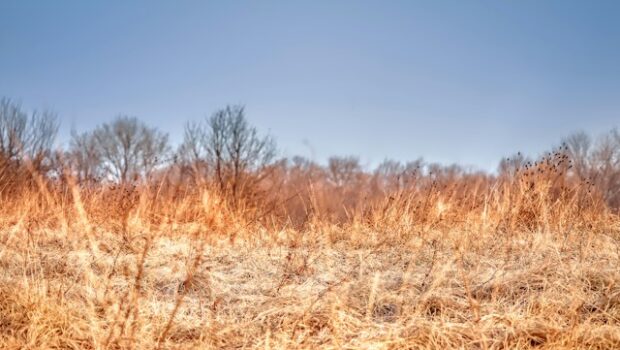
Very soon, the green of parks, gardens and all of the countryside in the whole country disappears, as if it had never been, and is substituted by dry grass, chaff, baked earth. The sad, dusty trees barely cast any shadow. London has become Pedro Páramo’s Comala. Who knows how the birds, squirrels and other animals are scraping along and finding water. Butterflies persevere, in particular the small white ones that keep on fluttering everywhere, seemingly quite untroubled. It is an incongruous image, for we’re used to seeing their whiteness in contrast against the green that, this year, is by now non-existent.
Soon we are told that this is, officially, a drought. It won’t rain in London for over two months. Every week, the weather forecast tells us that it will rain on such and such a day, but it doesn’t. The forecast simply postpones the rain, until we stop believing in it. In the media, we see photographs of what is happening in the rest of Europe, where the heat is even fiercer: dried up rivers, the tourists trying to protect themselves from the sun with their umbrellas, seeking an oasis in the fountains and rivers of cities whose prestige is suddenly transmuted by the infernal conditions. We start receiving news about the dead; those whose health couldn’t withstand the heat’s onslaught, and the drowned, who plunged desperately into rivers, lakes or the sea, where their body succumbed to the shock brought about by the sudden change of temperature. Soon the pictures show us the damage in the UK as well—the burnt-up fields (which will severely affect the crops); places of emblematic beauty turned into an unrecognizable wasteland, our own diminished rivers and streams. The initial alarm begins to take the shape of a deep sadness, and then it is alarm again, in an unceasing sway, as we read the news about the wildfires in France, Spain and other countries; as we hear of friends in France or in Madrid who can see the ashes, smell the smoke, or know people in neighbouring villages who have been evacuated. The reports and photographs have, no doubt about it, an apocalyptic feel. But this is not a problem of “the continent”; little by little, the wildfires start to ravage the UK as well. The figures differ, but they all coincide on one point—here, between June and August, there have been over one thousand fires, big and small, caused by the heat waves. It is calculated that more than 23,000 hectares have been burnt across the country. Many houses and other properties have been completely destroyed, not to talk about the vegetation, the trees, woods and wildlife… We learn that the close presence of the apocalypse seals your mouth shut. In view of the devastation’s magnitude, of the superhuman efforts of the fire brigades and volunteers against a force which is much bigger than us, we’re truly lost for words.
We no longer feel the desire to plan picnics, that innocent summer pleasure—not on this burnt grass. In a few weeks, this has stopped being altogether William Blake’s “green and pleasant land”.
There is, however, confusion in this stupor. It is the summer, after all, and the sun is shining. In those days when the heat’s grip yields a little (and how soon we get used to saying, ‘today it’s only 34 degrees’!), it is almost possible to forget the cataclysmic dimensions of what we’re living through, of what it really means. Days are very long, and it is always beautiful to have light well into the night; not to talk about the pleasure of wearing light dresses, getting rid at last of the layers of clothing and boots, scarves and hats; the delight of wearing sandals only for days on end. The hallucination has also streaks of joy—a long, endless hot day, which becomes eternal in its repetition. In my case, it’s the onset of flashbacks, of not knowing well where I am. The atmosphere of these hot and dry streets takes me back to the Guadalajara where I grew up… Only that it’s not entirely true. In that Guadalajara, the heat was relieved by those storms that were fearful and delicious all at once; sudden, fleeting, cooling everything down, while here, in London, the sky doesn’t give us a single drop of water. Time and again this summer drags me into a whirlwind of real, present sensations, along with images and memories of my life in Mexico, and many of those moments carry a joy which is the exclusive property of summer and the sun; a way to be in the world, a way to live. By now, we’re all suntanned, as if we lived in Greece, or in Puerto Escondido. No; joy and the sensuous pleasure of warm lands are not absent… until we look again at the withered grass; we see again the news of the devastation; we remember: “This is England. This is not right at all.”
Thus, weeks and months go by, in a kind of delirium in which, sunstruck and exhausted, we barely pay attention to the change of Prime Minister, and we get some respite from Count Binface’s quips during his campaign against Reform’s Nigel Farage for the Clacton-on-Sea by-election.
One day in July, a friend tells me in an email that the day before, in Covent Garden, there was a negligible drizzle for just a few minutes, and people cheered and clapped. God only knows what stray cloud passed over Covent Garden. In the rest of London, not a drop.
Given the drought’s severity, the use of hosepipes has been banned, and there’s not a single blade of grass alive in parks or gardens. One day we walk towards Coal Drops Yard and are surprised by a small area of healthy grass where some young people huddle together, having their lunch. The disappearance of grass has been so absolute that the green in this small, exceptional lawn seems strange to us, an hallucination within the greater hallucination of the drought, and I even wonder whether it’s artificial turf. We touch it: it is real.
Sitting in parks isn’t the same anymore—they no longer look like parks. When by chance there is some breeze, it is dust it carries. One day, sitting silently on a bench in Brunswick Square, I can almost hear a Western’s lone, somewhat ominous guitar strum, and I wouldn’t be at all surprised to see huge tumbleweeds circumventing some dog or squirrel’s bones. The scorched grass is covered with dry leaves, or to be more exact, burnt leaves that don’t resemble in the least autumn’s dry leaves. The dusty trees look utterly sad. I wonder how this autumn will be like, whether we’ll get some of its colour, when the summer has already burnt and brought down so many leaves. One day we see them fall swayed by a slow breeze, hypnotic, strangely beautiful; the strangeness obeys the fact that nothing of what we are seeing corresponds to the place we live in. Another day, all of a sudden a branch of considerable size falls off one of the plane trees, alarming the young woman sitting against its trunk. We don’t know what snapped off the branch, but the first thing that crosses our mind, maybe absurdly and in an entirely unscientific fashion, is “it’s the heat. The branches must be drying up.” The sun burns, it is hardly bearable out of the shade, and yet, inconceivably, there are days when some befuddled people still lie in swimwear on the scorched grass and earth, with their suntan lotion, to fry with pleasure. Like that young woman in bikini, with the attitude of one who sunbathes in a paradisiacal beach (or even in this very park, back then green, last summer). But today, under this sun’s intolerable heat that is killing people, in this wasteland, the image is almost grotesque, incomprehensible. The end of the world’s last suntan. Every day the parks and squares we often visit look sadder, the trees more desolate, and it hurts to look at them.
On the 12th of August we arrive in Wales, where we will spend some days at some friends’ house. The view from the train’s window is disconcerting. There is nothing left from the green fields and slopes that are the very essence of this country’s geography. It’s like watching a well-known film revealed in different colours. As we get off the train in Newport, we’re received by an oven’s mouth. It is even hotter than London. The River Usk is alarmingly dried-up. J. picks us up at the station. We go first to the supermarket to buy groceries, and suddenly, as I get off the car, it’s like a childhood déjà vu—a shopping centre’s car park in McAllen, Texas, travelling with my family, in torrid weather that, there and then, was normal. But in Wales?
Our friends’ house is an old farm near Arthur Machen’s Caerleon. I have visited this area before—dense forest, and intensely green arcadian fields and hills. Now, however, as we meander through narrow rural roads, the effect is one of perplexity: I recognise the landscape’s forms, the architecture of the few buildings and farms we pass by, but all the colour has disappeared, giving way to burnt grass. Vague flashbacks of travelling in my childhood through Jalisco’s motorways come back. Where am I? This is in no way the landscape of The Hill of Dreams, where Lucian Taylor, Machen’s febrile and tormented hero, experiences the awakening of his sexuality on an intense summer, amidst an explosion of green.
Early in the evening we climb the hill next to the house. It is a low hill, barely steep; the climb hardly requires effort, but the heat is still overwhelming. We sit on the parched grass to see the eclipse. Tiny flowers, buttercups and clover have survived. The eclipse proceeds slowly, with its silence; its singular twilight spreads softly over the fields and brings along the relief of fresh breeze. Though it’s almost total, that “almost” makes a big difference; the darkness is not so dramatic, it is much more subtle, but the transformation’s delicacy and parsimony are balm for body and soul. Through the protective glasses we can see the moon’s progress as it covers the sun, the deity that is torturing us so this summer and which, however, keeps on being our magnificent, life-giving star. Our earth is a prodigy of chance; the unlikely but perfect balance, the optimal distance from the central star of this solar system for life to be possible. What is happening to this earth these days is not a wrathful god’s punishment, but the consequence of our human actions.
For the rest of our stay in Wales, the heat is too much to make “a walk in the countryside” desirable. What countryside? During the day we find shelter on the ground floor, fresh thanks to the old farm’s thick walls, and it is only in the evening that we go out to eat in the garden. One evening, all the mobile phones start beeping in unison with a strident alarm, and we get several times the same text message, titled severe alert in English, but the rest is all in Welsh. The only thing we understand is “999”, the emergencies number. None of us speaks Welsh, but we all intuit that the alarm must be related to the heat and the wildfires. Is there a fire near us? Will we have to evacuate the area? Later, at long last, we get the message in English. It was sent to every phone, all across the country, to tell us that the likelihood of wildfires throughout the nation due to the drought is very high; that we must be extremely careful and not light fires of any kind out of doors, nor make barbecues.
On the train back, I focus my attention on one of the most glorious sunsets I have ever seen, ignoring, as far as I can, the gang of football hooligans that shout and provoke, barely keeping behind the verge of violence, and who, unbelievably, can’t see the majestic spectacle. But I see it, with reverence. The sun is still sovereign.
In London, to look at Brunswick Square from the terrace or large windows of the café across, where I often go to write, is one of my routine pleasures. As the summer progresses this year, that pleasure gets entangled with strands of sadness, as I see the trees ever more withered, yellowish and dusty; a desert of scorched earth and dry grass covered by leaves that are also scorched, untimely dry. One afternoon I think that I must not avert my gaze; that the love we have for the infinite spaces on this earth must remain firm even as they burn; that if we look away we lose our love for them, and if we lose the love, we lose the world and ourselves—we give up. And what other thing is that love, if not a deep and lucid appreciation of the existence of things, of the value inherent to that existence? One late afternoon, the sunbeams on a patch of dry grass make it look like pale gold.
Monty Python’s Eric Idle writes in The Times about his anxiety and uncertainty, having been evacuated twice from his home in the south of France because of the wildfires. All sorts of people, of renown or no renown at all, bear witness to their distress. Those who have lost their homes razed by fire talk about their incredulity, a stunned despair. Two trains are derailed in the UK, because the tracks aren’t designed to adapt to such high temperatures. It is estimated that the heat this summer has caused around 3,000 deaths in the country. It’s impossible to keep track of the news and photographs that record the gravity of the circumstances, from their most Dantesque scale to the most humble. Two images stick in my mind—a bat rescued from a toilet, where it fell looking for water, and a half-burnt field mouse saved by firemen.
Andy Burnham, the new Prime Minister, tries to convince us, without much success, that during the transition from fossil fuels to green energy—which unfortunately, he says, cannot be immediate—to keep drilling in the North Sea is better for the economy and causes less environmental impact. Burnham’s promises regarding social justice are laudable and I agree with them all, but he doesn’t seem to have registered yet the gravity of the climate emergency. I write to my MP to ask her to remind him that social justice cannot exist on a dead planet.
They tell us that El Niño is already underway, and that it will be the most severe one in living memory; that autumn and winter will be stormy beyond our imagination, winter very cold, and that summer in 2027 will probably be like this one, or far worse. The government advises us to stockpile water and food in case we’re left without energy, in case we’re trapped in some vague kind of disaster. The sensation that something essential is being wrenched away from us is almost physical; I feel it in my chest. The wait for summer in these latitudes, during the long winters, is usually an exercise in patience linked to a hope inherent to the renovation of life’s cycles. It isn’t the wait for hell, for unbearable heat, for devastating fire. Are we losing summer forever? And, along with it, the very foundations of this form of hope?
Little by little the temperature begins to abate, to resemble that of a normal summer. Clouds start gathering. Imminent rain is promised. Although some friends living up north tell me that, over there, it is already raining, in London, during a couple of muggy weeks, we wait for the rain every day, watching the clouds take all their wondrous shapes and then dissolve, but no rain comes. One day at noon, sitting on a bench, I feel the pinprick of three drops of water on my face. And that is all.
Until it comes, at last. Early one morning I awake with its tapping on rooftop and windows, and I remain in bed for a while, listening to it, feeling a simple, deep joy. Days of alternating rain and sunshine follow; some are still hot, others fresh. I enjoy the scent of petrichor, which I had forgotten. One afternoon there is a sudden, brief, heavy storm followed by hot sunshine, which leads me back again to the memory of those storms in the Guadalajara of my youth. The sense of relief is immense. And how magnificent, the roar of thunder! But the scars of disaster remain: the parched earth, the desolate-looking parks. I look closely at the grass everywhere, in the hope to see it grow green again. (It will—slowly, miraculously, during the rainy days that will follow in September.)
One day I feel around me the beginning of autumn’s unmistakable air and light, so difficult to describe, suggesting a serenity that has been lacking this brutal summer. Later, the heat comes back, but it is moderate, reminding us of what a normal summer in England feels like, and the soul finds respite.
And then, the Nepal avalanche, caused by a glacier collapse. None of the above is a warning—this summer has written on the wall in very big letters the consummation of innumerable warnings that we have ignored. To now ignore their consummation amounts to absolute surrender, and to a forlornness from which the rich and powerful who so far have believed themselves invulnerable won’t be exempted. Do we need to find ourselves all on our knees to give back to the earth (to every single corner of the earth that holds us in our everyday life) that loving gaze that is needed to save it? To save ourselves. It is an urgent question. We are already too close to too late.
Today there’s a light drizzle. At the gate of the block of flats where B. lives, a very green, sole weed makes its way with brio through the flagstones.
Foto de simon en Unsplash

Adriana Díaz-Enciso es poeta, narradora y traductora. Ha publicado las novelas La sed, Puente del cielo, Odio y Ciudad doliente de Dios, inspirada en los Poemas proféticos de William Blake; los libros de relatos Cuentos de fantasmas y otras mentiras y Con tu corazón y otros cuentos, y seis libros de poesía. Su más reciente publicación, Flint (una elegía y diario de sueños, escrita en inglés) puede encontrarse aquí.
©Literal Publishing. Queda prohibida la reproducción total o parcial de esta publicación. Toda forma de utilización no autorizada será perseguida con lo establecido en la ley federal del derecho de autor.
Las opiniones expresadas por nuestros colaboradores y columnistas son responsabilidad de sus autores y no reflejan necesariamente los puntos de vista de esta revista ni de sus editores, aunque sí refrendamos y respaldamos su derecho a expresarlas en toda su pluralidad. / Our contributors and columnists are solely responsible for the opinions expressed here, which do not necessarily reflect the point of view of this magazine or its editors. However, we do reaffirm and support their right to voice said opinions with full plurality.
Regresamos del frescor y la llovizna del Distrito de los Lagos a finales de junio, justo cuando empieza una nueva oleada de calor en el Reino Unido. El último día en Ambleside y, brevemente, en Windermere, es cálido y soleado: perfecto. Y por lo tanto engañoso. El regreso a Londres nos hace entrar de golpe a otra realidad. Es el verano, sí, pero no como lo conocíamos, ni como lo esperábamos.
La extrañeza de estos meses es alucinatoria. Son borrosos los recuerdos; los días empiezan a fundirse en una sola argamasa amorfa dominada por el calor, su tiranía. Repetidas veces B. y yo renunciamos a nuestras largas caminatas habituales. ¿Pero acaso no era esto lo que habíamos estado deseando todos, tras el largo (y muy frío) invierno? La brillantez del sol, el verdor aún presente, regalo de una hermosa primavera en que tuvimos abundante lluvia, nos hacen pensar por momentos que todo está bien. ¡Es el verano! ¡El verano al fin! Pero basta poner un pie fuera de casa para ser doblegados por la plancha aplastante de ese mismo sol inmisericorde.
Casas y departamentos se vuelven opresivos, el aire irrespirable. Los edificios en estas latitudes no están construidos para esta tórrida nueva realidad.
Hablan de varias oleadas de calor entre junio y agosto, pero en mi percepción ha sido una sola oleada interminable, con mayores o menores crestas, pero sin tregua.
Un día (¿finales de junio, o es julio ya?) salgo desesperada a buscar un ventilador grande. Mis modestos ventiladores, perfectamente adecuados para el verano londinense hasta este año, son ahora claramente insuficientes. Nueva es también mi sensación de alarma, de estar viviendo algo inusitado para lo que no estoy adecuadamente preparada. Imposible encontrar ventiladores en línea: están todos agotados. Me armo de valor y voy a la tienda más cercana. Ya no queda tampoco ni uno solo, pero una amable dependienta logra encontrar uno en otra sucursal y arreglar que me lo lleven a mi casa en un par de días. (La espera será agobiante.)
El trayecto de regreso en autobús es infernal. Una variante de El extranjero en la que dejamos de tener noción de nuestra conciencia, nuestras acciones automáticas pero lentas y al filo de una igualmente lenta desesperación. Al subir al autobús el aire me golpea como el interior de un horno (no todos los autobuses en Londres tienen aire acondicionado, lo que será motivo de una serie de huelgas iniciando en agosto). Alguien dice en voz muy alta, como delirando, que ahí dentro estamos a 47 grados. Me digo que es imposible, que se ha vuelto loco, y saco mi abanico de mano, pero entonces sucede algo que no había experimentado nunca y que me hace preguntarme si aquel hombre no tendrá razón, porque al mover el abanico no me llega ninguna brisa fresca. Me llega aire, sí, pero más caliente aún. No sé si eso es físicamente posible; lo vuelvo a intentar, con iguales resultados. ¿Qué pasa? Cierro el abanico. El autobús hace ruidos muy extraños y a medio camino se detiene, sobrecalentado, vencido. Nos bajamos todos a esperar el siguiente. Esto es Londres, Inglaterra, no el Sahara. Estoy demasiado agotada como para experimentar cabalmente el miedo, la alarma, pero están ahí.
El Reino Unido llegó por primera vez a los 40°C en 2022. Ese día también sentí esta especie de alarma difusa entre la niebla mental provocada por el calor. Regresaba ese día de París, donde las cosas estaban mucho peor; un trayecto accidentado y también alucinatorio, y Londres tenía una atmósfera ominosa y ajena, pero ni siquiera entonces llegamos al extremo de esta larga tortura interminable.
Muy pronto el verdor de parques, jardines y del campo todo en el país desaparece, como si no hubiera sido nunca, y es sustituido por hierba seca, paja, tierra cocida. Los árboles, polvosos y tristes, apenas dan sombra. Londres se ha convertido en el Comala de Pedro Páramo. A saber cómo se las estarán ingeniando los pájaros, las ardillas y otros animales para hidratarse. Las mariposas persisten, en particular ésas pequeñas y blancas que siguen revoloteando por todas partes al parecer muy quitadas de la pena, una imagen incongruente, pues estamos acostumbrados a ver su blancura en contraste con un verdor que ya no existe.
Pronto también se nos avisa que estamos, oficialmente, en sequía. No llueve en Londres durante más de dos meses. Todas las semanas, el pronóstico del tiempo dice que tal o cual día va a llover, pero no llueve. El pronóstico nada más se va aplazando, hasta que dejamos de creer en él. Vemos en los medios las fotografías de lo que está pasando en el resto de Europa, donde el calor es aún más fiero: ríos desecados, los turistas que intentan protegerse del sol con sus paraguas, buscando oasis en fuentes y ríos de ciudades cuyo prestigio de pronto es transmutado por sus condiciones infernales. Van llegando las noticias de los muertos: aquellos cuya salud no soportó la embestida del calor, y la de los ahogados, que se lanzaron desesperados a los ríos, los lagos o el mar, donde su cuerpo sucumbió al shock del cambio repentino de temperatura. Pronto las fotografías nos muestran también los estragos en el Reino Unido: el campo consumido (lo que afectará gravemente las cosechas); sitios emblemáticos por su belleza convertidos en un páramo irreconocible, nuestros propios ríos y arroyos disminuidos. La alarma inicial se va convirtiendo en honda tristeza, y luego es alarma otra vez, en un vaivén incesante, al leer las noticias de los incendios forestales en Francia, España y otros países; al oír de amigos en Francia o en Madrid a los que les llega la ceniza, que huelen el humo o conocen gente en poblaciones vecinas que ya han sido evacuadas. Los reportes, y las fotografías, tienen sin duda visos apocalípticos. Pero esto no es un problema “del continente”; los incendios empiezan a asolar poco a poco también al Reino Unido. Las cifras difieren, pero en lo que todas coinciden es en que aquí, entre junio y agosto, ha habido más de 1,000 incendios, entre pequeños y grandes, causados por las oleadas de calor. Se calcula que se han quemado más de 23,000 hectáreas. Muchas casas y otras propiedades han sido totalmente destruidas, por no hablar de la vegetación, los árboles, los bosques, la fauna… Aprendemos que la presencia cercana del apocalipsis sella la boca. Ante la magnitud de la destrucción, de los esfuerzos sobrehumanos de bomberos y voluntarios contra una fuerza que es mucho mayor que nosotros, de verdad no se encuentran las palabras.
Se nos quitan las ganas de planear picnics, ese inocente goce del verano, en esta hierba quemada. En unas cuantas semanas, ésta ha dejado de ser la “tierra verde y placentera de Inglaterra” a la que cantara William Blake.
Hay confusión, sin embargo, en este estupor. Es, pese a todo, el verano, y brilla el sol. En los días en que el puño del calor cede un poco (¡y qué pronto nos acostumbramos a decir: “hoy estamos a sólo 34 grados”!), casi es posible olvidar las dimensiones cataclísmicas de lo que estamos viviendo, de lo que realmente significa. Los días son larguísimos, y siempre es hermoso tener luz hasta bien entrada la noche; y qué decir de la delicia de los vestidos ligeros, deshacernos al fin de las capas de ropa y botas, bufandas y sombreros; el deleite de no usar sino sandalias día tras día. La alucinación tiene también trazas de gozo: un largo día de calor interminable que en su repetición se vuelve eterno. Empiezan, para mí, los flashbacks, este no saber bien a bien en dónde estoy. La atmósfera de estas calles calientes y resecas me regresa de golpe a la Guadalajara en que crecí… Aunque no es del todo cierto: en esa Guadalajara, el calor era aliviado por aquellas tormentas pavorosas y deliciosas a la vez, súbitas y fugaces que todo lo refrescaban, mientras que aquí, en Londres, el cielo no nos da ni una gota de agua. Una y otra vez este verano me envuelve en un torbellino de sensaciones reales, presentes, e imágenes y recuerdos de mi vida en México, y muchos de estos momentos vienen cargados de un gozo que es propiedad exclusiva del verano y del sol; una forma de estar en el mundo, de vivir. A estas alturas, estamos ya todos bronceados, como si viviéramos en Grecia, o en Puerto Escondido. No; no está ausente la alegría, el goce sensual de las tierras cálidas… hasta que miramos de nuevo la hierba marchita; vemos de nuevo las noticias de la devastación; recordamos: “Esto es Inglaterra. Esto no está nada bien.”
Así pasan las semanas, los meses, en una especie de delirio en el que, agotados, insolados, apenas prestamos atención al cambio de primer ministro, y nos distraemos con las ocurrencias del Conde Binface, el candidato de parodia que se postuló para las elecciones parciales locales en Clacton-on-Sea contra Nigel Farage, el deleznable líder del partido de ultraderecha Reform.
Un día de julio una amiga me cuenta en un email que el día anterior, en Covent Garden, empezó a caer una insignificante llovizna, que no duró más de unos cuantos minutos, pero de todas formas la gente se puso a vitorear y a aplaudir. Quién sabe qué nube descarriada habrá pasado por Covent Garden. En el resto de Londres, ni una gota.
Dada la gravedad de la sequía, se ha prohibido el uso de mangueras, y no queda brizna viva en parques ni en jardines. Un día B. y yo caminamos hacia Coal Drops Yard y nos sorprende una breve extensión de césped sano en la que se apiñan unos jóvenes para comer su almuerzo. La desaparición de la hierba ha sido tan absoluta que el verdor de este pequeño prado de excepción nos parece extraño, una alucinación dentro de la alucinación mayor de la sequía, y hasta llego a preguntarme si no será hierba artificial. La tocamos: es real.
Sentarse en los parques ya no es lo mismo, porque ya no parecen parques. Cuando llega a haber brisa, es polvo lo que arrastra consigo. Un día, sentados en silencio en Brunswick Square, casi puedo oír el acorde solitario y un tanto ominoso de una guitarra en una película del Oeste, y no me extrañaría nada ver pasar enormes plantas rodadoras sorteando el esqueleto de algún perro, alguna ardilla. La paja está cubierta de hojas secas o, para ser más exactos, hojas quemadas, que en nada se parecen a las hojas secas del otoño. Los árboles polvorientos se ven tristísimos. Me pregunto cómo será el otoño, si recuperaremos algo de su color, cuando el verano ya ha quemado y hecho caer casi todas las hojas. Un día las vemos caer mecidas por una brisa lenta, hipnóticas, con una extraña belleza; la extrañeza se debe a que nada de lo que vemos corresponde al lugar que habitamos. Otro día, de pronto, una rama de dimensiones considerables cae de uno de los plátanos de sombra, alarmando a la joven que lee apoyada contra el tronco. No sabemos qué hizo desgajarse a la rama, pero lo primero que cruza nuestra mente, quizá de manera absurda y por completo anticientífica, es “es el calor. Se han de estar secando las ramas”. El sol quema, apenas se soporta fuera de la sombra, pero, inconcebiblemente, hay días en que todavía algún despistado se tira en traje de baño, con bronceador, sobre la hierba y la tierra quemadas para freírse a gusto. Como esa mujer joven en bikini, con la actitud de quien se tiende a tomar el sol en una playa paradisíaca, o en este mismo parque, entonces verde, el verano pasado. Pero hoy, bajo el sol de ardor intolerable que está matando gente, en este páramo, la imagen es casi grotesca, incomprensible. El último bronceado del fin del mundo. Cada día las plazas y parquecitos que visitamos cotidianamente se ven más tristes, los árboles más desolados, y duele mirarlos.
El 12 de agosto llegamos a Gales, donde pasaremos unos días en casa de amigos. La vista por la ventana del tren es desconcertante. Nada queda de los acostumbrados campos y lomas verdes que son la esencia misma de la geografía del país. Es como ver una película conocida revelada en otros colores. Al bajarnos del tren en Newport, nos recibe la boca de un horno. El calor aquí, hoy, está peor que en Londres. El río Usk está alarmantemente desecado. J. pasa a recogernos. Vamos primero al supermercado a comprar víveres, y de pronto, al bajarme del auto en el gran estacionamiento, tengo un déjà vu de mi infancia: el estacionamiento de un centro comercial en McAllen, Texas, viajando con mi familia, en un clima tórrido que ahí, entonces, era normal. ¿Pero en Gales?
La casa de nuestros amigos es una vieja granja, cerca del Caerleon de Arthur Machen. He visitado antes esta zona: bosques densos, y campos y colinas de un verdor idílico. Pero ahora, mientras nos internamos por estrechos caminos rurales, el efecto es uno de perplejidad: reconozco las formas del paisaje, la arquitectura de los pocos edificios y granjas que pasamos, pero todo el color ha desaparecido, cediendo su lugar a la hierba quemada. Vuelven vagos flashbacks de viajes de mi infancia por las carreteras de Jalisco. ¿Dónde estoy? Esto no es en forma alguna el paisaje de La colina de los sueños, donde Lucian Taylor, el héroe febril y atormentado de Machen despierta a la sexualidad durante un intenso verano entre una explosión de verdor.
Al final de la tarde subimos la colina junto a la casa. Es una colina baja, apenas empinada, cuyo ascenso no requiere mayor esfuerzo, pero aun así el calor agobia. Nos sentamos en la hierba seca a ver el eclipse. Flores diminutas, ranúnculos y tréboles han sobrevivido. El eclipse avanza lento, con su silencio; su singular ocaso se extiende suavemente sobre los campos y trae consigo el alivio de una brisa fresca. Aunque casi total, ese “casi” marca una gran diferencia; el oscurecer no es tan dramático, es mucho más sutil, pero la delicadeza y parsimonia de la transformación son un bálsamo para cuerpo y alma. A través de las gafas protectoras vemos el avance de la luna oscureciendo al sol, esa deidad que este verano nos tortura y sin embargo sigue siendo nuestro astro magnífico, dador de vida. Nuestra tierra es un prodigio del azar; el improbable pero perfecto equilibrio, la distancia idónea de la estrella central de este sistema solar para que la vida sea posible. Lo que le está pasando a esta tierra en los tiempos que corren no es el castigo de un dios iracundo, sino la consecuencia de nuestros humanos actos.
El resto de los días en Gales, el calor es demasiado como para volver deseable “una caminata en el campo”. ¿Cuál campo? Durante el día, nos refugiamos en la planta baja, fresca gracias a los muros gruesos de la vieja granja, y hasta el final de la tarde salimos a cenar al jardín. Una tarde todos los teléfonos celulares empiezan a sonar al unísono con una alarma estridente, y nos llega repetidamente el mismo mensaje de texto, titulado, en inglés, severe alert, pero el resto está todo en galés. Lo único que entendemos es “999”, el número de emergencias. Ninguno de nosotros habla galés, no entendemos nada, pero todos intuimos que la alarma debe estar relacionada con el calor y los incendios. ¿Será que hay un incendio cerca de nosotros? ¿Tendremos que evacuar la zona? Más tarde nos llega, al fin, el mensaje en inglés. Fue enviado a todos los teléfonos, en todo el país, para decirnos que la probabilidad de incendios por todo el territorio dada la sequía es muy alta; que debemos tener extremo cuidado y no encender fuegos de ninguna índole al aire libre, ni hacer parrilladas.
En el tren de regreso, concentro mi atención en una de las puestas de sol más gloriosas que he visto en mi vida, ignorando en la medida de lo posible al grupo de hinchas de futbol que gritan y provocan, manteniéndose apenas al filo de la violencia, y que, increíblemente, no ven el majestuoso espectáculo. Pero yo lo veo, con reverencia. El sol sigue siendo soberano.
En Londres, mirar Brunswick Square desde la terraza o ventanales del café de enfrente, a donde voy a escribir a menudo, es uno de mis placeres cotidianos. A medida que avanza el verano este año, dicho placer se enreda con fibras de tristeza al ver los árboles cada vez más mustios, amarillentos y polvosos; un desierto de tierra quemada y hierba seca cubiertas de hojas también quemadas, también secas a destiempo. Una tarde pienso que no debo desviar la mirada; que el amor que tenemos por los infinitos lugares de esta tierra ha de mantenerse firme aún mientras arden; que si desviamos la mirada perdemos el amor por ellos, y si perdemos el amor, perdemos el mundo y a nosotros mismos; nos damos por vencidos. ¿Y qué otra cosa es ese amor, sino una apreciación profunda y lúcida de la existencia de las cosas, del valor inherente en ese existir? Un atardecer, los rayos del sol sobre un parche de hierba seca le dan una apariencia de oro pálido.
Eric Idle, de Monty Python, escribe en The Times sobre la ansiedad e incertidumbre de haber sido evacuado dos veces de su casa en el sur de Francia debido a los incendios. Personas de todo tipo, con o sin ninguna fama, dan testimonio de su desasosiego. Quienes han perdido sus casas arrasadas por el fuego hablan de su incredulidad, de una aturdida desesperación. Dos trenes se descarrilan en el Reino Unido, pues las vías no están diseñadas para adaptarse a tan altas temperaturas. Se calcula que el calor de este verano ha provocado alrededor de 3,000 muertes en el país. Imposible llevar cuenta de las noticias y fotografías que registran la gravedad de los hechos, desde la escala más dantesca hasta la más humilde. Se me queda grabada la imagen de un murciélago rescatado de un retrete al que cayó buscando agua, o la de un ratón de campo medio quemado que salvaron los bomberos.
Andy Burnham, el nuevo primer ministro, intenta sin mucho éxito convencernos de que, durante la transición de combustibles fósiles a energía verde, que por desgracia, afirma, no puede ser inmediata, seguir perforando en el Mar del Norte es mejor para la economía y causa menos impacto ambiental. Las promesas de Burnham sobre justicia social son muy loables y estoy de acuerdo con todas, pero parece no registrar aún la gravedad de la emergencia climática. Le escribo a mi representante en el Parlamento para pedirle que le recuerde que la justicia social no puede existir en un planeta muerto.
Nos dicen que El Niño ya se está gestando, y será el más severo de que se tiene memoria; que el otoño y el invierno serán tormentosos más allá de lo que podamos imaginar, el invierno muy frío, el verano en 2027 probablemente igual o mucho peor que éste. El gobierno nos aconseja almacenar reservas de agua y comida por si nos quedamos sin energía, por si quedamos atrapados en alguna forma vaga de desastre. La sensación de que algo fundamental nos está siendo arrebatado es casi física, dentro del pecho. La espera del verano durante los largos inviernos en estas latitudes suele ser una forma de paciencia ligada a la esperanza, inherente a la renovación de los ciclos de la vida. No es la espera del infierno, del calor intolerable, del fuego arrasador. ¿Estamos perdiendo el verano para siempre? Y con él, ¿los fundamentos mismos de esta forma de esperanza?
Poco a poco la temperatura empieza a ceder, a parecerse más a la de un verano normal. Empiezan a acumularse las nubes. Se nos promete lluvia inminente. Aunque amigos que viven en el norte me dicen que allá ya está lloviendo, en Londres, durante un par de semanas bochornosas, esperamos la lluvia todos los días, mirando las nubes formarse y deshacerse en todas sus formas asombrosas, pero no llega. Un mediodía, sentada en una banca, siento el alfilerazo de tres gotas de agua en la cara. Y es todo.
Hasta que llega, al fin. Temprano una mañana me despierta su repiquetear en el techo y las ventanas, y permanezco un buen rato en la cama escuchándola, con una simple, profunda alegría. Siguen días de alternancia entre lluvia y sol; algunos todavía calientes, otros frescos. Gozo el olor a tierra mojada que había olvidado. Una tarde cae una tormenta súbita, tupida y breve, seguida de sol caliente, que me lleva de nuevo al recuerdo de aquellas tormentas en la Guadalajara de mi juventud. La sensación de alivio es inmensa. ¡Y qué magnífico es el rumor del trueno! Pero las huellas del desastre permanecen: la tierra seca, los parques con su aire desolado. Miro atentamente la hierba en todas partes, con la esperanza de verla reverdecer (lo hará: lenta y milagrosamente, durante los días de lluvia que seguirán en septiembre).
Un día siento el aire y la luz inconfundibles del inicio del otoño, tan difíciles de describir, sugiriendo una serenidad que le ha faltado a este verano brutal. Después regresa el calor, pero moderado, recordándonos lo que es un verano normal en Inglaterra, y el alma descansa.
Luego llega la avalancha en Nepal, provocada por un colapso glaciar. Nada de esto es una advertencia: este verano ha inscrito en la pared con letras muy grandes el cumplimiento de innumerables advertencias que hemos ignorado. Ignorar ahora su cumplimiento equivale a la absoluta rendición, y a un desamparo del que no quedarán exentos los ricos y poderosos que hasta ahora se han creído invulnerables. ¿Será que hace falta vernos todos de rodillas para devolverle a la tierra (a cada uno de los rincones de la tierra que nos acogen en nuestra vida cotidiana) esa mirada amorosa que hace falta para salvarla? Para salvarnos. La pregunta es urgente. Estamos ya muy cerca del demasiado tarde.
Hoy cae una llovizna ligera. A la entrada del edificio de departamentos donde vive B., un hierbajo muy verde se abre paso con enjundia entre el pavimento.
Foto de simon en Unsplash
Adriana Díaz-Enciso es poeta, narradora y traductora. Ha publicado las novelas La sed, Puente del cielo, Odio y Ciudad doliente de Dios, inspirada en los Poemas proféticos de William Blake; los libros de relatos Cuentos de fantasmas y otras mentiras y Con tu corazón y otros cuentos, y seis libros de poesía. Su más reciente publicación, Flint (una elegía y diario de sueños, escrita en inglés) puede encontrarse aquí.
©Literal Publishing. Queda prohibida la reproducción total o parcial de esta publicación. Toda forma de utilización no autorizada será perseguida con lo establecido en la ley federal del derecho de autor.
Las opiniones expresadas por nuestros colaboradores y columnistas son responsabilidad de sus autores y no reflejan necesariamente los puntos de vista de esta revista ni de sus editores, aunque sí refrendamos y respaldamos su derecho a expresarlas en toda su pluralidad. / Our contributors and columnists are solely responsible for the opinions expressed here, which do not necessarily reflect the point of view of this magazine or its editors. However, we do reaffirm and support their right to voice said opinions with full plurality.