
Un halcón bajo mi ventana (A Hawk Beneath My Window), by Lydia Cacho
Un halcón bajo mi ventana, de Lydia Cacho
Alberto Islas
|
Getting your Trinity Audio player ready...
|

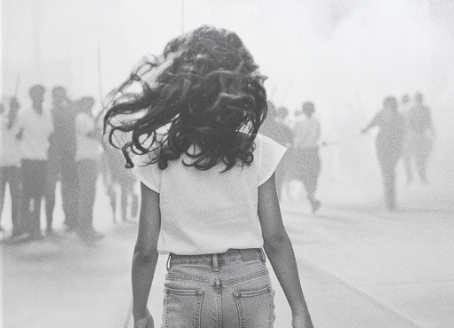
Un halcón bajo mi ventana (A Hawk Beneath My Window), by Lydia Cacho, is a novel that blends the historical memory, personal background, and social criticism to rebuild, from an intimate view, several of the most painful chapters of contemporary Mexico. Through Julieta, a 14-year-old who grows among the political awakening, sexual revolution, feminism and state repression, the author provides a human and traditional reading of the student movements of 1968 and the Corpus Christi Massacre or “Halconazo” of 1971.
One of the best choices made in this novel is the contrast made between the violence of the historical context and the tenderness with which the main character creates emotional ties with the women who are part of these urban movements. Cacho does not showcase repression only as a political fact, but as an experience that cuts through daily lives that is felt by the families of the revolutionary women. A renowned writer misses a meeting of the organization because “she has to make dinner.” These examples of reality are the axis of the novel: while facing fear, brutality and censorship, friendship, love, and the longing for justice and solidarity arise as forms of resistance.
The novel also stands out because it seeks to recover the feminine memory of the social movements. Instead of focusing on the traditional masculine leadership, Cacho gives visibility to the mothers, aunts, activists, and young women who were part of the political struggle and have frequently been erased from history. This focus helps us understand that the resistance did notonly take place on the streets or assemblies, but also in the homes, undercover conversations and the ties forged among women who took care of each other.
From a literary point of view, Lydia Cacho’s prose is intense, emotional, and direct. Her writing conveys confusion, fear and curiosity of a teenager affected by extreme historical events. Julieta’s voice helps the reader have a closer look at the political violence without taking their eyes off of the sensibility of the character who, at the same time, is discovering love, their identity, sexuality, death, and the power of rebellion. This combination makes this a moving read while maintaining a narrative tension.
Another relevant aspect is the work’s current sociopolitical relevance. Although the story takes place over fifty years ago, the issues it presents are the same as the current ones: institutional violence, forced disappearances, authoritarianism, and gender inequality. In this sense, the novel does not only take a look at the past, but it also encourages us to question the present and acknowledge how certain historical wounds are still open.
Un halcón bajo mi ventana (A Hawk Beneath My Window) is a courageous, sensitive, and necessary novel. Its greatest strength is that it ties the historical memory to an intimate and feminist view, capable of showing that the political fight is also built on affections.
Lydia Cacho has created a work that will provide many lessons to the thousands of mothers of any Julieta. The sense of solidarity and feminism is not only built on Julieta’s mother, but also on the example of the different women that Julieta chooses to follow. Today, the Julietas have more role models in the arts, science, politics, and business world. And the message that is revealed to Julieta’s parents is that: it all starts by being there for your daughter.
 Alberto Islas founded Más Libros, Mejor Futuro, a non-profit organization, 16 years ago with the mission of reclaiming public spaces through reading. The organization hosts events featuring authors and gives away their books, fostering active audience participation. To date, it has organized more than 100 events across Mexico and distributed over 30,000 books. Alberto holds a degree in Economics and a master’s degree in Political Economy from MIT.
©Literal Publishing. Queda prohibida la reproducción total o parcial de esta publicación. Toda forma de utilización no autorizada será perseguida con lo establecido en la ley federal del derecho de autor.
Las opiniones expresadas por nuestros colaboradores y columnistas son responsabilidad de sus autores y no reflejan necesariamente los puntos de vista de esta revista ni de sus editores, aunque sí refrendamos y respaldamos su derecho a expresarlas en toda su pluralidad. / Our contributors and columnists are solely responsible for the opinions expressed here, which do not necessarily reflect the point of view of this magazine or its editors. However, we do reaffirm and support their right to voice said opinions with full plurality.