


Maraña: War and Disease in the Jungles of Colombia
Lina Pinto-García
|
Getting your Trinity Audio player ready...
|

Cutaneous leishmaniasis, transmitted by female sandflies, produces skin lesions of varying size and shape. In Colombia, the insect vector of the disease is native to the same forested environments that have served as the main stage for one of the longest and most violent wars in Latin American history. As a result, the populations most affected by leishmaniasis in Colombia are members of the state army and nonstate armed groups. In Maraña, Lina Pinto-García explores how leishmaniasis and the armed conflict are inextricably connected and mutually reinforcing. Maraña means “tangle” in Spanish but is also commonly used in Colombia to name the entangled greenery, braided lianas, and dense foliage that characterize the tropical forests where leishmaniasis transmission typically occurs. Pinto-García argues that leishmaniasis and the war are not merely linked but enmarañadas to each other through narratives, technologies, and practices produced by the state, medicine, biomedical research, and the armed conflict itself. The following excerpt is from the book’s introduction.
*
Andrea González spent two years traveling on board helicopters of the Colombian Army— at least once a week between 2006 and 2008. These helicopters were routinely used to shuttle soldiers in and out of combat zones; rescue the wounded; and supply food, ammunition, and other provisions to troops scattered in densely forested areas of the Amazon region. However, Andrea was involved in a very different operation—a scientific one. As a university researcher with a background in microbiology, she was coordinating a clinical trial that recruited military participants to investigate biomedical therapies against cutaneous leishmaniasis.
The characteristic sign of this disease is a rounded, hollowed-out, and raw skin sore that forms after a sandfly bites and transmits microscopic Leishmania parasites to a person. The standard treatment used to heal these ulcers in Colombia is a drug with the brand name Glucantime. The clinical trial led by Andrea sought to compare this pharmaceutical with two other therapies. To do so, the trial protocol prescribed two additional follow-ups to be conducted with the participants three and six months after the end of the treatment. Andrea and her colleagues had to devise a plan for her to execute the follow-up treatment visits even though her trial soldier-patients had already returned to the front lines of combat in the jungle. It was decided that she would join routine military helicopter operations to the tropical forest zones in order to access her military patients and document the effect that these experimental antileishmanial therapies had on a trial group of 437 soldiers.
From the helicopter, the thickly meshed canopy of trees resembled a giant green and velvety carpet stretching out on the horizon. Once on the ground, however, this seemingly homogeneous living mass took on a very different appearance. Composed of an extraordinary diversity of plants that compete for every available corner and ray of sunlight, the rainforest shows itself as an intricate tangle of multiple forms and textures, colored by shadows and the most varied palette of humid greens, blues, and browns. For over five decades, this densely forested tropical environment has served as the main stage for Colombia’s armed conflict—el conflicto armado, one of the longest and most violent wars in Latin American history.
Besides demarcating the zones of conflict, the ecological borders of the tropical jungle also delimit the spaces of existence for minute sandflies that transmit leishmaniasis. In this lush setting, rock crevices, nests, the undersides of leaves, animal burrows, and the uneven surfaces of tree trunks offer humid and dark dwellings for these insects to spend most of the day in hiding. At twilight, however, female sandflies become particularly active, seeking mammals to bite and obtain the blood they need to develop their eggs. Opossums, armadillos, sloths, anteaters, bats, wild rats, porcupines, pumas, and jaguars are attractive sources of blood for these insects—and so are two-legged mammals, many of them armed and dressed in camouflage. To the sandflies, these beings simply represent yet another source of nourishment, one that became particularly abundant and available with the armed conflict. As a result, Army soldiers, guerrillas, and paramilitaries constitute the populations most affected by leishmaniasis in Colombia.
As long as the helicopter was not ambushed from below, it would land, permitting its onboard military personnel and Andrea to hop off in order to fulfill their respective assigned missions. Fearing a sudden guerrilla attack, military members loaded and unloaded provisions and people from the aircraft with feverish haste. Concurrently, as the rotating helicopter blades roared beside her, Andrea quickly assessed and documented the healing progress of each of the soldiers who were participants in her trial. Andrea recounted her experience to me ten years later in her university office, far away from the Amazon and the daily tensions of war. “I saw many young men without legs, even a twenty-two-year-old soldier whose face had been completely blown up by a land mine, eyes included; it was absolutely sad and horrifying,” she told me.
Andrea kept stressing how different and impressive it was to be in the forested and remote areas of the country, confronting the war face-to-face. In her opinion, her experience was in sharp contrast to that of most Colombians in the main cities who had become used to watching the events of the war on television. “It was a titanic job, a suicide job. I even had to do it on Christmas Day. It was very difficult to coordinate all this with the Army commanders. But that work was great. I loved it!” she said. I asked her whether she might have had the same sort of experience if she had been doing research on a disease other than leishmaniasis. “No, it’s very unlikely, it’s very unlikely,” she answered.
Such stories never made it into the scientific articles that Andrea and her colleagues published on the clinical trial, and they remain undocumented to this day. Leishmaniasis researchers do not tend to divulge their experiences on the ground, except as anecdotes that might informally arise as hallway conversation or during the coffee breaks at scientific conferences. As such, they are not part of the “official” accounts about leishmaniasis found in scientific journals or public health documents. Scenes like these remain marginal, unfamiliar, and, for the most part, unknown to the (scientific) world. Thus, people wearing immaculate lab coats and latex gloves in quiet and aseptic rooms, illuminated with cold white lamps still make up the iconic image—but not necessarily the reality—that is associated with leishmaniasis-related biomedical research and clinical studies in Colombia.
Yet this skin vector-borne disease is deeply intertwined with the complex armed conflict the country has experienced for decades. When you examine Colombian leishmaniasis closely, as I have, you will inevitably encounter all sorts of actors, objects, violences, inequities, knowledges, and imaginaries engendered, shaped, connected, and kept alive by war. I would have, as Andrea implied, been significantly less likely to uncover the picture that I present in the following pages had my focus been on a disease other than leishmaniasis.
Among those who have heard about leishmaniasis in Colombia, this disease—like no other—is often stigmatized as “the guerrilla disease” or “the subversive disease” (see, for instance, Molano Bravo 2005b; Emanuelsson 2012). Although leishmaniasis does not affect only guerrilla members, the misconception that it is solely a guerrilla illness has deeply infused certain imaginaries with gruesome, even deadly consequences for some people in rural areas. Significantly, this stigmatization has been reinforced by the fact that the state has established restrictive control on access to antileishmanial medications, a measure that is locally interpreted as a warfare strategy aimed to disadvantage insurgent groups living in close relationships with the forested ecologies and sandflies that inhabit them.
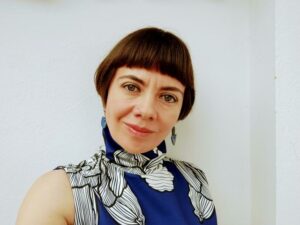 Lina Pinto-García is a postdoctoral fellow in the Connected Minds program at York University in Canada. She is also a research affiliate of the School of Anthropology and Museum Ethnography at the University of Oxford.
Excerpted from Maraña: War and Disease in the Jungles of Colombia by Lina Pinto-García. © 2025 by The University of Chicago. All rights reserved.
Buy the book here
©Literal Publishing. Queda prohibida la reproducción total o parcial de esta publicación. Toda forma de utilización no autorizada será perseguida con lo establecido en la ley federal del derecho de autor.
Las opiniones expresadas por nuestros colaboradores y columnistas son responsabilidad de sus autores y no reflejan necesariamente los puntos de vista de esta revista ni de sus editores, aunque sí refrendamos y respaldamos su derecho a expresarlas en toda su pluralidad. / Our contributors and columnists are solely responsible for the opinions expressed here, which do not necessarily reflect the point of view of this magazine or its editors. However, we do reaffirm and support their right to voice said opinions with full plurality.
Posted: October 8, 2025 at 9:42 pm