
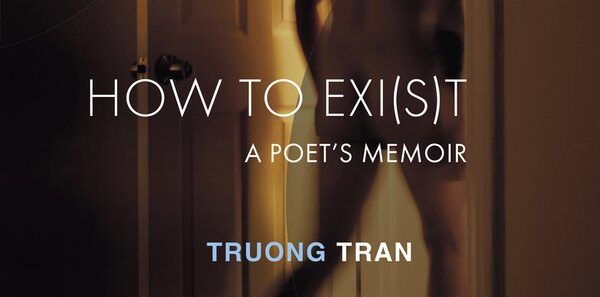
How to Exi(s)T A Poet's Memoir
Truong Tran

On Breathing
On the missing bag
Back in May 2022, I met up with a former student to catch up over a lunch consisting of tacos and horchata. She insisted on treating. She said she was all grown up now and that she could afford to take her favorite professor out this one time. A moment like that makes it worthwhile to call oneself a teacher, even if you’ve not had a raise in the last 10 years. It is the reassurance that your student is thriving, or, if not thriving, then at least OK in that moment in that exchange.
We ate at a taqueria on Haight Street. We sat outdoors along the sidewalk, where I hung my leather bag from the dining chair’s back. We talked about her many jobs and the desire to keep on writing. We talked about my suspect health and the reality of growing old. She said that I was not old, and then we spent a good half-hour debating the logistics of being old. We talked about my latest obsession, this newfound love of nature and gardening. As she’s one of the strongest human beings I know, I asked her to help me plant a 13-foot dogwood tree that was leaning up against a wall in my backyard. After planting it, we sat in the backyard admiring our handiwork. We rewarded ourselves with a couple of beers. We circled back to the subject of writing. I wanted to show her the book I was currently trying to read.
I looked for my bag and it was then that I realized I left it on that seat outside the restaurant. By the time we got back there, the bag was gone. The rest of that day, I tried to convince her that it was only a bag. Deep beneath this outward display of no-big-deal, I was devastated. I had coveted that bag long before I took the plunge and splurged on it as a treat for myself and, in fact, it was a source of great pride. Everywhere I went, someone would say something kind about the bag. How is it that kindness comes by way of an object? It made me feel, strangely enough, like I was something other than myself. I am a writer and an artist, but for some reason, I needed this bag to hold my belongings and my identity as both. Its worn-in characteristics conveyed a history, a lived experience of someone else, someone worthy of being called a writer or an artist. Why did this matter? Why did I put all that in a bag?
In the weeks that followed, I reminded myself constantly that it was just a bag. I looked for a replacement online but then decided to just let it go. Why am I compelled to write these disparate narratives in the hopes of finding a worthy story? I know that there is something here, something inside this bag, inside these sentences that I am still trying to bring to the surface.
I traveled east that May. I lectured at a university, read at bookstores, and taught a workshop to a group of writers. I entered into these spaces with my book in hand, my thoughts scripted, and no bag to hold my identity as a writer. I stayed in a hotel and then at a bed and breakfast where I was always seated at a table by myself. To be fair, all the guests or groups of guests were seated with their people. It would have been strange to be seated at any of the various groupings, the father and son on a bird- watching expedition, the newlyweds from the next town over, or the family with their teenage children texting on their phones. How did I know this? I was told by the woman who ran the B&B. Why was I told? I’m not sure why, but I have to admit, I was curious. They were all white and apprehensively friendly. They offered hellos, and I in turn made it a point to say goodbye. Somewhere in between, we exchanged a question here and there. I was acutely aware that I was alone and wanting to be invisible.
I came home after a week of traveling. I had forgotten about the bag again. A letter was waiting upon my arrival, written with the shaky penmanship of someone older or struggling, someone living with the weight of living. Inside the envelope was my credit card and ID, no cash or wallet, and a note that read, “My name is Heidi. I found your bag. Do you want it back? Call me if you do. You look handsome in your picture.” This letter, which read like a ransom note, brought me hope and a sense of familiarity. I went to bed that night thinking I was home.
Again, I pause to ask the question. Why am I writing this and what is the point? I still don’t know, but something compels me to put words down on this page, to wander in search of a worthy narrative, an attempt, always an attempt.
I called the number provided in the letter the very next morning. I spoke with Heidi. I thanked her for the letter, for returning my credit card and ID, for the promise of returning my beloved bag. She said she would get it back to me but she needed a few days, a week maybe. I ended the phone call with an appointment to call again in one week’s time. Some part of me knew I needed to play this with a level of measured calmness. I needed to acknowledge mentally the precarious nature of this interaction. I concocted a story of the bag as a gift from my father, not long before he passed away. This was a lie that I made up on the spur of moment. I had hoped that it would serve as an incentive to locate and return my missing bag. I told a lie about my father to a stranger I’d yet to meet. Maybe I am writing this now to come clean.
There is something more to this narrative that’s telling me to keep writing. Where am I going with my words? The truth is, I still don’t know. I called Heidi a week later, exactly at noon, as scheduled. I tried for some semblance of casual banter. I asked how she was doing. I told her of my excitement and how I shared the news of her kindness with my friends. I then asked her if she had found the bag. And not surprisingly, her answer was “no.” This reach for a conversation quickly turned into a confrontation. “Who did you give my bag to? What is this person’s name? Why did you give it to this stranger? And where and when did you give it to this person? This was my father’s bag. You had no right to give it away.” By this point in the exchange, I was losing my patience. I was starting to raise my voice. I had convinced myself of my own lie. This was now my father’s bag. I wanted it back at whatever the cost.
She said she had given it to a stranger so that he would leave her alone. She said she had given it to him to carry some things and that she gave it to him at the corner of 6th and Market Street about three weeks back. I mentioned the prospect of looking for it myself, of filing a police report. I asked for his name. She quickly denied knowing his name. She asked that I not file a police report. She asked for another week and then she told me to have a little faith. Something in the way she said it told me the truth of my defeat. I asked her to stop her search, to not put herself in danger, that 6th and Market was not a place to wander about alone. I asked that she let it go, and in that instance, again, I told myself to let it go. Heidi said that she was still going to try. To which I said, “Please don’t.” Our discourse ended. Writing this now, I realize I’ve written thus far to arrive at this knowledge of my shame. Did I use my tone in this way to intimidate another in that moment? Did I assert my authority? Did I become the bully by way of wielding the English language? I’ve written this story. I’ve arrived at an ending. The bag is back in my possession. I thanked Heidi on the phone and in person. I brought carnations at her request. I brought her chocolates. I said, “Thank you.” I lost the note with her number written on it. I have no way of staying in contact. I’ve written all this to say I’m sorry.
*This excerpt belongs to the title How To Exists. A Poet´s Memoir . Published by City Lights Book.
Expect “On the missing bag”, pp. 91–95. © 2026 Truong Tran.
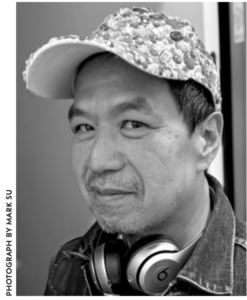 Truong Tran is a poet, visual artist, and teacher born in Saigon, Vietnam. His books include Book of the Other: Small in Comparison, winner of the American Book Award, The Book of Perceptions, Placing the Accents, Dust and Conscience, Within the Margins, Four Letter Words, 100 words, Looking and Seeing/Seeing and Looking, the children’s book Going Home Coming Home, and an artist monograph, I Meant To Say Please Past the Sugar. He is the recipient of the Poetry Center Prize, the Fund for Poetry Grant, the California Arts Council Grant, and numerous San Francisco Arts Commission Grants. Truong is also a visual artist who believes that art, be it poetry, cooking, sculpting, or even gardening, is his way of thinking through the conscience of the times we live in. Truong teaches at Northeastern University, Oakland and lives in San Francisco.
©Literal Publishing. Queda prohibida la reproducción total o parcial de esta publicación. Toda forma de utilización no autorizada será perseguida con lo establecido en la ley federal del derecho de autor.
Las opiniones expresadas por nuestros colaboradores y columnistas son responsabilidad de sus autores y no reflejan necesariamente los puntos de vista de esta revista ni de sus editores, aunque sí refrendamos y respaldamos su derecho a expresarlas en toda su pluralidad. / Our contributors and columnists are solely responsible for the opinions expressed here, which do not necessarily reflect the point of view of this magazine or its editors. However, we do reaffirm and support their right to voice said opinions with full plurality.
Posted: November 8, 2026 at 3:18 pm