It is barely possible to say what a human being is in current times. Not that it was ever easy, but now the distractions are bigger, scourging us in their relentless downpour. That must be why we’re giving up, and why, in the eyes of the 21st Century’s inhabitants, our humanity, along with the faculties unique to it, is so worthless.
There must be millions of pages now in newspapers, magazines, books (printed and online) discussing the subject of artificial intelligence, and it’s no wonder. Among the multiple threats rising their head amidst us insinuating the end, if not of times, at least of ours, this one is particularly unsettling, for it is so little what we understand about it and so much that is enticing to our fantasy. No doubt we have reasons to be stunned, but it’s pitiful to find ourselves looking at this cobra of our own invention like a helpless, hypnotised animal, forgetting that it is ourselves who have created the chimera, and us who have turned it against us on calling it by that oxymoron: artificial intelligence.
It’s technology. Sophisticated, yes, beyond what until recently we thought conceivable, but technology nevertheless. Machines, algorithms. A tool, useful for some things, useless for others, and with many absurd functions. A toy.
The latter is its most trivial attribute, and its most dangerous. More terrifying than the creation of machines and software designed by human beings with who knows what inside their heads to substitute human agency in all the activities of our life is the ease and absolute mindlessness with which we are accepting to be substituted. True, there is some resistance; individuals and organisations who’re fighting the fight, speaking out, for instance, against the most visible damages so far—the loss of jobs, or the immoderate energy consumption used up by this technology, responsible for a high climate cost in a planet already on the verge of collapse, disregarded because of the insatiable greed of the companies that generate it. There is also an abundance of philosophical and ethical questionings about the repercussions of our docility, but these voices are in no way the majority, and we can’t deny that on levels sometimes subtle, puerile always, we are handing over little by little the very essence of the human adventure to a toy’s automated actions.
Throughout several conversations held about this subject I have heard the excuse, “I only use it for…”, and that “for” rarely seems justified. I’m always troubled by the kind of innocence with which adult and thinking individuals seem to genuinely ignore the high cost they risk to pay just to save themselves some minutes or hours of work, so that they don’t have to think of what they want or have to do nor see themselves forced to understand that it is precisely the engagement of our attention what gives sense to every human labour. I have nothing against sparing ourselves from mechanical chores that don’t nurture us in any way and thus liberate time for more fruitful activities, or making use of this or any other technology for truly beneficial or creative ends, using the contraption with the caution required by the use of any tool (a handsaw wrongly used can mutilate us; so can AI); but we’re so confused that we seemingly can no longer even tell the difference between a mechanical chore and a fundamentally human task. All those activities which involve cognition, even when applied to something as innocent as a Google search, bring into play a complex web of impulses, perceptions, reasoning, intent, desire, purpose and discernment which is essential for what, so far, we take a conscious human being to be. It is through cognitive processes that the development of our learning happens and our comprehension of the world is shaped. To skip any of the stages of such processes means shrinking our thinking capacity. Just as the muscles of an inert body are atrophied, our intellectual abilities waste away every time we delegate our diligence and execution, our thought’s very activity, to another. In this case, to make matters worse, that “another” is a machine or software with no capacity for thought or reflection, and, however sophisticated it may be, with no trace of true intelligence.
Every time we say: “I’ll only use AI so that it does the research, the summary, my homework for me; for writing a letter; for writing the first draft, for the initial translation”, we are, in our unspeakable sloth, immolating the cognitive process that gives value (apart, obviously, from the results we seek) to the devoting of our time to an activity, without assessing the consequences of such a sacrifice for our relationship with the world and with our fellow humans, as well as for our inner world, and what’s worse, without caring much about it. And, in our even more unspeakable stupidity, we trust these tasks to a machine, to a software program, a monstrosity fed with all the scraps of human knowledge we have notice of (most of them, by the way, stolen in a rather ugly, bad way), which regurgitates and vomits with no idea of what it’s doing, because the thing, let us remember, is not human. Even worse, not only do we allow this thing to substitute us, but we ask it to. We implore it. We feel strangely powerful because we can speak loudly to a machine asking it for and about anything and see that it responds and gives us, supposedly, what we want, without being aware of the paradox that, on doing so, we are conferring to it power over us—over our will; over our intelligence, which, however scarce or high it may be, it’s at least human, and not artificial. We don’t seem to realise that, as we confer authority to the information engendered in this cauldron and repeat it ad infinitum, we keep on feeding the blathering Frankenstein, increasing its antinatural alimentary bolus, which grows in an hermetic and self-referential space, with no true contact with reality or with the processes which made that knowledge possible, and without making use of the faculties that allow us to grasp —as far as that is possible—the real, thus submerging ourselves in an inane solipsism, an ever narrower and more circular vision of the world around us, in an endless nonsensical feedback.
Our weakness before the gadget is human, that’s for sure; not very different from the power that some people feel when driving a very expensive and sleek fast car, only that, in this case, at least it is us who are at the wheel. With artificial intelligence, our indolence has reached the point when we say, “Naaaah! You drive.”
It’s enough to make one weep—our passivity, our sloppiness. Not very different either from that of who chooses to spend all the days of their lives watching TV (I insist, our fancy for toys is nothing new) because, at some point, they decided to capitulate, abandon all command over their own life, without even noticing they were making such a decision. And what for? Not, among the vast majorities which make up the battered human community, for the sake of science, medicine, the arts, education, social welfare, but so that a gadget makes our homework, comes up with some jokes, sends our partner a text message, astounds us in our tedium, gives us the illusion of turning us into something we are not; in order to falsify reality, disfigure it; to substitute it for another one in which the copy, the deliberate confusion, simulation, the deforming game of mirrors is the only starting point for trying to find the place of human beings in the world.
Our capitulation to the wrongly named artificial intelligence is the symptom of a disease. There is no reason to show such surprise now—we gave in since, at the very least, the arrival of the smartphone, to which we surrendered our memory, our imagination, our mental space, the hours of our days; in short, our life, and if most people can’t understand how there are some of us who still refuse such slavery it is because the disease has become so normalised that we can’t see it anymore. It suffices, however, to step back a bit, see ourselves from a certain distance with a minimum of objectivity to realise that we’re turning the planet’s whole surface into a madhouse; that we’re all implicated in the progress of our malaise, and that being hostages to our wilful insanity makes us unhappy.
I won’t repeat here the horrors, of which we’ve all heard now, of the use of AI as a substitute of human relationships of all kinds, that most sad simulacrum with often tragic consequences, pathetic all of them, and confirmation of the abysmal loneliness that stifles so many in a century bent on abolishing its humanity. This is the world we have handed over to the young, many of whom haven’t had access to any other vision of it and who are therefore paying the highest price. If we don’t open for them the doors to a truly broader and more genuine universe, if we don’t protect them or defend them, it’s because we ourselves are mesmerised by the artificial beast, agape before the circus show that runs incessantly on our screens.
(Just as I was writing this piece, I received an email by someone who asked for my authorisation to include an essay I wrote in a virtual library. The drafting of the email was utterly uneven, clearly the fruit of AI. I was about to refuse my permission. In any case, I told this person that in the future she must write to me herself, as I still prefer to communicate with humans. There is insult for those who receive these texts created by automatons, but the lack of self-respect of those who have them made is no less. Even if the results are refined with time, can’t we really see the misery in “communicating” this way?)
It is clear that AI is getting ever more sophisticated, with astounding results, sometimes funny, often horrifying. But—I insist—what should truly alarm us is to watch ourselves fascinated by the falsification and deceit; thrilled because, for instance, a text or an image created with this technology “seems to be made by humans”; because sometimes we can’t tell the difference. As if that were a good thing. Grim, our delight in being substituted, in having invented some junk that can do for us what is only for us to do. In my view, our surrender to artificial intelligence is, deep inside, a profound death wish. It is the renunciation to live our own lives and do what that living demands from us; relinquishing to discover the path that conveys value to this unpredictable adventure, including its sources of joy and knowledge, as well as the acknowledgement and use of our own faculties. Despite living in such “interesting” times, we’re bored. Let us then leave the helm in the hands of the machine and let the world burn.
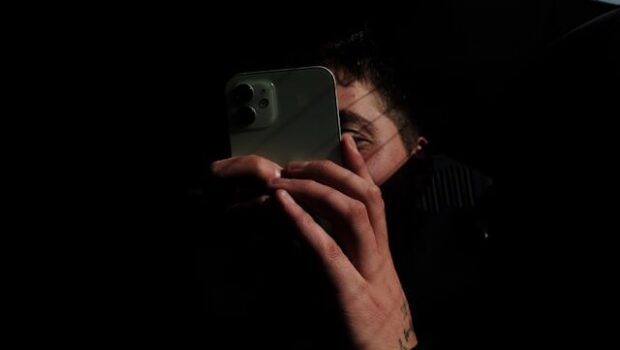
Foto de Nerses Khachatryan en Unsplash

Adriana Díaz-Enciso es poeta, narradora y traductora. Ha publicado las novelas La sed, Puente del cielo, Odio y Ciudad doliente de Dios, inspirada en los Poemas proféticos de William Blake; los libros de relatos Cuentos de fantasmas y otras mentiras y Con tu corazón y otros cuentos, y seis libros de poesía. Su más reciente publicación, Flint (una elegía y diario de sueños, escrita en inglés) puede encontrarse aquí.
©Literal Publishing. Queda prohibida la reproducción total o parcial de esta publicación. Toda forma de utilización no autorizada será perseguida con lo establecido en la ley federal del derecho de autor.
Las opiniones expresadas por nuestros colaboradores y columnistas son responsabilidad de sus autores y no reflejan necesariamente los puntos de vista de esta revista ni de sus editores, aunque sí refrendamos y respaldamos su derecho a expresarlas en toda su pluralidad. / Our contributors and columnists are solely responsible for the opinions expressed here, which do not necessarily reflect the point of view of this magazine or its editors. However, we do reaffirm and support their right to voice said opinions with full plurality.
Apenas es posible decir lo que es un ser humano en los tiempos que corren. No que haya sido fácil nunca, pero ahora las distracciones son mayores, y nos azotan en un aguacero sin tregua. Por eso ha de ser que nos estamos dando por vencidos y que, a los ojos de los habitantes del siglo XXI, nuestra humanidad, con las facultades que le son propias, vale tan poco.
Deben ser millones las páginas de periódicos, revistas, libros (impresas y en línea) que discuten actualmente el tema de la inteligencia artificial, y no es para menos. Entre las múltiples amenazas que se yerguen entre nosotros insinuando el fin, si no de los tiempos, sí del tiempo nuestro, ésta es particularmente inquietante, pues es tan poco lo que entendemos de ella y tanto lo que se presta a la fantasía. No hay duda de que tenemos motivos para estar aturdidos, pero es penoso encontrarnos mirando a esta cobra de nuestra invención como un inerme animal hipnotizado, olvidando que somos nosotros mismos quienes hemos creado a la quimera, y nosotros quienes la hemos vuelto en nuestra contra al bautizarla con ese oxímoron: inteligencia artificial.
Se trata de tecnología. Sofisticada, sí, más allá de lo que hasta hace poco creíamos concebible, pero tecnología al fin. Máquinas, algoritmos. Una herramienta, útil para algunas cosas, inútil para otras y con muchas funciones absurdas. Un juguete.
Este último atributo es el más trivial, y el más peligroso. Más aterrador que la creación de máquinas y software diseñados por seres humanos que quién sabe qué tienen en la cabeza para sustituir el albedrío humano en todas las actividades de nuestra vida es la facilidad y absoluta inconsciencia con que vamos aceptando ser sustituidos. Cierto que algo hay de resistencia; individuos y organizaciones que están dando la batalla; protestando, por ejemplo, por los daños más visibles hasta el momento: la pérdida de trabajos, o el desmesurado consumo energético que utiliza esta tecnología, responsable de un alto costo climático en un planeta que está ya al borde del colapso, e ignorado merced a la avaricia insaciable de las compañías que la generan. Abundan también los cuestionamientos filosóficos y éticos sobre las repercusiones de nuestra docilidad, pero estas voces no son en modo alguno mayoría, y es innegable que, a niveles a veces sutiles, en todo caso pueriles, estamos cediendo poco a poco la esencia misma de la aventura humana a las acciones automatizadas de un juguete.
Durante varias conversaciones sobre este tema he escuchado la excusa “yo sólo la uso para…”, y rara vez ese “para” parece justificado. Me perturba siempre la especie de inocencia con que personas adultas y pensantes parecen ignorar genuinamente el alto costo que se exponen a pagar por ahorrarse unos minutos u horas de trabajo, por no tener que pensar en lo que quieren o deben hacer ni verse obligadas a entender que es justamente la dedicación de nuestra atención la que le da sentido a toda labor humana. No tengo nada en contra de ahorrarnos tareas mecánicas que en poco o nada nos alimentan y liberar así tiempo para actividades más fructíferas, o hacer uso de ésta o cualquier otra tecnología con fines verdaderamente benéficos y creativos, utilizando el artilugio con la cautela que requiere el uso toda herramienta (un serrucho mal usado puede mutilarnos; la IA también), pero estamos tan confundidos que ya no parecemos saber siquiera cuál es la diferencia entre una tarea mecánica y una labor fundamentalmente humana. Todas aquellas actividades que involucran la cognición, así sea aplicada a algo tan inocente como una búsqueda en Google, ponen en juego una compleja red de impulsos, percepciones, razonamiento, voluntad, deseo, propósito y discernimiento que es esencial para el funcionamiento de lo que, hasta ahora, conocemos como un ser humano consciente. Es a través de los procesos cognitivos que se desarrolla nuestro aprendizaje y cobra forma nuestra comprensión del mundo. Saltarnos cualquiera de las etapas de dichos procesos equivale a reducir nuestra capacidad pensante. Así como se atrofian los músculos de un cuerpo inerte, nuestra capacidad intelectual se atrofia cada vez que delegamos a otro nuestra diligencia y ejecución, la actividad misma de nuestro pensamiento. En este caso, para empeorar las cosas, ese “otro” es una máquina o software sin capacidad de pensamiento ni de reflexión y, por sofisticada que sea, sin rastro alguno de verdadera inteligencia.
Cada vez que decimos: “sólo utilizaré la IA para que me haga la investigación, el resumen, la tarea; para que me escriba una carta; para que me escriba el primer borrador; para que me haga la traducción inicial”, estamos, en nuestra indecible pereza, inmolando el proceso cognitivo que le da valor (además, obviamente, de los resultados que buscamos) al hecho de dedicar nuestro tiempo a una actividad, sin calcular las consecuencias de tal sacrificio para nuestra relación con el mundo y con nuestros semejantes, así como para nuestro mundo interior, y sin que nos importe gran cosa. Y, en nuestra aún más indecible estupidez, le confiamos estas tareas a una máquina, a un programa de software, una monstruosidad alimentada de todos los retazos del conocimiento humano de que tenemos noticia hasta ahora (la mayoría, por cierto, robados de muy mala manera), que regurgita y vomita sin tener la menor idea de lo que está haciendo, porque la cosa, recordemos, no es humana. Peor aún, no nada más le damos permiso a esta cosa de que nos sustituya, sino que se lo pedimos. Se lo imploramos. Nos sentimos extrañamente poderosos por poder hablarle fuerte a una máquina preguntándole o pidiéndole cualquier cosa y ver que nos responde y nos da, según esto, lo que queremos, sin advertir la paradoja de que, al hacerlo, le estamos cediendo el poder sobre nosotros—sobre nuestra voluntad; sobre nuestra inteligencia, que por poca o mucha que sea, al menos es humana, y no artificial. No parecemos darnos cuenta de que, al conferirle autoridad a la información engendrada en este caldero, y repetirla ad infinitum, seguimos alimentando al Frankenstein verborreico, incrementando su antinatural bolo alimenticio que crece en un espacio hermético y autorreferencial, sin verdadero contacto con la realidad ni con los procesos que volvieron posible dicho conocimiento, y sin hacer uso de las facultades que nos permiten aprehender —en la medida de lo posible— lo real, hundiéndonos así en un solipsismo inane, una visión cada vez más estrecha y circular del mundo que nos rodea, retroalimentándose sin fin hasta el sinsentido.
La debilidad ante el artilugio es humana, claro está; no muy distinta del poder que algunos sienten por manejar un automóvil carísimo y reluciente que corre muy rápido, nada más que en este ejemplo, al menos somos nosotros los que vamos al volante. Con la inteligencia artificial, nuestra indolencia ha llegado a tal grado que decimos: “¡Neeeel! Maneja tú.”
Es como para llorar: nuestra pasividad; nuestra dejadez. No muy distinta, tampoco, de la de quien elige pasarse los días enteros de su vida viendo la televisión (insisto, esto de nuestra afición por los juguetes no es nada nuevo) porque en algún momento decidió claudicar, abandonar todo dominio sobre su propia vida, sin darse cuenta siquiera de que estaba tomando semejante decisión. ¿Y para qué? No, entre las grandes mayorías que conforman la maltrecha comunidad humana, por el bien de la ciencia, la medicina, el arte, la educación, el avance social, sino para que un aparato nos haga la tarea, invente algunos chistes, le mande un mensaje de texto a nuestra pareja, nos asombre en nuestro tedio, nos dé la ilusión de convertirnos en lo que no somos; para falsear la realidad, desfigurarla; para sustituirla por otra en que la copia, la confusión deliberada, la simulación, el juego de espejos deformantes es el único punto de partida para intentar encontrar el lugar del ser humano en el mundo.
Nuestra capitulación ante la mal llamada inteligencia artificial es el síntoma de una enfermedad. No hay motivo para mostrarnos ahora tan sorprendidos: claudicamos desde, por lo menos, la llegada del smartphone, al que le entregamos nuestra memoria, nuestra imaginación, nuestro espacio mental, las horas de nuestros días; en suma, nuestra vida, y si la mayoría no entiende cómo es que existimos algunos que todavía nos negamos a semejante esclavitud es porque la enfermedad se ha normalizado tanto que ya no la vemos. Basta, sin embargo, retirarnos unos pasos, observarnos desde cierta distancia con un mínimo de objetividad para darnos cuenta de que estamos convirtiendo la extensión entera del planeta en un manicomio; que estamos todos implicados en el avance de nuestro mal, y que ser rehenes de nuestra voluntaria locura nos hace infelices.
No repito aquí los horrores, de los que ya nos hemos enterado todos, del uso de la IA como sustitución de relaciones humanas de toda índole, tristísimo simulacro con consecuencias a menudo trágicas, patéticas todas, y constatación de la soledad abismal que asfixia a tantos en un siglo empecinado en abolir su humanidad. Este es el mundo que les hemos entregado a los más jóvenes, muchos de los cuales no han tenido acceso a otra visión del mismo, y que, por lo tanto, son quienes están pagando el precio más alto. Si no les abrimos la puerta a un universo más verdaderamente amplio y genuino, si no los protegemos ni los defendemos, es porque nosotros mismos estamos hipnotizados por la bestia artificial, boquiabiertos ante el espectáculo de circo que transcurre incesante en nuestras pantallas.
(Justo en los días en que escribía este artículo, recibí un correo electrónico pidiendo mi autorización de incluir un ensayo de mi autoría en una biblioteca virtual. La redacción del correo era sumamente accidentada, y estaba claro que la persona que me envió el correo había utilizado IA. Estuve a punto de negar mi autorización; en todo caso, le dije que en el futuro me escriba ella misma, pues yo todavía prefiero comunicarme con humanos. El insulto es para quienes reciben estos textos creados por autómatas, pero no es menos la falta de respeto propio de quien los manda crear. Aún si los resultados se van refinando con el tiempo, ¿de verdad no nos damos cuenta de cuán miserable resulta “comunicarnos” de esta forma?)
Está claro que la IA es cada vez más sofisticada, con resultados asombrosos, a veces graciosos, a menudo espeluznantes. Pero, insisto, lo verdaderamente digno de alarma es observarnos a nosotros mismos fascinados por la falsificación y el engaño; porque, por ejemplo, un texto o una imagen creados con esta tecnología “parecen hechos por humanos”; porque a veces no sepamos distinguirlos. Como si eso fuera una cosa buena. Aterrador es nuestro deleite en ser sustituidos, en haber inventado unos trastos que pueden hacer por nosotros lo que solamente a nosotros nos incumbe. Desde mi perspectiva, nuestra rendición ante la inteligencia artificial es en el fondo un profundo deseo de muerte. Es la renuncia a vivir nuestra propia vida y hacer lo que ese vivir nos exige; a descubrir en el camino lo que le da valor a esta impredecible aventura, incluyendo sus fuentes de goce y de conocimiento, y el reconocimiento y uso de nuestras propias facultades. Pese a vivir en tiempos tan “interesantes”, estamos aburridos. Dejemos, pues, el mando en manos de la máquina, y que el mundo arda.
Foto de Nerses Khachatryan en Unsplash
Adriana Díaz-Enciso es poeta, narradora y traductora. Ha publicado las novelas La sed, Puente del cielo, Odio y Ciudad doliente de Dios, inspirada en los Poemas proféticos de William Blake; los libros de relatos Cuentos de fantasmas y otras mentiras y Con tu corazón y otros cuentos, y seis libros de poesía. Su más reciente publicación, Flint (una elegía y diario de sueños, escrita en inglés) puede encontrarse aquí.
©Literal Publishing. Queda prohibida la reproducción total o parcial de esta publicación. Toda forma de utilización no autorizada será perseguida con lo establecido en la ley federal del derecho de autor.
Las opiniones expresadas por nuestros colaboradores y columnistas son responsabilidad de sus autores y no reflejan necesariamente los puntos de vista de esta revista ni de sus editores, aunque sí refrendamos y respaldamos su derecho a expresarlas en toda su pluralidad. / Our contributors and columnists are solely responsible for the opinions expressed here, which do not necessarily reflect the point of view of this magazine or its editors. However, we do reaffirm and support their right to voice said opinions with full plurality.