
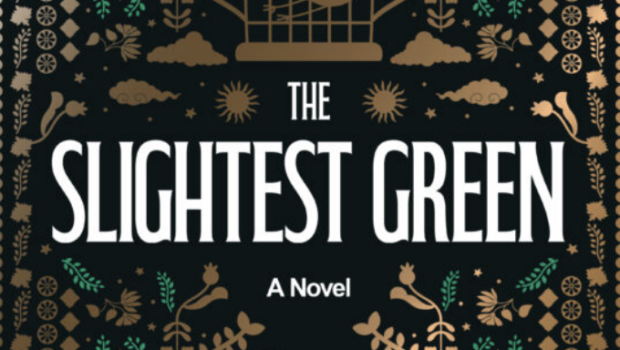
The Slightest Green A Novel
Sahar Mustafah
|
Getting your Trinity Audio player ready...
|

“We inherit memory, the way we inherit the color of our eyes and skin.”
—Ibtisam Azem,
The Book of Disappearance“We believed that freedom was possible, despite all its demands, and that our sacrifices might not be enough. We didn’t stop believing for a single day. We would have died, had we stopped believing.”
—Nasser Abu Srour, The Tale of a Wall.
Bayt al-Hawa: September 2007
CHAPTER 1
Sundus checks for spiders. Under a fig tree, she crouches on her haunches, inspecting crates of golden and red grapes. She lifts each newly shorn cluster, delicately probing sprigs of succulent orbs.
Outside her orchard, a black Mercedes pulls up, its tires crunching gravel. Sundus turns her head and her jaw instantly tightens. Soon the man approaches, this snake in a blue suit, white shirt unbuttoned, slithering onto her land. His head is swaddled in a keffiyeh, held in place by an elegant headband. Abdul Waheed pretends to be one of them, fingering his prayer beads, thumb sliding over each one between his fingers. “May the Lord smite him,” she mutters under her breath.
“Salaam, ya Hajja!” he calls out, waving at her.
Abdul Waheed descends the stone steps and heads toward Sundus. She pretends to ignore him, though her heart beats faster. She’s preparing for the trickle of villagers clutching their coins in exchange for a kilo or two of her grapes.
It was a decent harvest, alhamdullilah, enough to cover the labor of the migrants from the south who help her each season.
She hoists herself up and removes an old-fashioned scale from a burlap sack and sets it on a small wooden plank. Its base is solid iron, its trays hang from brass chains and are wide enough for two bunches at a time. Her late husband Jalal had acquired the scale and its black, one-kilo measuring discs from a retired vendor at the souk, a seller of oranges. Now you are a legitimate business,her husband’s smile had congratulated her.
Atop a weathered rug, she settles down on a low wooden stool. Uninvited, Abdul Waheed does the same, pulling another stool close to her. He leans forward on his elbows, as if he’s about to explain something important to her. His strong cologne bris-tles her nostrils. Sundus has never trusted a man who pampers himself. Around his neck is a gold necklace—another shameless indulgence. Abdul Waheed’s smooth, pale face glistens in the bright morning light. It’s one that has been sheltered from the sun. He extracts a linen handkerchief from his jacket pocket and dabs his neck.
“How is Hafez?” he asks, feigning concern, as if he hasn’t stolen the deed to her land, hasn’t forged her husband’s signa-ture. His lower teeth are crowded, like a cluster of grave markers.
Her hands curl into fists at the sound of her son’s name on the tongue of this crook. His headdress—meticulously arranged—is a tactic to ingratiate himself as he swindles villagers. He pretends to be a legitimate soomsar—a broker who’s already sold over twenty dunum of land in Bayt al-Hawa, convincing their owners to sell for less before mustawtaneenswoop down and steal it. Look how close the settlers are getting to you, he wheedles them, pointing to the western hill.
It started as a military post—or so the sign declared in Hebrew and Arabic, warning the inhabitants of Bayt al-Hawa to stay away. Ten years ago, the hill opposite Sundus’s house had a scattering of stone-brick houses with orange-tiled roofs like hers, where laundry flapped in the air during the warm months. Gradually, the houses disappeared, the original owners gone. The military post has swollen into a compound of settlers. A barbed-wire border separates them, but not stern enough to ward off children who play nearby until a man in civilian clothes, a machine gun strapped to his back, shouts at them in Hebrew to get away or he’ll shoot. He spits at them and curses their mothers for the day they were born.
ISBN: 9781623715830
Imprint: Interlink Books
Buy the book here
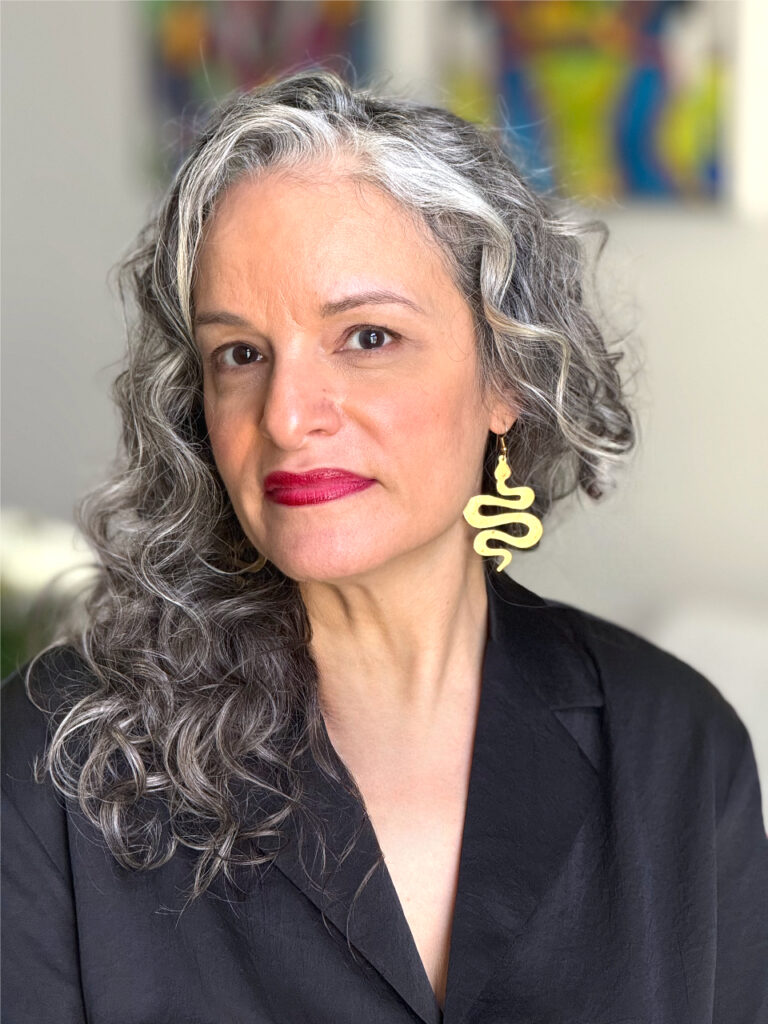 Sahar Mustafah is the daughter of Palestinian immigrants, an inheritance she explores in her fiction. Her debut novel The Beauty of Your Face was named a 2020 Notable Book and Editor’s Choice by New York Times Book Review and one of Marie Claire Magazine’s 2020 Best Fiction by Women. It was long-listed for the Center for Fiction 2020 First Novel Prize, and was a finalist for the Palestine Book Awards. Her short story “Star of Bethlehem” was awarded the Lawrence Prize for Best Fiction in 2022, and “Tree of Life” won the 2023 Robert J. DeMott Prize. Her recent fiction is featured in Stories from the Center of the World: New Middle East Fiction and ‘The View from Gaza’ published in The Massachusetts Review. She was awarded a 2023 Jack Hazard Fellowship from New Literary Project and an Illinois Arts Council Grant. Mustafah writes and teaches outside of Chicago.
©Literal Publishing. Queda prohibida la reproducción total o parcial de esta publicación. Toda forma de utilización no autorizada será perseguida con lo establecido en la ley federal del derecho de autor.
Las opiniones expresadas por nuestros colaboradores y columnistas son responsabilidad de sus autores y no reflejan necesariamente los puntos de vista de esta revista ni de sus editores, aunque sí refrendamos y respaldamos su derecho a expresarlas en toda su pluralidad. / Our contributors and columnists are solely responsible for the opinions expressed here, which do not necessarily reflect the point of view of this magazine or its editors. However, we do reaffirm and support their right to voice said opinions with full plurality.
Posted: November 18, 2025 at 7:55 pm