
A Conversation with Michael Tully
Michael Tully

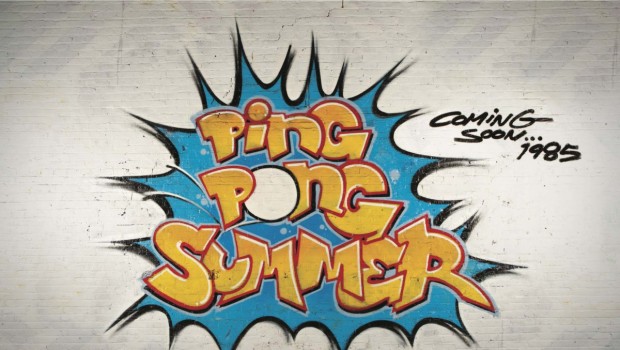
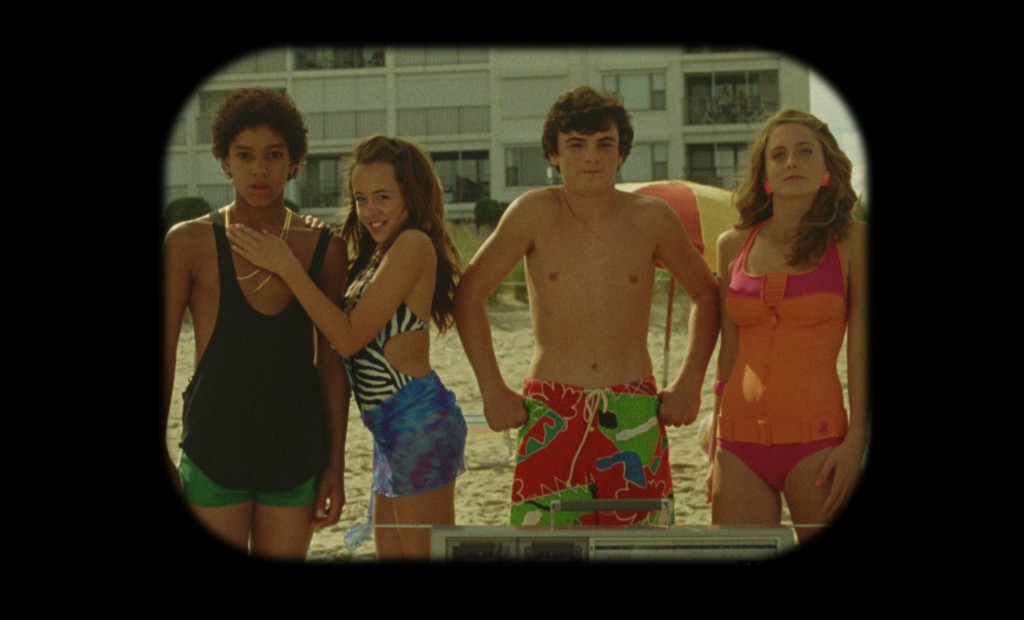
Michael Tully, writer, film enthusiast and filmmaker, recently premiered his 3rd feature, Ping Pong Summer at Sundance this year, a blast from the past for the 80’s nostalgic crowd and a rather good historical reference for those of us that weren’t around at that time. Thirteen-year-old Rad Miracle (Marcello Conte) still possesses the purity of heart of a teenage boy as he spends his summer in Ocean City, MD in 1985. Those were the good ol’ days, when Ping-Pong and Icees were the building blocks for a friendship that would last for a lifetime. However, there are a few lucky people left on this planet that still embrace that light-hearted spirit that never fades, and such is the case with Tully. Here’s a glimpse of Micheal Tully’s brain:
So, I know you had a blog at Indiewire, “Boredome at its Boredest,” and are now the editor of Hammer to Nail, when did you decide to become a filmmaker?
It’s funny, it’s weird how everything worked out. I went to film school to be a filmmaker; I studied Film Production and made shorts. It wasn’t like I was at the NYU critical school; this was in the 90’s when it was harder to make movies. The digital revolution hadn’t happened. I graduated in 1997 and moved to New York in 1998 and then lived there for 14 years off and on. But even in the late 90’s when I got to New York and saw all the film people and producers; it felt like they were from another world. It felt like movies were made by those people, not by people like me. I was just insecure in my 20’s, unlike my friend David Gordon Green. I worked on George Washington (2000), his first movie. We met in the fall of 1998 in New York; we had mutual friends and had buddied up. He told me, “I’m making a movie next summer called George Washington!” and I was like, “I’m making a movie next summer called Ping Pong Summer!” We exchanged drafts of scripts. The next summer I was in North Carolina working on George Washington and now here we are in 2014 with Ping Pong Summer. I didn’t have that self-determination and belief that David has to say, “I’m doing this, I don’t care,” I’d just listen to all the insecure voices.
When I moved to New York I was just writing scripts, that was my thing. I was writing about movies and then working a day job at a company called Muze Incorporated. It was the best of both worlds because it was a cubicle job, it had health insurance, but I was writing about movies, books and music. Around 2003 the whole blog thing happened. I had friends at Indiewire.com and they were starting a blog network where they just took in 10 or 15 people, friends of theirs whom they thought were interesting. I started a blog called “Boredom at its Boredest.” At the time it was just me writing about whatever. I said, “I’m going to treat this as if I’m a newspaper columnist. Each day I can write whatever I want.” I was writing about movies at that point and about being a film lover. But then I started writing about college basketball too much and they weren’t publishing my stuff. They said, “You need to be writing about movies!” But around 2005, I bought a Panasonic DVX camera. It was the first digital camera I felt comfortable shooting a feature on, which turned out to be Cocaine Angel (2006). I made that in Florida with my friend Damien Lahey, who wrote it and starred in it. My blog turned into the online journal of a filmmaker. It was weird, the overlap, how accidental and organically it all happened.
After I had made a few movies, Hammer to Nail came to me in 2008. Producers Ted Hope and Corbin Day founded this site where they wanted to be championing and writing more about under the radar movies as opposed to super-heroes and spectacles. They liked my blog; they liked my attitude. It was positive and focused on things that I liked as opposed to just tearing things apart and being very bitter. Indiewire ended up being an accidental calling card. I wasn’t really writing it for that reason.
I guess on record I was really writing about other movies before I had officially made one, but years before that I was dreaming about making movies and writing scripts.
 Do you believe that your blog, “Boredom at its Boredest,” gave your filmmaker status some sort of validation as it became the journal of a filmmaker? Sometimes writing things down is therapeutic in the sense that it can act as a mirror.
I don’t know if it helped in the sense of me actually gaining courage to make a movie, because I also never read the analytics. I remember one filmmaker (who is a friend now), David Redman, who came up to me at the Boston Independent Film Festival when I was there for Cocaine Angel, and he said, “ I read your blog! I know all about you!” At first I thought it was weird, but then I realized I had been writing about myself for two years! I was never even conscious of that. I’m proud of all the movies I’ve made, but maybe there is something to be said about programmers that acknowledge a filmmaker’s voice in the community.
For me personally, the consonance just came when I turned 30. At that point I was tempting at law firms in Manhattan, I thought, “What am I doing with my life?” I had this epiphany where my motto was “nobody cares.” I didn’t mean it in a depressing way, but nobody cares what you are doing in life. It’s all about the expression. I hit a wall and turned around. Since I committed to that, things have been going well.
You know I think there’s a point for all independent artists, not just filmmakers, where they really have to make a conscious decision of whether they want to take the artistic path or not. More specifically for filmmakers, it takes so much money to make a film that the risks are rather high, and that’s something you need to be very aware of before you jump into the industry.
I think you are right. Not to compare, but a musician, for example, can go into a room and feel and create a sound. You can make music on your own. Whereas film, micro-budgeted and stripped down, the pieces that are involved force it to be a bigger, more draining and scarier endeavor.
Would you ever want to work with bigger studios? Is that something that you are aiming for or would you rather keep it as independent as possible?
It’s funny; I’ve been thinking about this a lot. I just signed with an agency for the first time. I have a mortgage. I am the parent of a puppy and a husband of a wife. I would love to not have to tempt at a law firm to pay the bills. If there is a way to do that, I feel more comfortable with my voice and the filmmaking process so as to not see it as selling out. I might be midway on the other side of the scale. For me, it’s all about the challenge and feeling like it’s something I haven’t done before. Inherently, the idea of doing a bigger movie, a Hollywood movie, sounds interesting because it would be cool to see if I can get myself in there and make something that doesn’t feel cookie cutter. Automatically, that’s a bold and creative challenge for me. Of course the salary would be higher than making lower budget movies, but it’s about doing things that you feel. It’s not just about the big paycheck. As long as I can have a sense of creative, personal attachment, whether it’s this movie that we’re hopefully shooting in Ireland this fall with a $2 million range (which is still big for me, even though comparatively it’s small), or if I pitch myself for a studio movie and say, “it seems like a bad idea on paper, and that’s why I want to try and make it succeed.” That’s more of a challenge.
Money aside, do you think there is something romantic in remaining unseen? Ideologically speaking, having someone come in and find you, discover you, as opposed to marketing yourself out to the world, can you relate to any of that?
I don’t know. I take my work seriously but I don’t take myself seriously in that way. I don’t think that I’m better than anyone else. I think I have a unique perspective for better or for worse, so that idea of being seen or unseen is not a driving force for me. Septien (2011) is the perfect example. I knew it was made for the 3 weirdoes out of the 100 in the audience. It was almost a conscious effort to make a cult film that was going to confuse most of the people who watched it, and I was paying for that with my credit card. It was a deliberate act, not to say we didn’t want any people to like it, but that wasn’t the agenda. Whereas Ping Pong Summer is a much more acceptable movie, it’s a family friendly movie, but there were never conscious decisions along the way. I wanted to tell this movie from the perspective of a 13-year-old in 1985 when there wasn’t irony. He really is an innocent character. It’s based on me a little bit at that age. Nothing was calculated from the outside in, it’s always from the inside out. That’s where I think every project becomes different. I think that’s the only threat or danger, if you start thinking about the kind of movie you are making instead of just trusting your skills and your talents and the people you are collaborating with. You have to say, “We believe in this story and we commit to it. We can’t control all that other stuff.”
Now that we’re bringing all your films into the picture, I wanted to ask you if you feel as if there is a common thread amongst them all. Even though they have nothing to do with each other on the outside.
That’s a good question. My friend, Todd Rohal, called Ping Pong Summer the gateway drug to Septien. He said, “It’s still a weird movie!” Again, if you’re not being bullied by your producers, if you’re allowed to be who you are, I think directing is really a personality workshop test. I don’t know if there is a concrete example between my films, like a shot list, maybe you could say that there are eggs in both movies. One thing that may be interesting in both of my films is the commitment to shoot them in Super 16. That ties them together in a way. Then, with both the cinematographers, Jeremy Saulnier and Wyatt Garfield, it was important to me to pick more than one aesthetic. We just looked for what the scene called for and what felt right; there was no overriding ethos. And in that regard, maybe there is that sense of lankiness. Maybe another filmmaker wouldn’t do that, or say you shouldn’t do that, but for me it’s important to trust that it is all going in one direction and that it will be cohesive in the end. That’s what’s fun about it, not putting parameters on yourself and trusting your instincts and your collaborators in that moment.
Absolutely, that is what art is all about, allowing the expression to flow.
But it is such a hyper-intellectual, technical process because you are always collaborating with others. You are constantly speaking to people, so it’s all about communication. You do want to justify every decision. In these past two movies, Cocaine Angel and Silver Jew (2007), I tried to get to a place where, even if it was technically wrong, it felt right. I tried to make it feel like it was coming from the stomach as much as possible, because it really isn’t. The whole time you’re talking about it and over-thinking it.
It’s definitely a challenge to bring one idea onto the table, communicate it to the rest of the group and try and make it sound as coherent as possible. Is there anyone from your past films that will work on the movie you are making now?
When it comes to the collaborators, Jeremy Saulnier (who shot Septien) is now a hotshot director after making his film Blue Ruin (2013). He’s the king of the world right now, so he won’t be working with me this time. There’s a core crew, mostly with production designer Bart Mangrum, composer Michael Montes, editor Marc Vives and colorist Alex Bickel. We’ve been doing the past two together as far as the technical stuff. But with this new Irish movie, it’s going to be tough. My father is from Ireland so I have an Irish passport. I can work over there as an Irish director. I think with this particular project, to hopefully get the tax breaks from the film board, the crew will necessarily have to be Irish or E.U. based. We’re still determining what we are going to do in that regard, but I’d love to work with the same team. I feel like every project that we do together, there’s a short hand and we get to know each other better. The goal would be to keep making movies with the same people along the way because I think it’s a big benefit for everyone. However for the Irish movie, the stakes are totally different over there. I might not be able to be a punk-rock man and say, “We’re bringing the team over there, damn it!” I just don’t know if that’s going to be an option.
Well, thank you for speaking with us, Micheal.
No, thank you, I really appreciate it.
Ping Pong Summer will be released theatrically and on vod on June 6, 2014. Find Ping Pong Summer on Twitter and Facebook.
Posted: March 25, 2014 at 4:51 pm