
‘We’re Long Past Post-Tragic’: A Conversation with Novelist Tim MacGabhann
Adam Critchley
|
Getting your Trinity Audio player ready...
|

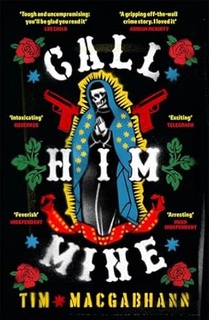
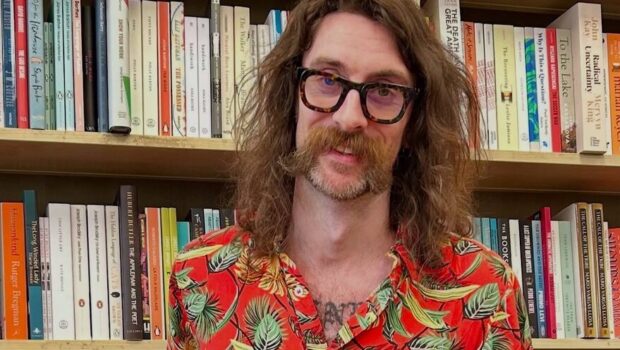
Irish novelist Tim MacGabhann, author of ‘Call Him Mine’ (Weidenfeld & Nicolson, 2019) and ‘How to Be Nowhere’ (2020), spent almost a decade working as a journalist in Mexico prior to writing his two novels, parts of which are set in Mexico and were inspired by true crime, some of many in Mexico that have made headlines around the world in recent years. His arrival in Mexico also coincided with his own desire and need to get sober, having become an alcoholic during his student days, an experience harrowingly and bravely depicted in ‘The Black Pool’ (Hachette UK, 2025), and which is subtitled ‘A Memoir of Forgetting.’ Having met him in person some years ago in Tepoztlán, Mexico, where he was participating in the annual ‘Under the Volcano’ literary workshop organized by US translator Magda Bodin and named in honor of the novel by another alcoholic foreign writer in Mexico, Malcolm Lowry, I sat down with MacGabhann over a Zoom call in July, me in Lowry’s former haunt of Cuernavaca and MacGabhann in Paris, his current abode, dressed in a Liverpool FC shirt in homage to the late striker Diogo Jota, and sporting his trademark handlebar moustache.
You write with a terrific sense of place, vividly – and viscerally – capturing Mexico and other Latin American countries, and creating a world that is immediately recognizable and relatable, but which could act as a rude introduction for the reader who is unfamiliar with this region. When you arrived on these shores, did you have a sense that you were coming here to write, that it would feed or boost your writing?
I was just trying to go somewhere where I wouldn’t be miserable. I think it’s impossible to work if you’re miserable, so arriving in Mexico was like a relief. And having to use Spanish meant that the English I used and grew up with retreated, it became more of a private or personal language and lived off the most intense sensory input. It created a lovely sense of improving on the present. And that shifted the texture of the words. There are specific aspects of Mexico – there’s a lot of flesh and blood and bone on show all the time, or even flesh without skin – and so I ended up thinking in these ‘skinless’ sentences, as if the casings have been taken off the words. I love walking around the center of Mexico City, but I also noticed that there is a particular eye-aching fatigue that you get from such sensory input.
You capture that intensity of daily life in central Mexico City, the sounds and the smells, and you depict a sensory overload, and which some people may find too much, but which is perhaps difficult to describe without it sounding exaggerated.
Nobody [in Mexico] is just kind of ordinary, everyone’s got some story, or some weird shit has happened to them or their friend. It’s similar to what happens in Ireland when everyone’s had a few pints, and there is an exuberance that creeps in, and I feel like in Mexico it’s easy to get to that exuberance by just having conversations with people. And I have a really bad habit now of just talking to fucking anybody, and it works most of the time, but I also sometimes think, ‘that’s a Mexico thing’, you just end up gossiping with whoever, and talking bollocks. And I notice that trait has lingered. And I think it makes you friendlier, and that’s a great tribute to the place. It’s not so much me taking something out, but rather me saying ‘you [Mexican] guys are brilliant, I want to tell you how brilliant I think you are’.
When I first came to Mexico the country that it most reminded me of was Ireland, where everyone seems to have been born with a guitar in their hand, but where there is also that easy-going way of talking to people, and you as an Irishman probably relate to that, how the communication can be so fluid here.
I’m from Kilkenny, which is very nice place, but it’s a small town and there is the sense that it’s very gossipy. And with Mexico City, the place is massive but the people are so fucking sound, it was like the best of both worlds, like Ireland in Spanish. In Ireland, we don’t yet have a sense of ourselves as post-colonial, and in Mexico I felt like it was an enlarged mirror of the colonial dynamic in Ireland. There’s another way to frame Irishness in history. It’s definitely more complete in Mexico, and I found that really educational. There’s a lot of common ground, which is really nice, and not to take the edge off the unfamiliar, but a way of feeling a deeper love for the place that has adopted you, a mutual recognition, and which is one of the best ways to integrate.
You were working as a journalist in Mexico, and one gets the sense that, for the kind of colorful stories you wanted to write, you came to the right place.
When you arrive in a new place you want to contribute, and I thought, ‘I’m not much good at a lot of things, but I could write a few articles and maybe try and help out a bit’. Nobody comes to the dinner party and says they have the best thing to offer, everyone has a thing to offer and that was what it was about. And with the novels, the first one was based on an investigation that myself and a fellow journalist were doing, a story for Reuters about oil-related skullduggery, and everything in the novel is just all the stuff that we found out about, and I only made the ending a little bit more dramatic, but it’s not a massive exaggeration of what happened, it’s just more novelized. I spoke to people whose job it was to dispose of bodies, but then we were called away to cover Trump’s election campaign and so I turned it into a novel. So the reality can feed your fiction in very direct ways.
It also comes across as very autobiographical, the main character is a young journalist cutting his teeth, while also experiencing a certain bewilderment, rather than, for example, portraying a more jaded, veteran journalist further into their career.
I wonder if there will still be journalism by the time I am old enough to write a jaded figure, with the way it’s going. Journalism will even be slightly more collapsed by the end of this conversation. It’s like Flannery O’Connor said, “the reason fiction is different from any other art form with language is the primacy of the sensory,” it’s about the body in language, and that’s lucky, because when you feel like your attention is starting to flag, when you are your own reader, you look at what’s happening physically, so that the reader is going to go the rest of the way with you.
Your writing is quite hyperbolic, there are moments when it’s almost too much, with a tendency toward exaggeration in some of the description. “Bags under my eyes thick enough to sponge up floodwaters” (‘How To Be Nowhere’).
I think it’s almost always too much. I was very young when I wrote those novels, I have a friend who read it and he said it’s like the anime genre, and that’s a compliment for me.
They’re very visual, very visceral novels.
It’s important to write using all five senses.
Were there readers who said they were put off visiting Mexico after reading the books, or who were inspired to come here as a result of reading them?
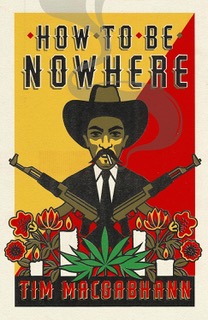 My editor had never been and he told me it made him want to go there, and my buddies in Mexico who read them said ‘you didn’t fuck it up’. And that was a huge relief. I was never going to reduce the place to its most picturesque elements. I’m from Ireland and I know what that’s like, they do it to us all the time, Ireland’s having a sexy moment, and I’m like, ‘yeah, about four people are sexy in Ireland’. I find it appalling having it done to me, so I find it equally appalling to do it to anybody else. I feel like the books are more of their time now than they were when they came out. The horror that we are living through now. They’re not for everyone, but that is what happens to us, we’re pretty fragile. We’re crushable.
I’m reminded of Harold Pinter describing the work of Samuel Beckett, when he said ‘the more he rubs my nose in the shit, the more grateful I am’. You’re writing about horrific events, you’re writing fiction, thrillers, but there is also a sense that you are bleeding across into the genre of horror.
Yes, because I think horror is the basis for everything, because horror is a recognition of our fragility. Structurally, comedy and horror have the exact same shape. Thy both have a perpetual denial of comfort, peace, satisfaction. The character doesn’t even get a glass of water in either, and in comedy that’s funny and in horror you’re like ‘oh my god’. I think we’re long past post-tragic now. I think since the coincidence of modern journalism and genocide, and you can go back to Armenia, to the end of World War II and the liberation of the camps. Tragedy has no meaning now, after all of that. So you are left with two modes, if you’re going to respond to history at all, and one is comedy and the other is horror.
But there’s also a distinction between gratuitous violence and a story that needs to be told.
I think people react to violence and call it gratuitous when there is a sense of exaltation and a justification behind it, whereas horror is not an emotion, it provokes a nervous, physical reaction. Disgust, horror, anger, they’re not really emotions.
There has been much portrayal of the violence in Mexico by local authors, such as Jorge Volpi, Martín Solares, Élmer Mendoza, Emiliano Monge and Fernanda Melchor, but there has also been a certain backlash among some writers and critics against the portrayal of violence in fiction, denouncing it as ‘narco-fiction’ or ‘narco-porn’ and ‘easy to write,’ based on newspaper reports, with Mexican critic Christopher Domínguez Michael commenting that “one has to be a very good writer to be able to turn that journalistic reality into good literature”. Six years on from ‘Call Him Mine,’ would you change anything or write it differently if you were writing that book now?
I wouldn’t change a thing, I feel very happy about the way I wrote those books and the way I portrayed the female characters. That was what I was most worried about. I was really keen to not have a Laura Palmer figure from David Lynch. I have a real problem with that, the dead woman and then the story. I love Dahlia de la Cerda, I think she doesn’t hold back, and Balam Rodrigo, writing about all the things that can be done to a human body. I totally get people not wanting the goodies versus baddies thing. I would far rather be misread by these beautiful soul types who want the purity of a particular aestheticism, and who say ‘we mustn’t look at this stuff because it’s so awful’, than to agree with them and to say ‘we mustn’t look at anything bad that’s happening because it’s insensitive’. But you do have to respect the sanctity of the victim and I was really trying to do that with ‘Call Him Mine’. But that realism, that extreme violence, does happen, it’s not going anywhere.
Another argument is that this stuff should be reserved for narrative journalism, for the non-fiction genre.
The chronicle is a literary form, and the novels are essentially a chronicle, the machinery of fiction with the truth of journalism. Mexican novelist Fernanda Melchor really got me excited about writing. Especially her early stuff, that was the first stuff that I encountered and I was quite primed for it. I just love her and De la Cerda’s freewheeling contempt for what’s happening, and it’s so important that it’s from a feminist angle, rather than the ‘bad boy’ angle. I mean, men behaving badly, even the president does that. It gives me more energy than coffee does to read those feminist writers.
And women also have more justification to write about violence, because it’s something that affects women much more…
Women have a sense of the micro-aggression, and men, we just don’t have a sense of that. The subtle gradations starting from domestic aggression and how that can escalate. In Morelos some women councilors showed me a ‘violentómetro’ that gauges how all aggression is violent. I’m not saying literature’s function is to illustrate political phenomena, but the side effect is that someone might learn something, to know what it’s like to be somebody else.
You mention De la Cerda and Melchor. Before you came to Mexico were you inspired by writers from here, or by foreign writers who were here, such as William S. Burroughs, Malcolm Lowry, B. Traven, D.H. Lawrence?
I was more interested in visual art, and my favorite paintings, which I saw when I was very small, were by Diego Rivera. I think it was the visual side of things that was my primer. I read Lowry when I started realizing I had a drink problem, and I was already in Mexico by then. And I realized it was not really a novel about Mexico but a novel about alcohol. I don’t think I’ve read a more upsetting account of a hangover in my life. I only read it because I heard it was about alcohol. I’m very embarrassed to say that until I arrived there I hadn’t read a lot of Mexican authors, but I had read a lot of history and about artists. And about the surrealists. I was aware of Trotsky hiding out in Mexico. I used to say I would wait until I could read it all in Spanish. But I was drawn immediately to writers like Melchor, women writers, and my first encounter with psychoanalysis was through feminist critics. I was so impatient to get reading I accelerated the process. Rosario Castellanos, that kind of super quiet presentation with super loud implications.
Your new book, ‘The Black Pool’, is not for everyone, it’s very scatological, but it’s brave. You’re vomiting up stuff that some people wouldn’t like to see, although I think there’s also a morbid curiosity among some readers. Was writing the memoir a catharsis?
I think I just came to my senses. ‘Let’s go to some exotic land’, and where I realized there was another way to live. I got very lucky. I was also ready. I was three weeks away from turning 26 and I didn’t think I was going to make it to 26. I don’t know what to attribute it to, I was living like shit and I saw people who were living clean lives, and it made me think ‘I need to just shut up and go home’. I haven’t touched a drop since my first Alcoholics Anonymous (AA) meeting. I think the will to stick around was stronger.
But Mexico is probably not the best country to try to stop being an alcoholic in…
I think it’s probably worse in Ireland. Anywhere is a terrible place to be an alcoholic, but Ireland’s probably the worst. One sober year in Ireland is like seven years elsewhere. It’s like dog-sober years. I think alcoholism is more on the surface in Ireland and in Mexico, but the most alcoholic place I’ve been is the U.S. I think they’re better at lying to themselves.
Your experience of coming to Mexico to sober up reminds me of when David Bowie left Los Angeles in the early 70s in a bid to end his cocaine addiction, and moved to Berlin, only to find he’d moved to the heroin capital of Europe…
It’s true. I’m very glad I did, though. I wish I’d been conscious enough to have made that joke, that I’d moved to Mexico to sober up, but I just wasn’t conscious in any sense at all.
With ‘The Black Pool’ you said in one interview that you had thought about suggesting to your parents that they perhaps ‘sit this one out’. It’s a very personal memoir, and writing it must have been quite an undertaking. Was there any hesitation on your part in publishing it?
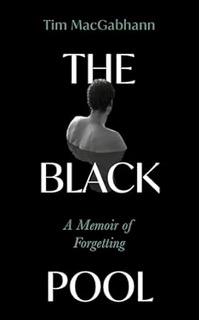 I think catharsis is a funny one, it’s the release of terror and pity. I was trying to problematize the plot structure with the novels, and with the memoir I had tried writing it as a story, but it wasn’t any good, and my editor told me to take the fiction out of it. It was in the third-person and it was ‘moany’. When I’m in my hubristic moments, when I’ve had my second coffee and I’m strutting around my apartment in my shorts I think that this is the most important Irish book in the first-person since Beckett’s ‘The Unnamable’. Which is not true, but I say it when I’m high on coffee. It’s about exhausting a voice, taking that 25,000 hours’ worth of voice in the skull and letting it out. So it’s not catharsis. I just wanted to exhaust my own interest in my own suffering. I’ll probably never write in the first-person ever again. I think it’s maybe a decision that’s made for you. Every journalist hears first-person stories, so the first-person in your story is not necessarily your own. I love short stories where it’s someone telling another character a story. I’ve told the truth enough to spend the rest of my life lying.
After writing something like that, are you now returning to fiction?
Since then I’ve written three novels, one is historical and set in Argentina and one in Dublin, and a book’s worth of short stories, and which are all third-person. And I’ve had some fun with it.
As opposed to the experience of writing ‘The Black Pool’?
Writing that was crap, I hated every second of it. I didn’t hate working with my editor, he was a legend, as always, but everything else was crap. I talk about this stuff in AA and Narcotics Anonymous (NA) meetings all the time, it’s like me doing my routine. But it’s one thing to talk about the most fucked-up stuff that has ever happened to you in a room full of people and which will make them laugh, and it’s another to be typing it at six o’clock in the morning in 2021 when you’re waiting for the vaccines to come out. I feel like however much attention it gets is not enough. I used to think that I had an aversion to publicity because I wanted to be a kind of mysterious Kurt Cobain figure, but it’s genuine. One of my sponsors on my MA program said to me, ‘you have to find joy in the process’.
I think you also achieve a humor that was perhaps not obvious when you were writing it.
Honestly, I’m really glad you said that because I was trying to make it funny. This totally hostile bollocks ranting at you, and the thing that AA and NA teach you is that no matter how fucked-up your story is, someone in the room will find it funny. If I hear someone laugh in the background I think ‘it can’t be that bad then’. There are particular mechanisms for humor, like if you repeat something enough it becomes funny, and if you roll on and on in a rhythm, that also becomes funny, and if you patiently narrate a process there will be an agony of boredom that somehow morphs into humor.
I can also imagine that the intention behind the writing was to offer insight and share that experience, which is very valuable.
There are different kinds of laughter, the laugh of hilarity, of recognition, of disbelief. And the laughter of insight, that laughter of ‘yes, of course’.
It also strikes me as particularly Irish, and takes me back to Beckett, portraying that absurdity of existence. But I also felt that, after a few pages, I needed a break from the text, and it’s rare that a text makes you want to take a break from it.
The literary talent I most admire is relentlessness.
It also reminded me of Burroughs’ ‘Junky’, that blatantly and explicitly honest portrayal of addiction, fused with the scientific and medical background of what is happening to the author’s body. How has the reaction been to the book when you’ve presented it? I’m thinking of those reports of people fainting at Chuck Palahniuk readings…
I hear the audience laughing a lot, and in places that I don’t expect. I tend to just read the opening. And people buy it afterwards, which is good. You give them a trailer and they take it home. I can’t read reviews. If they’re good I feel like I’m on coke, and if they’re bad I feel like I took coke last night. If the good ones are true then the bad ones also have to be true. I love giving readings, but the best bit is hanging out with people, it’s just an excuse for a bit of a party. And I’m still in bed by eleven.
The blurbs on your books and some reviews tend to be hyperbolic, and which create huge expectations. US-Guatemalan author Francisco Goldman described ‘Call Him Mine’ as “terrifying, riveting, emotionally wrenching … the most beautiful writing about Mexico in an English-language novel since Lowry’s ‘Under the Volcano’,” while a reviewer at the Irish Examiner described ‘How To Be Nowhere’ as having “the grace of Greene, the imagination of Bolaño and the darkness of Ellroy’.
There is a secret thing about blurbs. Sometimes they are in-jokes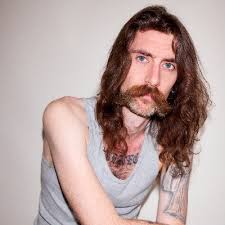
But they do raise expectations for a potential reader, sometimes excessively so. What do you think of the statement by Simon & Schuster publisher Sean Manning earlier this year that the imprint will no longer require its authors to procure blurbs? “I believe the insistence on blurbs has become incredibly damaging to what should be our industry’s ultimate goal: producing books of the highest possible quality,” he wrote in an essay for Publishers Weekly.
I think it’s cool, I think that anything that tones down the marketing is great. And it depends how you measure your success. My definition of success is to be able to get up and write 200 words and not be a steaming arsehole to my little ones. I’m only good at one thing and it’s important not to be overhyped.
You studied an MA in creative writing at the University of East Anglia. What did that teach you?
The thing I learned is that you make your own work better by reading other people’s. I can only see my problems when someone else sees them, and which goes for everything in life.
 Adam Critchley es un periodista y traductor británico radicado en México. Sus artículos han aparecido en Brando , Forbes , GQ , Gatopardo , Latin American Literature Today y Publishers Weekly , entre otras revistas, y ha traducido más de 20 libros, entre ellos una serie de títulos infantiles trilingües, publicados en inglés, español y lenguas indígenas mexicanas.
©Editorial Literal. Queda prohibida la reproducción total o parcial de esta publicación. Toda forma de utilización no autorizada será perseguida con lo establecido en la ley federal del derecho de autor.
Las opiniones expresadas por nuestros colaboradores y columnistas son responsabilidad de sus autores y no reflejan necesariamente los puntos de vista de esta revista ni de sus editores, aunque sí refrendamos y respaldamos su derecho a expresarlas en toda su pluralidad. / Nuestros colaboradores y columnistas son los únicos responsables de las opiniones aquí expresadas, las cuales no necesariamente reflejan el punto de vista de esta revista o sus editores. Sin embargo, sí reafirmamos y apoyamos su derecho a expresar dichas opiniones con plena pluralidad.
Posted: September 2, 2025 at 3:48 pm