
A Sun Behind Us/Un sol caído avanza
María Auxiliadora Álvarez

(Poems from the book A Sun Behind Us/Un sol caído avanza, by María Auxiliadora Álvarez. Translated by Linde M. Brocato and María Auxiliadora Álvarez. New York: Akashic Books, 2025).
1
(dense branch: don’t touch the wounded animal)
dense branch: don’t touch the wounded animal, provide him isolation, provide him refuge, provide him a long night, over his closed eyes
(tupida rama: no toques al animal herido)
tupida rama: no toques al animal herido, provéele de aislamiento, provéele de refugio, provéele de larga noche, sobre los ojos cerrados
2
(closed eyes produce silence)
closed eyes produce silence, in the depths of silence there is a compressed bone, head bowed, cold tepid on contact. The chisel of silence hammers in circles: the ear of stone has the shape of a snail’s shell
(los ojos cerrados producen silencio)
los ojos cerrados producen silencio. en lo profundo del silencio hay un hueso comprimido, la cabeza inclinada, el frío tibio al contacto. El cincel del silencio golpea en círculos: la oreja de piedra tiene forma de caracol
3
(your ears don’t hear)
your ears don’t hear only what they want to hear. Your ears are yours, but you can’t close them. YOUR EARS AREN’T YOURS. Your ears hear what they don’t want to hear, like a pulse, a pulse, a pulse
(tus oídos no escuchan)
tus oídos no escuchan solamente lo que quieren escuchar. Tus oídos son tuyos, pero no los puedes cerrar. TUS OÍDOS NO SON TUYOS. Tus oídos escuchan lo que no quieren escuchar, como una pulsación, una pulsación, una pulsación
5
(I carry with me my wounded eye’s blood)
I carry with me my wounded eye’s blood. I carry its blood in my hand, dry and living. I am the helper of an incompetent pupil: now subjugated (dry), now subjugating (living)
(llevo conmigo la sangre del ojo herido)
llevo conmigo la sangre del ojo herido. Llevo su sangre en la mano, seca y viva. Soy el lazarillo
de una pupila incompetente: ora subyugada (seca), ora subyugante (viva)
8
(if the cold freezes you)
if the cold freezes you, don’t cozy up to the side of the coals transformed into ash. get close to a heat that still keeps a trace of some circulatory system. because the ash is gasping for air, drowned in its own dust, and the dryness that it passes on, will suffocate you
(si te entumece el frío)
si te entumece el frío, no te acerques a la parte de la brasa convertida en ceniza. Allégate a un calor que aún conserve el rastro de algún sistema circulatorio, porque la ceniza boquea, ahogada en su propio polvo, y la sequedad que comparte: te asfixiará
23
(I write for the dead)
I write for the dead from a ship stranded in the desert (I will not speak these words, nor save them in writing). It’s night. And the cold sand encircles the ran aground keel. I write for this, and other mausoleums, because what is held back, has already arrived at its end
(escribo para los muertos)
escribo para los muertos desde un barco varado en el desierto (no pronunciaré estas palabras. ni las guardaré por escrito). Es de noche. Y la arena fría rodea la quilla encallada. Yo escribo para este, y otros mausoleos, porque lo que está detenido ya ha alcanzado su destino
26
(poem with two inseparable versions)
(first version, 2021)
the night is coming, and all that I have left, is the flame of this candle (my father dead, my children gone, my grandchildren far away, my siblings absent, my friends weren’t friends), the flame of this candle, the flame of this candle
(second version, 2024)
the night is coming, but I hold in my hand this burning candle: my father within, my children living, my grandchildren growing, my siblings attentive, my friends all present. in this burning candle, THIS BURNING CANDLE
(poema con dos versiones inseparables)
(primera versión, 2021)
la noche se avecina, y sólo me queda la llama de esta vela (el padre muerto, los hijos idos, los nietos lejos, los hermanos ausentes, los amigos no eran amigos), la llama de esta vela, la llama
de esta vela
(segunda versión, 2024)
la noche se avecina, pero tengo en la mano esta vela encendida: el padre adentro, los hijos vivos, los nietos creciendo, los hermanos pendientes, los amigos presentes, en esta vela encendida, ESTA VELA ENCENDIDA
30
(thought wants to be alone)
thought wants to be alone, its animals play, as if beauty chose its moments. The vapor of the crater rises in columns (…), the boiling lava knows not its own splendor. What is watched doesn’t expect to be watched, it understands pauses, anger, death, and says: “everything’s fine” (gesturing)
(el pensamiento quiere estar solo)
el pensamiento quiere estar solo, sus animales juegan, como si la belleza escogiera sus instantes. La humareda del cráter se eleva en columnas (…), el hervor de la lava desconoce su propio resplandor. Lo mirado no espera ser mirado, entiende la pausa, la cólera, la muerte, y dice: “no pasa nada” (gesticulando)
32
(summer is getting left behind)
summer is getting left behind. Its yellow lights are going under in another horizon. Forward and upward, winter shows the edge of its imposing curtain of ice. On the shoulder of the highway, one glimpses a bundle (half closed, as of bones (and hairs of some animal: the still image also contains me, and the last light of the old sun over the ice extracts from our fur the best flashes
(el verano va quedando atrás)
el verano va quedando atrás. Sus luces amarillas se van hundiendo en otro horizonte. Adelante y arriba, el invierno va mostrando el borde de su imponente cortina de hielo. En el hombrillo de la carretera se vislumbra un bulto (a medio cerrar, como de huesos (y pelos de algún animal: la imagen que se repite me contiene, y la última luz del viejo sol sobre el hielo extrae de nuestra pelambre los mejores destellos
33
(out of breath we moved ahead)
out of breath we moved ahead, waiting for the star to look down, and in SINGLE RAY OF LIGHT measure all our effort. But its lidless eye, stayed stretched across, and unpressured. Unsheltered, we moved ahead (the sun beating down on our eyes), and in a crook of the road, OUR GUIDE tried to take his own life: managing it —halfway— and losing his eyes & his feet, he took shelter in another night quiet and permanent. Defeated, we moved ahead, from the grave —halfway— of the meaning of life. The sun beating down on our (useless) eyes & the night awaiting us on our (unmoving) feet
(avanzábamos sin aliento)
avanzábamos sin aliento, esperando que la estrella bajara la mirada, y de UN SÓLO FULGOR
midiera todo nuestro esfuerzo, pero su pupila sin párpado permanecía horizontal y sin apremios.
Avanzábamos sin resguardo (el sol hiriéndonos en los ojos) y en un recodo del camino, EL GUÍA intentó quitarse la vida: alcanzándolo -a medias- perdió los ojos & los pies y se acogió a otra noche quieta y permanente. Avanzábamos vencidos, desde la tumba -a medias- del sentido. El sol hiriéndonos en los (inútiles) ojos & la noche esperándonos en los (inmóviles) pies
39
(don’t say that this tree)
don’t say that this tree, reaching out above the door of my house, looks like death. Don’t say it. Don’t say that you see my silhouette beneath or behind, walled in by it, don’t say it. Because those summer days were happy, and memory likes to breathe. Don’t say that you don’t remember the image of the standing stone, shining beneath the sun, when the brilliance still wasn’t trying to empty out its thickness. Don’t say that you see the trunk of the tree at the door of my house, trying to get in, forcing a horizontal position that takes in my silhouette, as if I didn’t have a resting place, as if I had never had one
(que no digas que ese árbol)
que no digas que ese árbol, extendiéndose sobre la puerta de mi casa, se parece a la muerte. Que no lo digas. Que no digas que ves mi silueta debajo o detrás, tapiada por él, que no lo digas. Porque los días del verano fueron felices, y a la memoria le gusta respirar. Que no digas que no recuerdas la imagen de la piedra de pie, brillando bajo el sol, cuando la esplendidez todavía no intentaba vaciar su espesura. Que no digas que ves el tronco del árbol en la puerta de mi casa tratando de entrar, forzando una horizontalidad que incorpore mi silueta, como si yo no tuviera lecho, como si nunca lo hubiera tenido
Reprinted by permission from Akashic Books, copyright María Auxiliadora Álvarez.
Comprar el libr0/Buy the book HERE
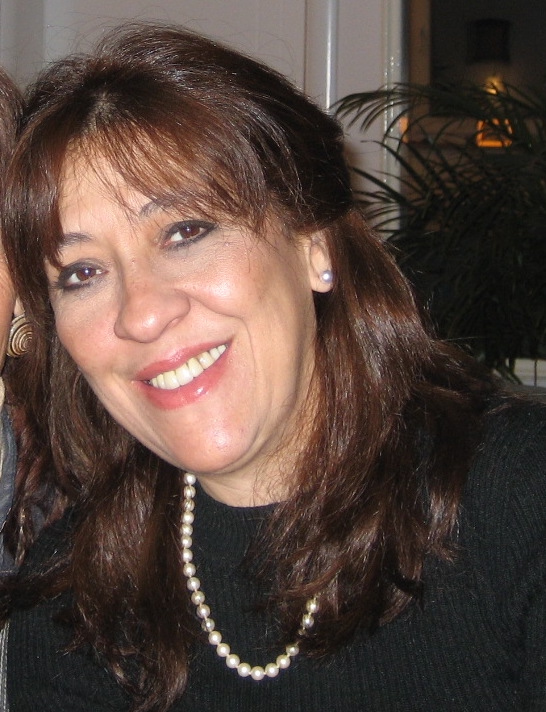 María Auxiliadora Álvarez was born in Caracas, Venezuela in 1956 and has been a professor emerita at Miami University, Ohio, since 2023. Growing up in different countries due to her father’s diplomatic career, she settled in the United States in 1996, where she received a master’s degree and doctorate in Spanish literature from the University of Illinois at Urbana-Champaign. Her research areas include mystical/contemporary poetry; pre-Columbian/ colonial cultures; and women, cultural, and interdisciplinary studies. She has published several critical articles in literary journals, two essay collections, and fourteen volumes of poetry.
María Auxiliadora Álvarez nació en Caracas, Venezuela, en 1956, y es profesora emérita de la Universidad de Miami, Ohio, desde 2023. Creció en diferentes países debido a la carrera diplomática de su padre, y en 1996 se estableció en los Estados Unidos, donde obtuvo una maestría y un doctorado en literatura iberoamericana por la Universidad de Illinois en Urbana-Champaign. Sus áreas de investigación incluyen la poesía mística/contemporánea; las culturas precolombinas y coloniales; los estudios culturales e interdisciplinarios, y los estudios sobre la mujer. Ha publicado diferentes artículos críticos en revistas literarias, dos colecciones de ensayos y catorce volúmenes de poesía.
Posted: February 23, 2026 at 9:00 pm