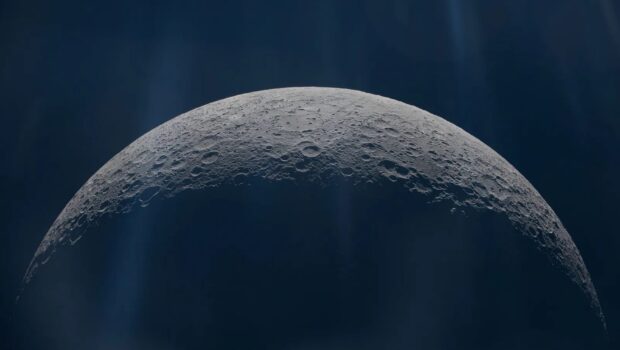
And as she grows, her beams more bright and bright
Are poured from Heaven, where she is hovering then,
A wonder and a sign to mortal men.
Hymn to the Moon
Homer, in P.B. Shelley’s translation
The full moon early in April this year was a handsome presence in the sky. Along with springtime’s merely natural renewed promises, to look up and find it there, enormous and luminous, marking the change of season in human memory—as it has done since prehistoric times—offered, by virtue solely of its mystery and beauty, respite among the growing insanity and brutality that burden the Earth in our times.
A respite, that is, if perchance we managed to forget for a moment the individuals loitering around it just then, onboard of their toilet-challenged spaceship, keenly devoted to the NASA’s Artemiss II mission, and the no less insane and barbarous intentions of those who launched it into space. Reading the papers’ reports of the space journey those days was exceedingly depressing. No notion was left in them of our satellite as a wonder, or a sign of anything to men (and women) who increasingly believe themselves to be immortal.
I don’t remember much from the Apollo 11’s moon landing in 1969; I was very small, but I do keep a memory of the overall sensation of excitement and wonder in the adults around me, which was passed on to us children. Everybody was like children then, and it is hard to blame the human race for the natural awe in the face of such a technological feat or the equally natural illusion of being witnessing the realisation of a dream shared by the whole of humanity—going to the moon, touching it, knowing what or who it was, feeling it closer. There was still some romance left back then between the moon and us, and we were enthralled with the naivety of children being told a fairy tale, voluntarily ignoring that the plans behind that feat were never romantic in any way, and that what we human call, brimming with arrogance, “the conquest of space” has always been a matter of power, of political bragging and military and commercial projects that do not reflect in any way the common dreams of humanity, if such exist.
It might have been expected that, over half a century later, we would have lost our innocence and learnt to call these missions by their true name, but last April, the press and all the media kept on talking, without a trace of irony, about something that supposedly gladdened us all, something supposedly positive that should give us hope, though we didn’t know hope of what exactly. For instance, from early in the year NASA was telling us that the Artemis program would obtain some vague financial benefits and would be the basis “for the first manned missions to Mars, for everybody’s benefit”.
Come April, no one had managed yet to tell us in which concrete way this mission and the future colonisation and exploitation of Mars are going to benefit us all. Looking for an answer, I read (with growing irritation) the platitudes blurted out by the four astronauts onboard the ship, as well as the commentaries of journalists who seemed to believe that, because one member of the crew was a woman, another one black and another one not American, we had to make a party and celebrate the NASA’s spotless political correctness and “inclusivity” as a sign of the goodness of our times. The smiling astronauts couldn’t refrain from giving utterance to their good vibes, perhaps forgetting that the government which had taken them up there was at that very moment bombing Iran and whatever crossed its path without rhyme or reason, hand in hand with the Israeli government, continuing the accelerated campaign of destruction of life and of the planet which is, up till now, our only home. Perhaps such destruction is one of the current space race’s driving forces, unconsciously or not: let us destroy whatever is left here, quick; after all we have the whole universe, as new, to conquer. I wonder if such doubts ever cross the mind of the Artemis II crew.
True: it is unlikely that they will ever send philosophers or poets to the moon, but even accepting such limitations, it was dire to read these astronauts’ dull, shallow and sentimental statements. Even more depressing was to read some people’s comments praising their words, and there were even those who said that they were—yes—poets. The collective infantilisation that the media were striving to impose was also manifest in the fuss around Rise, Artemis II’s “mascot”—a horrid plush toy which fulfilled the function of a zero-gravity indicator. It’s a smiling moon wearing an Earth cap, inspired on the famous photograph taken by the Apollo 8 mission. We are told, as if it were something prodigious, that it was designed by an eight-year-old child. I say that you can tell, and that the childish sentimentality displayed around an unsightly plush toy (or any plush toy, even if it were not ugly), when the business at hand is the brazen project of the colonisation of space, is evidence of one of the lowest points of the collective consciousness and intelligence in this ill-fated 21st Century. The said mascot carried within an SD card with the names of nearly six million people who sent it to the NASA in order to go to the moon themselves, somehow. I wonder, with genuine anthropological curiosity, what exactly was each of these persons thinking; in what scenery, what fantasy of what world could their adventure be desirable and add some points to the idea they have of themselves. They don’t seem to have stopped to think about what this project really means, never mind that its creators keep on telling us quite plainly. Nearly six million minds sunk in the empty space of unconsciousness is an alarming figure. Alarming as well were the crowds gathered in California to watch Artemis II splashdown, carried away by an entirely incomprehensible elation.
The crew members are brave, no doubt about it, and I’m glad that they came back safely, simply because it’s not right to wish ill upon anybody (not even a dog; let us remember the atrocious death of Laika onboard the Sputnik 2, in 1957), but one can be brave and still be involved in abject projects. Is it possible that nobody, among those crowds ecstatic with joy gathered to receive them, has wondered for at least a second which is the true value of this adventure, or what was exactly the triumph they celebrated? While the Earth is burning, I must insist.
During the high definition videocalls from the spaceship (our technology being so cutting-edge that it might as well have been a Zoom call with friends down here on earth), we heard astronaut Victor Glover state that the Earth, from up there (with us in it), looked “amazing” and beautiful, and that “homo sapiens is all of us, no matter where you’re from or what you look like. We’re all one people”. Indeed, only from up there could he believe that those beautiful feelings have any substance in reality on Earth nowadays, but an intelligent adult, as he must be, since his competence has taken him there, should be able to question the reasons behind the feat that launched him into space, and understand that they have nothing to do with his trite words, specially while seeing what his country’s president (who’s so anxious to launch the next mission so that the Americans stamp their boots on the moon again before his disastrous second term ends in 2029) is doing in the world these days. It is not that I don’t understand that some sublime emotions must be stirred during a journey like theirs, causing the overflow of some well-meaning passing words, but I do hope that at least during some seconds of insomnia, now back on Earth, Glover and his crew mates may realise that such words, in the context of their adventure, mean absolutely nothing, and rather reveal an alarming cognitive fracture.
Among all the verbiage surrounding the mission, we were clearly informed that it is part of a longer-term plan “to repeatedly return to the moon, with the aim of establishing a permanent base that will offer a platform for further exploration”, and we know already that the moon is considered just a stepstone to reach Mars, for which we supposedly can’t wait. Is this really what all of us humans want? A permanent space/military base on the moon? The awareness that it is there every time we look up at the sky and are struck by the moon’s beauty, its silence and its mystery, as others have been since human life and consciousness appeared on this planet? A permanent base, with its rubbish and its expansionist projects, representing the alleged supremacy of a nation (and what a nation!), in open competition with China to get hold of the satellite as soon as possible. (But Jared Isaacman, the NASA administrator, an astronaut and entrepreneur who has worked in collaboration with Elon Musk and represents the clear turn from governmental to commercial control of the space adventure, tells us that competition is good, and “a great way to mobilise the resources of a nation”.)
During the press conference after splashdown, Nasa’s associate administrator Amit Kshatriya said that this time we’ve returned to the moon “to stay. Let us finish what they started. [. . .] Let us not go to plant flags and leave, but to stay with firmness in our purpose, with gratitude for the hands who built the machines and with love for the ones that we carry with us.” Another NASA administrator, Jared Isaacman, warned us: “This is not a once in a lifetime […] . This is just the beginning. We are going to get back into doing this with frequency, sending missions to the moon until we land on it in 2028 and start building our base.”
Surely I’m not the only one who shudders before this discourse’s arrogance, nor the only one who reads behind the arrogance the tragedy—or tragedies—to come. Icarus comes to mind, though unfortunately with far less poetry. I trust I’m not the only person feeling the stab of sadness, the profound sensation of loss, this kind of existential panic before the destruction not only of our Earth now, but of our skies; the violation of the universe of which we are only part—not lords.
Someone please explain to me why the coverage of this sad event was full of allusions to “moments of unity for the whole of humanity”, echoed by the Artemis II crew, who know perfectly well which are the expansionist and commercial interests behind their mission.
Astronauta Christina Koch, after enumerating the project’s goals, and talking about the companies and industry that are to be built in space, said that at the end of the day, “we will always choose Earth”, and it is disturbing not to know who she means by that “we”. She also talked about the crew up there as a mirror in which we all were reflected, and said that the feat had been realised by all of us together. She doesn’t seem to even imagine that there may be humans on Earth who do not want to have anything to do with the colonisation and exploitation of space; those of us who do hear the dark warning implicit in this echo of similar impulses which have made of planet Earth a hell for so many throughout our history, destroying on their wake not the world that we “chose”, but the one where we were born, to which we belong, and which it is our duty to care for.
It isn’t true that Artemis II represented us all. Who asked us all, ever, if we want to colonise the moon, as if it were up for grabs? Or if we wanted to peer into its dark side, destroy the subtle balance according to which we relate to the universe from our human dimension. And who told the powerful of the Earth that by their sheer power they had a right to appropriate the moon? And then Mars, and whatever they can. To achieve what? What kind of human existence are they thinking of when they invest billions and billions of dollars, in a rampant race of commercial rivalry between the damaged egos of demented entrepreneurs?
To me, it is rather clear that Artemis II symbolises the loss of a way of living a truly human life; a life in which Homer could write his “Hymn to the Moon”, or Shelley translate it, because their vision was human. The moon is full again as I write these words; equally beautiful, mysterious and majestic, but I can’t shake off the conviction that we’re harming her, that she’s under threat. Artemis II has been a display of the power that stalks her. And what kind of power is that, and over what?
Those who live immersed in that delirium will go on bragging before the childish and sentimental gaze of the masses, launching their spaceships ever farther. Until the void swallows them whole.

Adriana Díaz-Enciso es poeta, narradora y traductora. Ha publicado las novelas La sed, Puente del cielo, Odio y Ciudad doliente de Dios, inspirada en los Poemas proféticos de William Blake; los libros de relatos Cuentos de fantasmas y otras mentiras y Con tu corazón y otros cuentos, y seis libros de poesía. Su más reciente publicación, Flint (una elegía y diario de sueños, escrita en inglés) puede encontrarse aquí.
©Literal Publishing. Queda prohibida la reproducción total o parcial de esta publicación. Toda forma de utilización no autorizada será perseguida con lo establecido en la ley federal del derecho de autor.
Las opiniones expresadas por nuestros colaboradores y columnistas son responsabilidad de sus autores y no reflejan necesariamente los puntos de vista de esta revista ni de sus editores, aunque sí refrendamos y respaldamos su derecho a expresarlas en toda su pluralidad. / Our contributors and columnists are solely responsible for the opinions expressed here, which do not necessarily reflect the point of view of this magazine or its editors. However, we do reaffirm and support their right to voice said opinions with full plurality.
And as she grows, her beams more bright and bright
Are poured from Heaven, where she is hovering then,
A wonder and a sign to mortal men.
Hymn to the Moon
Homero, traducción al inglés de P.B. Shelley
La luna llena a principios de abril fue una hermosa presencia en el cielo este año. Junto a las meramente naturales promesas renovadas de la primavera, alzar la vista al cielo y encontrarla ahí, enorme y luminosa, marcando en la memoria humana el cambio de estación (como lo ha hecho desde la prehistoria), ofrecía, por su puro misterio y su belleza, un respiro entre las crecientes insensatez y barbarie que agobian a la Tierra en nuestros tiempos.
Es decir: un respiro, si acaso lográbamos olvidar por un momento a los individuos que la merodeaban justo entonces a bordo de su nave con sanitarios defectuosos, entregados con enjundia a la misión Armetis II de la NASA, y las no menos insensatas y bárbaras intenciones de quienes la lanzaron al espacio. Leer los reportes del viaje espacial en los diarios en esos días era sobremanera deprimente. Ninguna noción quedaba en ellos de nuestro satélite como una maravilla, como una señal de nada para hombres (y mujeres) que se creen cada vez más inmortales.
Poco recuerdo del alunizaje de Apolo 11 en 1969; era muy pequeña, pero sí guardo en la memoria la sensación generalizada de entusiasmo y asombro de los adultos a mi alrededor, que nos contagiaban a los niños. Todos eran como niños entonces, y es difícil culpar a la raza humana de la natural admiración ante semejante hazaña tecnológica o la igualmente natural ilusión de estar presenciando la realización de un sueño de toda la humanidad: ir a la luna, tocarla, saber qué o quién es, sentirla más cerca. Algo quedaba todavía de romance entre la luna y nosotros, y nos embelesamos con la ingenuidad de niños a los que les cuentan un cuento de hadas, ignorando voluntariamente que los planes detrás de tal hazaña nunca fueron románticos en modo alguno, y que lo que los humanos llamamos, llenos de arrogancia, “la conquista del espacio”, siempre ha sido una cuestión de poder, de fanfarronear político y proyectos militares y comerciales que en modo alguno contemplan los sueños comunes de la humanidad, si acaso existen.
Habría cabido esperar que, más de medio siglo después, habríamos perdido la inocencia y aprendido a llamar a estas misiones por su verdadero nombre, pero el pasado abril los diarios y medios de comunicación seguían hablando, sin sombra de ironía, de algo que supuestamente nos alegraba a todos, algo supuestamente positivo que debía darnos esperanza, aunque no supiéramos exactamente esperanza de qué. Desde principios de año, por ejemplo, la NASA nos venía diciendo que el programa Artemis obtendría vagos beneficios económicos y sería el fundamento “para las primeras misiones tripuladas a Marte, para el beneficio de todos”.
Llegado abril, nadie atinaba a decirnos todavía concretamente en qué forma esta misión y la futura colonización y explotación de Marte nos van a beneficiar a todos. Buscando una respuesta leí —con creciente irritación— las perogrulladas de los cuatro astronautas a bordo de la nave, al igual que los comentarios de periodistas que parecían creer que porque un miembro de la tripulación era mujer, otro era negro y otro no era estadounidense, teníamos que hacer una fiesta para celebrar la intachable corrección política e “inclusividad” de la NASA como un signo de la bondad de nuestros tiempos. Los sonrientes astronautas no paraban de proferir sus buenas vibras, quizá olvidando que el gobierno que los había llevado allá arriba estaba en esos mismos momentos bombardeando a Irán y a todo lo que se atravesara a su paso sin ton ni son, de la mano del gobierno israelí, continuando la campaña de acelerada destrucción de vida y del planeta que es, hasta el momento, nuestra única casa. Quizá esa destrucción es uno de los motores, no sé qué tan inconscientes, de la actual carrera espacial: destruyamos lo que queda aquí, pronto, que al cabo queda el universo entero, como nuevo, por conquistar. Me pregunto si estas dudas cruzan alguna vez por la mente de los tripulantes de Artemis II.
Cierto: no es probable que se envíe nunca a filósofos o poetas a la luna, pero aún aceptando estas limitaciones, era bochornoso leer las declaraciones romas y sentimentales de estos astronautas. Más deprimente aún era leer los comentarios del público elogiando sus palabras, e incluso hubo quién llegó a decir que eran, sí, poetas. La infantilización colectiva que los medios intentaban imponer se manifestó también en el alboroto alrededor de Rise, la “mascota” de Artemis II: un peluche espantoso que cumplió las funciones de indicador de gravedad cero. Se trata de una luna sonriente con la Tierra como gorra, inspirada en la famosa foto tomada en la misión Apolo 8. Se nos dice, como si se tratara de un hecho prodigioso, que fue diseñada por un niño de ocho años. Yo digo que se nota, y que la sentimentalidad infantil desplegada alrededor de un peluche sin gracia (o de cualquier peluche, aunque no fuera tan feo), cuando de lo que estamos hablando es del descarado proyecto de colonización del espacio, evidencia uno de los puntos más bajos de la conciencia e inteligencia colectivas en este malhadado siglo XXI. La tal mascota llevaba adentro una tarjeta SD con el nombre de casi seis millones de personas que lo enviaron a la NASA para “viajar” ellas también de alguna forma a la luna. Yo me pregunto, con genuina curiosidad antropológica, en qué estaban pensando exactamente cada una de estas personas; en qué escenario, qué fantasía de qué mundo podría volverse deseable su aventura y añadirle puntos a su idea de sí mismos. No parece que se hayan detenido a pensar en lo que este proyecto realmente significa, por más que sus creadores nos lo digan sin tapujos. Casi seis millones de mentes hundidas en el espacio vacío de la inconsciencia es una cifra alarmante. Como eran alarmantes también las multitudes reunidas en California para ver el amerizaje de Artemis II, presas de un júbilo del todo incomprensible.
Sin duda los miembros de la tripulación son valientes, y qué bueno que regresaron con bien, simplemente porque no está bien desearle mal a nadie (ni a un perro; recordemos la muerte atroz de Laika en el Sputnik 2 en 1957), pero se puede ser valiente y estar de todas formas involucrado en proyectos deleznables. ¿De verdad nadie, entre esas multitudes presas de un gozo extático reunidas para recibirlos, se ha preguntado ni por un segundo cuál es el verdadero valor de esta aventura, o en qué consiste exactamente el triunfo que celebraron? Insisto: mientras la tierra arde.
En las videollamadas de alta definición desde la nave (nuestra tecnología tan avanzada que podría tratarse de una llamada de zoom con amigos acá en la tierra), escuchamos al astronauta Victor Glover declarar que la tierra, desde allá arriba, se veía “increíble” y hermosa, y que vistos desde esa perspectiva, “homo sapiens somos todos nosotros, no importa de dónde vengas, o cuál sea tu aspecto; somos un solo pueblo”. Y sí, sólo “desde allá arriba” podría creer que esos bonitos sentimientos se concretan en la realidad en la tierra hoy día, pero un adulto inteligente como debe serlo él, dado que su competencia lo ha llevado hasta ahí, debería ser capaz de cuestionarse los motivos detrás de la hazaña que lo lanzó al espacio y entender que nada tienen que ver con sus trilladas palabras, particularmente viendo lo que el presidente de su país (que tantas ansias tiene de lanzar ya la siguiente misión para que los estadounidenses vuelvan a poner su bota en la luna, antes de que termine su segundo desastroso mandato en 2029) está haciendo en el mundo en estos tiempos. No es que no entienda que algunas sublimes emociones habrán de despertar en un trayecto como el suyo, haciendo que se desborden algunas bien intencionadas palabras pasajeras, pero ojalá que al menos durante unos segundos de insomnio, ya de regreso en la tierra, Glover y sus compañeros puedan darse cuenta de que esas palabras, en el contexto de su aventura, no significan absolutamente nada, y más bien revelan una alarmante fractura cognitiva.
Entre toda esta palabrería se nos informó claramente que esta misión forma parte de un plan a más largo plazo de regresar repetidamente a la luna “para establecer en ella una base permanente que ofrecerá una plataforma para futuras exploraciones”, y ya sabemos que la luna es considerada nada más un escalón para llegar a Marte, cosa que supuestamente nos urge. ¿De verdad es eso es lo que queremos todos los humanos? ¿Una base espacial/militar permanente en la luna? ¿La conciencia de que está ahí cada vez que alcemos la vista al cielo y nos sorprenda la belleza de la luna, su silencio y su misterio, como lo ha hecho en la mirada de otros desde que la vida y conciencia humanas aparecieron en este planeta? Una base permanente, con su basura y con sus proyectos expansionistas, representando la supuesta supremacía de una nación (¡y miren qué nación!), en abierta competencia con China para apoderarse del satélite lo más pronto posible. (Pero, nos dice Jared Isaacman, director de la NASA, astronauta y empresario que ha trabajado en colaboración con Elon Musk y representa el claro viraje del control comercial de la aventura espacial por encima del gubernamental, la competencia es buena, “y una gran forma de movilizar los recursos de una nación”).
En la rueda de prensa tras el amerizaje, el administrador asociado de la NASA, Amit Kshatriya, declaró que esta vez regresamos a la luna “para quedarnos. Terminemos lo que empezamos. . . . No vayamos a sembrar banderas y marcharnos, sino a quedarnos con firmeza de propósito, con gratitud por las manos que construyeron las máquinas y amor por aquellos que llevamos con nosotros”. Otro administrador de la NASA, Jared Isaacman, nos advirtió: “Esto no es algo de una sola vez en la vida […] Es sólo el principio. Vamos a seguir haciendo esto con frecuencia, mandando misiones a la luna hasta que alunicemos en ella en 2028 y empecemos a construir nuestra base”.
Seguramente no soy la única que se estremece ante la arrogancia del discurso, ni la única que lee tras esa arrogancia la tragedia —o tragedias— por venir. Ícaro viene a la mente, aunque por desgracia con mucha menos poesía. Confío en no ser la única en sentir la puñalada de tristeza, la sensación profundísima de pérdida, esta forma de pánico existencial ante la destrucción ya no nada más de nuestra tierra, sino de nuestros cielos; la violación del universo del que somos nada más parte: no señores.
Que alguien me explique, por favor, por qué la cobertura de este triste evento estuvo llena de alusiones a “momentos de unidad de toda la humanidad”, a la que hacían eco los comentarios de los tripulantes de Artemis II, que conocen perfectamente los intereses comerciales y expansionistas detrás de su misión.
La astronauta Christina Koch, tras enumerar los objetivos del proyecto, de las compañías y la industria que habrán de construirse en el espacio, dijo que a final de cuentas siempre “elegiremos la Tierra”, y es perturbador no saber a quién se refiere con ese “nosotros”. Habló también de la tripulación allá arriba como un espejo en el que todos nos reflejábamos, y de que la hazaña la habíamos logrado “todos juntos”. No parece imaginar siquiera que hayamos humanos en la Tierra que no queramos tener nada qué ver con la colonización y explotación del espacio, y que escuchamos la oscura advertencia implícita en este reflejo de impulsos similares que han hecho del planeta Tierra un infierno para tantos a lo largo de nuestra historia, destruyendo a su paso no el mundo que “elegimos”, sino en el que nacimos, al que pertenecemos, y que es nuestra obligación cuidar.
No es verdad que Artemis II nos representó a todos. ¿Quién nos preguntó a todos nunca si queríamos colonizar la luna, como si estuviera en oferta? O si queríamos asomarnos a su lado oscuro, destruir el sutil equilibrio según el cual nos relacionamos con el universo desde nuestra humana dimensión. ¿Y quién les dijo a los poderosos de la Tierra que por su puro poder tenían derecho de apropiarse de la luna? Y luego de Marte, y de todo lo que se pueda. ¿Para lograr qué? ¿En qué clase de existencia humana están pensando cuando invierten billones y billones de dólares, en una carrera desbocada de rivalidad comercial entre los egos maltrechos de empresarios desquiciados?
Para mí está claro que Artemis II simboliza la pérdida de una forma de vivir una vida verdaderamente humana; una vida en la que Homero pudo escribir su “Himno a la luna”, o Shelley traducirlo, porque humana era su mirada. Es luna llena de nuevo mientras escribo estas palabras; igualmente hermosa, misteriosa y soberana, pero no puedo alejar de mí la convicción de que la estamos hiriendo, de que está bajo amenaza. Artemis II ha sido un alarde del poder que la acecha. ¿Y qué clase de poder es ése, y sobre qué?
Quienes viven inmersos en este delirio seguirán ufanándose, ante la mirada infantil y sentimental de las masas, lanzando sus naves cada vez más lejos. Hasta que se los trague el vacío.
Adriana Díaz-Enciso es poeta, narradora y traductora. Ha publicado las novelas La sed, Puente del cielo, Odio y Ciudad doliente de Dios, inspirada en los Poemas proféticos de William Blake; los libros de relatos Cuentos de fantasmas y otras mentiras y Con tu corazón y otros cuentos, y seis libros de poesía. Su más reciente publicación, Flint (una elegía y diario de sueños, escrita en inglés) puede encontrarse aquí.
©Literal Publishing. Queda prohibida la reproducción total o parcial de esta publicación. Toda forma de utilización no autorizada será perseguida con lo establecido en la ley federal del derecho de autor.
Las opiniones expresadas por nuestros colaboradores y columnistas son responsabilidad de sus autores y no reflejan necesariamente los puntos de vista de esta revista ni de sus editores, aunque sí refrendamos y respaldamos su derecho a expresarlas en toda su pluralidad. / Our contributors and columnists are solely responsible for the opinions expressed here, which do not necessarily reflect the point of view of this magazine or its editors. However, we do reaffirm and support their right to voice said opinions with full plurality.