

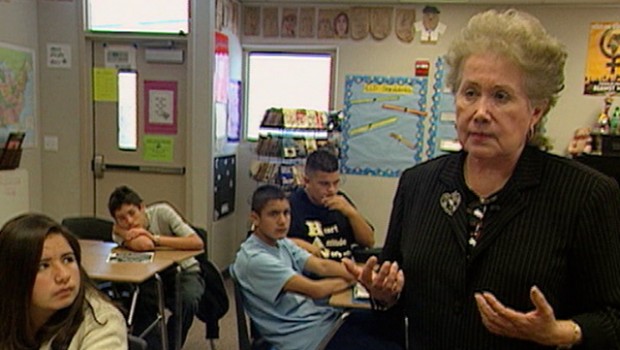
Storytelling with Intellectual Honesty: A Conversation with Graciela Limón
Gabriela Baeza Ventura

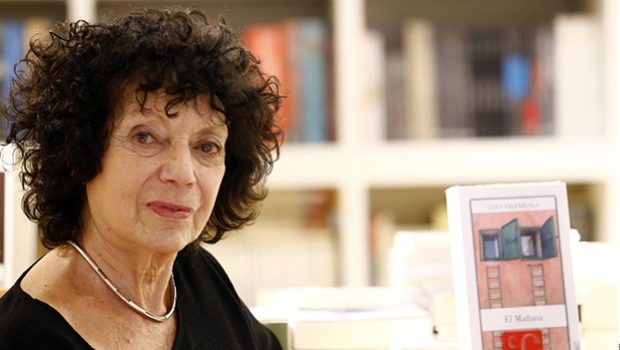
Acclaimed Chicana author, Graciela Limón is a native of Los Angeles. She is Professor Emeritus at Loyola Marymount University, where she taught Latino literature and served as Chair of the Department of Chicano Studies. Limón fulfilled her lifelong dream of becoming a published author in 1994 when Arte Público Press published her novel, In Search of Bernabé, a third-place winner of the University of California at Irvine’s Chicano/Latino Literary competition. The New York Times Book Review stated that Berbabé “leaves the reader with that special hunger that can be created only by a newly discovered writer. Ms. Limón’s prose is assured and engrossing.” Bernabé was named Notable Book of the Year for 1993 and, in 1994, it garnered the American Book Award. The novel was translated into Spanish in 1997 as En busca de Bernabé.
Limón’s first novel established her as a Chicana writer, and she has published an additional five books, two of which have been translated to Spanish: Day of the Moon (1999), Erased Faces (2001), the 2002 winner of the Gustavus Myers Outstanding Book Award, The Memories of Ana Calderón, (1994, 2001), Song of the Hummingbird, (1996), Left Alive (2005), El Día de la Luna (2004) and La canción del colibrí (2006), all published by Arte Público Press.
Limón asserts that there are two “growing” successes in her life: “I am a visiting professor as opposed to the fulltime professor that I used to be. Now I can do just simple, pure teaching, and I think I’m getting better each time. I consider this a true success because I love to teach. Teaching is a magical experience. The other thing is building on the success that came to me a few years ago: writing and getting my work published. I feel that my writing is reaching people— sometimes people say to me, ‘I read your book’ or ‘I saw your book in the bookstore,’ that is validation. These are the two areas that I consider growing successes. I think I’m on track.”
She is certainly on track, she recently published her sixth novel, Left Alive and the Spanish translation of her acclaimed Song of the Hummingbird will be released in 2006. What follows is an interview in which Limón details her writing process and responds to questions about the crafting of her characters.
* * *
Gabriela Baeza Ventura: When was it that you realized that you were a writer?
Graciela Limón: When I was really young, 18 or 19, I dreamed of being a novelist. My very first novel was The Song of Bernadette by Franz Werfel, I was about eleven and I was so impressed. But then I went on to college and I felt so at home with the academic world. I became a professor at Loyola Marymount and the dream of being a novelist went out the window, I forgot about it. I concentrated on being an academic. It wasn’t until I reached the top of my professorial level—I was a ten-year professor and simultaneously chair of the department— that I got very involved with the Salvadoran community in Los Angeles as a volunteer, dealing con todos los refugiados, listening to the stories, and crying with them. Then in 1990, I went as a delegate to the city of San Salvador. This is when it clicked on me that I should do something with all of this. Write about it. But what? An essay? An article? What about a novel? That is when I started writing Bernabé. It was called “A Voice in Ramah.” When it was ready, I started pedaling it myself because I didn’t have a literary agent. I got rejected all over the place. I got discouraged. I thought that I was wasting my time and I thought I should go back to being a professor. The UC Irvine literary contest that year was open to novels so I sent it as a final test. Being turned down, would be the sign that I didn’t have any business aspiring to be a writer of fiction. The first prize was to publish the winning novel, the 2nd and 3rd were money. I was aiming at the first prize, but I got third. I was very depressed because I had to be true to my word and give up. When the contest organizer called to invite me to the reception, I said no. She asked me to give myself one more chance and attend the ceremony where each winner would read, “You never know who may be in the audience so make this your last try.” So I’m glad I did this reading because María Herrera Sobek was in the audience, and this changed everything for me. She told me to submit my manuscript to Arte Público, she wrote Nick Kanellos’ name on a piece of paper and the rest is history. But I almost lost my writing career, I almost gave it up, threw it away. The validation of that dream came when Arte Público Press agreed to publish the novel.
G. B. V.: Do you continue to publish with Arte Público Press because they published your first novel?
G. L.: No, well, in part. There is a real intellectual reason for me and that is Arte Público Press’ mission. I think it’s very important what Arte Público Press has done and is doing and will be doing in creating venues for Latina/o writers in the United States, opening a forum where our issues can be written, spoken, read. This is a really important mission. I see what is being published and I want to be part of it. I really think Arte Público Press is making history.
G. B. V.: Do you feel the need to write? To tell the stories?
G. L.: I am, I get very happy. I go into a phase of satisfaction or joy or happiness when I’m writing. It’s painful, but I like the serenity that I get when I write. I can’t be doing it always, that’s why there are gaps. When I finish with the first draft, there is a time I don’t do any writing at all. But once I get into that phase, it’s a very rich, a very fulfilling phase of my life. So I look forward to it when it comes upon me again. I am very grateful. I write because it is an experience of joy and fulfillment.
G. B. V.: In terms of when you start writing, what happens in your home, your body, etc? What is the process? Do you drink coffee? How long does it take you to prepare to write?
G. L.: I go through what I have explained, I am captivated by an idea, and then I go through the research. I start reading. I’m a big researcher of two mediums that are really close to my heart: One is the newspaper, I feel that journalism has a rich vein of information that I’m not sure people know right off. Journalism is supposed to be very objective, very close to the truth but the truth is that it is very subjective, and I like that very much. The other source is movies, films. I was brought up on movies. I’m a movie freak. I think that the graphic, visual presentation of life that we get through film has affected my writing a great deal. I think it’s extraordinary how you can sit and see things recreated in 3-dimensions, changes in time and space, going backwards and forwards. It is something that other media doesn’t have. I turn back on that a lot in my writing. So in this process, I go through the material, digest it, reflect on it, and then I am ready to sit down to write. I’m an early bird all the time. The actual writing, sitting at the computer writing, is always real early in the morning, starting at 6 or 7 a.m. and I write for five hours. Towards the afternoon I’m not good. I’m not one of these writers that will write all night, I’d fall asleep. I’m not a romantic type of writer like Ernest Hemingway and that gang who could go to the sidewalk café with a little glass of wine and write with people that they know around them. I have to be alone. Total solitary. That’s my particular way, my process.
G. B. V.: Do you write directly onto your computer?
G. L.: I write directly onto my computer. I don’t do anything longhand. Even the first step. I write a loosely organized outline, where I think it’s going to go. And then, with time, I start filtering, tightening, and getting a closer, growing feeling for the novel. But despite the outline, my experience is that once I really get writing, my writing goes in a different direction than what I thought. When that happens I don’t stop it. I con- sider that inspiration and I follow it. In my opinion, some of the stuff that I’ve written very heavily under this inspiration has been my best. Not necessarily what other people like or the most praised, but, in my esteem, what I like the most.
G. B. V.: Some writers want to produce one novel after the other, but you’re quite careful about what you produce.
G. L.: You’re right. There is added dimension because I write only when I am captivated, you know. When you have ganas, si no tienes ganas de algo you can’t force that. It so happens that I have gaps in my writing some times longer than others. Because I have to be emotionally moved before I start the process of writing.
G. B. V.: Whenever your readers read your work, what do you hope they get from it? At which point in your writing process do you think of them?
G. L.: I think about my readers from the very beginning. It happens simultaneously with my desire to write about that particular project. It goes hand in hand. My highest goal is to have intellectual honesty, to write as honestly as I can, to steer away from gimmicks, from what is trendy or fashionable, to be as true to myself as I am, to be honest, to say what I believe, not what is accepted. Therefore, I have fallen into severe criticism. As I’m writing, I’m very concerned that what I’m saying will somehow enhance my reader, make them a better person, to contribute to their enhancement, their growth, so that when they finish reading they may say, “I didn’t know this,” or “I like this”, or “I really hate this.” To get some sort of transformation in the reader, some sort of evolution.
G.B.V.: You have received severe criticism for creating “stereotypical” characters.
G.L.: Yes, I got into a heated discussion with a man over the Internet. He said he felt sorry for the guys I created. This took me by surprise because he said that I created stereotypical men. He really helped much more than he understands. It allowed me to reflect on each of the male characters in all my novels. And I remember clearly that as I was crafting each one of those male characters, I was trying with all my heart to infuse them with humanity. A careful reader will find humanity in each one. So if I were to go back and recraft those characters, there is very little I would change.
I truly try to work against stereotypes. But it is something that populates everyone’s mentality, how do you differentiate stereotypical from typical? For instance, what if you have a macho character, a patriarch, who is the big, possessive boss who gets drunk, beats up on women, etc.? And what if you have an uncle who is exactly like that? Which is the stereotype? To me, this is the challenge. The stereotype is a character empty of humanity, it is not real. Now, if I read a novel where the females are submissive, pushed around, shadowy, and marginal, I’m not going to say that they are stereotypes because those women exist in my life, in my family. I’m not going to say they are stereotypes; I’m going to say I hate that presence, not them, but that presentation. There is a big difference between the stereotype and the person that really exists whom we wish did not.
The editor of Bernabé and I got into it a lot about Luz Delcano, the protagonist, in the part where she migrates from El Salvador to Los Angeles. She is all luchona, making tortas, making a living. She comes to Los Angeles and starts cleaning houses, making food for La Placita, etc. and the editor took issue saying that I was perpetuating a stereotype. My response was: “Would you like me to make her a neurosurgeon? How do you think women like her make a living in Los Angeles? Are all the people that we see walking around the streets of Los Angeles stereotypes?” That infuriates me. In other words, let us deny what is there. When they say: “This is a stereotype,” they might as well be saying: “No, this type does not exist.” Okay, well, who’s cleaning your house, baby?
I get testy and defensive on this issue because I want to be challenged as to pinpoint which of my characters is a stereotype. I want people to name those characters because if I’m perpetuating a reality and you don’t like that reality, that’s another issue. But don’t call them a stereotype.
G. B. V.: It seemed that for a time the themes for Chicanos had to be about braceros, migrants, people mistreated in school. Readers are finally realizing that these are not the only issues that affect Latinos.
G. L.: This is another thing about being honest with one’s writing. You know that the big umbrella term is Latino/Latina. Twenty years ago, we defined ourselves categorically with the word Chicana. This has been amplified and that’s okay as long as they’re talking about the same experiences, but that is not the case. We are all migrants, there’s not one of us that did not come from an immigrant family. There are different stages; however, some are still coming in from El Salvador and Mexico, some like my family on both sides came in the early part of last century. Some come directly as rural people and others as city people, one is not better than the other.
My familia were always de pueblo, de ciudad, poor, dirt poor, why else would they leave their country? My grandparents couldn’t make it in their country, they had eight, twelve kids. So this is why they came up, plus the Mexican Revolution kicked them out. So my experience is of an urban situation in East Los Angeles. That’s where I grew up. I remember that kids on the block in the summertime would go off a la pizca. My father was a truck driver with the Herald Examiner newspaper, my mother worked en la lavandería; there was no such thing as going to la pizca. My two brothers and I wanted to go: “Mamá, ¿por qué no vamos a la pizca? Everybody’s going to la pizca.” She said, “Tan locos, ustedes no saben lo que es ir a la pizca. Denle gracias a Dios que no tienen que ir a la pizca.” We lived on the same block as everybody and there was no distinction. So, what am I going to write about if it isn’t an urban setting? Does it make me less of a Chicana than the one that writes about the campesinos? No, I’m just as much a Chicana. I get testy on this one as well because I am somehow also challenged because I write about other topics. I write of my world.
G. B. V.: How do you feel about being a Chicana writing in 2006?
G. L.: It’s very exciting. It’s a marvelous thing to be writing about the issues, concerns, conditions, and experiences of a group that is so vibrant—Chicanas and Chicanos. This is reconfirmed to me when I go into the classroom to see mostly Latinos and Latinas. And to have someone like Alicia Gaspar de Alba, who was generous enough to come and talk to the class, to see her stand up there as such a model and then turn to me for verification on what she was saying about character creation. That is so vibrant and so exciting. And I think we are just beginning. The generations of writers after my time are going to continue on the track that is why I feel Arte Público Press is so important.
G. B. V.: Do you feel that as a female writer you have to respond to a position of social conscience more than male writers?
G. L.: I’ve never felt compelled to write about this or that, or to take a position whether it’s political or ideological. However, I know that because of who I am, what I am, this will come out. I am a woman, so therefore my writing will be about strong women. Because I am the person I am, the women will be very much along my lines and think the way I think, so to speak. It’s hard for me to write about marginal women. I don’t even know what that feels like. Therefore, I will be criticized that my male characters suffer. But when guys write about women look what happens. Can you name a strong woman in Ernest Hemingway? And, so what does that make him? It’s perspective. It’s like a camera focusing, naturally I focus on women. Just like an urban setting is my setting, a female body, soul, and spirit are my setting. I inhabit the body of a woman, my soul is the soul of a woman, and my eyes are the eyes of a woman, so what else can come out? Of course the women are going to loom to the foreground and the males will go to the background that is not male bashing. It is not because I feel an imperative, a mission; it’s because of who I am and what I am.
G. B. V.: Where do you find yourself within the realm of writers in the United States?
G. L.: In academia, I’m enjoying a good position. My books are being taught and read in the classrooms. I’m teaching at UCLA and UC Santa Barbara, and students come to me and say, “I’m taking your course because I read your books.” That means a lot to me because other professors are using my books. I get emails from professors who say they are reading my books.
G. B. V.: Who do you read?
G. L.: I’m always attracted to books with historical backgrounds regardless of country or time. I don’t read history books; I read novels, biographies that deal with historical background. I really like it, because if anybody reads my books they’ll see, that they all have a history component to them. And I think it is so interesting how history affects people.
G. B. V.: Do you have plans for other projects?
G. L.: Just Paloma, the sequel to Song of the Hummingbird.
Posted: April 5, 2012 at 5:51 pm


so important to have our stories out there