For Jordan
My husband bought a salt water aquarium over a year ago. I know nothing of water creatures past hopeless memories of childhood pet fish dying for no rhyme or reason. I felt a stern hesitation at the notion of bringing in new beings into our house—life that would rely on my unavailable knowledge. He placed the tank in the kitchen, in the home’s hearth, an irreconcilable accompaniment to the everyday. Within days there was a world coexisting next to us. We could look into this liquid dimension like gods, admiring its composition, adjusting its PH levels, or rearranging its basic structure to our pleasing.
At first there were only corals—beautifully colored slow dancers. Then the fish arrived. We let the children name them: Mr. Fox, Nemo, Wolf, Skittles, Eeny, Meeny, Miny, and Moe (for the school of 4 blue damsels), and finally, Goober. I wondered how each of these individual fish would react to one another. As a parallel situation I imagined being placed in a mid-sized, glass house with seven other humans picked at random, and how we would have to face each other for the rest of our lives. We would begin learn our habits, quirks, preferences. We would eye the others from our periphery as we walked to the bathroom or made our way from one room to the next. I fantasized that, with time, we would grow accustomed to one another’s presence. We would transition imperceptibly from hypervigilance into neutrality.
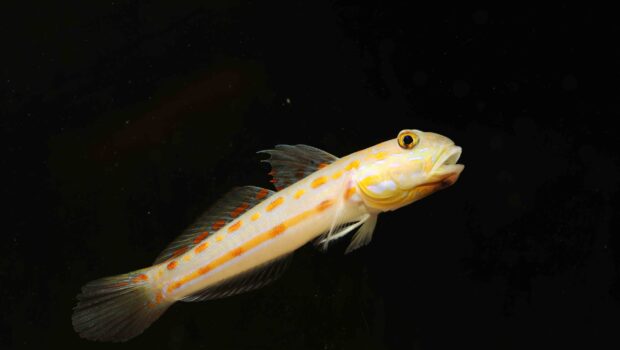
Every fish has a unique set of traits, which I have immediately attributed to a particular personality. Nemo is playful. Wolf is the self-assigned guard. Skittles finds adventure in the subtlest of places. Mr. Fox has proclaimed himself the noble patriarch. Eeny, Meeny, Miny, and Moe are simply skeptical of everyone, including themselves. And Goober. He is unlike the others. Goober is a legless creature, born to glide through the ocean sands with humility and purpose. Since his arrival, he selected an isolated, curved rock formation and transformed it into an underwater cave. This cave became the host—the altar—of his everyday devotion.
From dawn until midday, Goober scoops sand from the inside of his cave and scatters it on the outer surroundings. He does this until the opening of his burrow forms a visibly black hole, too obscure to discern its interior. His gaze is loyal to the aquarium floor, sifting the sand, unaware of the rest of the group. It is as if he has a purifying complex, as if he did something terrible in another life and this behavior is his only chance at redemption. We sometimes witness him carrying broken pieces of seashells or entire hermit crab shells into his cavern. Goober is indifferent of anyone else’s judgment; I admire his determination, even if I am unfamiliar with the ultimate objective. I visualize him sitting among his collected relics at night, bathing in their essence, praying they will fill the inner void that has lived within him for so long. He senses, in a non-verbal fish way: Perhaps this shell, with its perfect curvature and tint, will cleanse my sins.
When the sun shines from its zenith, Goober begins to undo his morning work, scooping sand from the outskirts of his nucleus and covering its aperture. Like the sand mandalas of Tibetan monks, Goober faithfully erases the hours of diligence from the day. There is no pride. He does not indulge the gluttony of self-flattery. By nighttime, he has shoveled one last mound of sand before tucking himself in his den, and disseminating the sand to eclipse the last streak of light.
By nighttime, he disseminates the last mound of sand to eclipse the final streak of light before tucking himself in his den.
From time to time, Goober catches my attention and lures me in. Time slows, and I drift into a hypnosis. There is mystery in his repetitions—is there faith in his monotony? Was there meaning? Purpose? Ritual? I could ask the same about my own patterns as I stand in my godly stance. Every day, I awaken to step in the exact footsteps from the morning prior. I could tell you about my goals and my aspirations, and yet, I shy away from hearing them echoed from another ominous observer, peering through glass into my world. Patterns unfolding upon patterns, infinitely.
A scientific mind would explain our destiny away through the coils of genetic inscription. Perhaps that is the end of it: instinct. Without denying the history of organic evolution, the very experience of instinct comes with knowing, with memory. We seem to float through time without understanding where it all ends, while every action is inspired by a belief in the next moment. Something is constantly being followed under the illusion of time, without ever acknowledging that we were running in place. It is not about the destination but the movement itself.
Months passed, and the wonder of the aquarium began to fade. Wolf and Nemo became a pair, retreating into the arms of sea anemones. Eeny, Meeny, Miny, and Moe surrendered to their cynicism and engaged in a battle royale; we could not tell which one prevailed in the end. Mr. Fox and Skittle carried on in nobility and play. As for Goober, his fate was less fortunate. Rumor has it he began exploring the water’s surface until his sudden disappearance. I wondered if he had finally found redemption—if he had claimed his freedom. Perhaps he touched a higher consciousness, breaking the chains of nature and transcending into another plane of being. I wondered if he now looks upon us and waits, patiently, as we faithfully sway our sands in and out, hoping to reach the next perfect state.
*Cover image by the author
 Lorís Simón Salum is a psychotherapist in private practice in Houston, TX. She is the author of Ensoulment: Exploring the Feminine Principle in Western Culture (2016), as well as the film director of the multi award-winning documentary Ensoulment: A Diverse Analysis of the Feminine in Western Culture (2013). She was the Creative Director for Literal Magazine for over 10 years. Some of her projects included Literally Short Film Festival, Literal’s short international film festival, and Literally Everything, Literal’s podcast. You can find her at www.lorissimon.com.
©Literal Publishing. Our contributors and columnists are solely responsible for the opinions expressed here, which do not necessarily reflect the point of view of this magazine or its editors. However, we do reaffirm and support their right to voice said opinions with full plurality.
Para Jordan
Mi esposo compró un acuario de agua salada hace más de un año. Yo no sé nada sobre criaturas acuáticas, más allá de recuerdos infantiles de peces que morían sin motivo alguno. Sentí una firme resistencia ante la idea de traer nuevas formas de vida a nuestra casa: seres que dependerían de un conocimiento que yo no poseía. Colocó el tanque en la cocina, en el corazón del hogar, como un acompañamiento irreconciliable con lo cotidiano. En cuestión de días, había un mundo coexistiendo junto al nuestro. Podíamos mirar dentro de esa dimensión líquida como dioses, admirando su composición, ajustando sus niveles de pH o reordenando su estructura básica a nuestro antojo.
Al principio solo había corales: bailaban lentos y llenos de color. Luego llegaron los peces. Dejamos que los niños les pusieran nombre: Mr. Fox, Nemo, Wolf, Skittles, Eeny, Meeny, Miny y Moe (para el grupo de cuatro damiselas azules) y, finalmente, Goober. Me preguntaba cómo reaccionaría cada uno ante los demás. Imaginé, como situación paralela, ser colocada en una casa de vidrio de tamaño medio con otras siete personas elegidas al azar, y cómo tendríamos que enfrentarnos unos a los otros por el resto de nuestras vidas. Empezaríamos a aprender nuestros hábitos, manías y preferencias. Observaríamos a los demás con el rabillo del ojo mientras caminamos hacia el baño o de una habitación a otra. Fantaseé con que, con el tiempo, nos acostumbraríamos a la presencia de los otros. Pasaríamos, imperceptiblemente, de la hipervigilancia a la neutralidad.
Cada pez tiene un conjunto único de rasgos que yo, de inmediato, atribuí a una personalidad particular. Nemo es juguetón. Wolf se autoproclamó guardián. Skittles encuentra aventura en los lugares más sutiles. Mr. Fox se comporta como el noble patriarca. Eeny, Meeny, Miny y Moe son simplemente escépticos de todos, incluso de sí mismos. Y Goober. Él no se parece a los demás. Goober es una criatura sin patas, nacida para deslizarse por la arena marina con humildad y propósito. Desde su llegada, eligió una formación rocosa curva y solitaria, y la transformó en una cueva submarina. Esta cueva se convirtió en su templo, en el altar de su devoción cotidiana.
Desde el amanecer hasta el mediodía, Goober recoge arena del interior de su cueva y la esparce alrededor. Lo hace hasta que la entrada de su madriguera forma un agujero negro visible, demasiado oscuro para distinguir su interior. Su mirada es leal al suelo del acuario, cuela la arena, ajeno al resto del grupo. Es como si tuviera un complejo de purificación, como si hubiera hecho algo terrible en otra vida y este comportamiento fuera su única oportunidad de redimirse. A veces lo vemos cargando trozos de conchas rotas o caracolas enteras de cangrejos ermitaños hacia su caverna. Goober es indiferente al juicio de los demás; admiro su determinación, aunque desconozca su objetivo final. Lo imagino sentado entre sus reliquias reunidas por la noche, bañándose en su esencia, rezando para que llenen el vacío interior que lo habita desde hace tanto tiempo. Intuye, de una manera no verbal, propia de un pez: Quizás esta concha, con su curvatura y su tono perfectos, limpiará mis pecados.
Cuando el sol alcanza su cenit, Goober comienza a deshacer su trabajo matutino, recogiendo arena de los alrededores de su núcleo y cubriendo su entrada. Como los mandalas de arena de los monjes tibetanos, Goober borra fielmente las horas de trabajo del día. No hay orgullo. No se entrega a la glotonería de la autoadmiración. Al llegar la noche, ha amontonado un último puñado de arena antes de meterse en su refugio y dispersar el resto para eclipsar la última hebra de luz.
De vez en cuando, Goober capta mi atención y me atrae. El tiempo se desacelera, y entro en una especie de hipnosis. Hay misterio en sus repeticiones: ¿hay fé en su monotonía? ¿Hay significado? ¿Propósito? ¿Ritual? Podría hacerme las mismas preguntas sobre mis propios patrones mientras permanezco en mi postura de diosa. Cada día despierto para seguir exactamente las mismas huellas que el día anterior. Podría contarme mis metas y aspiraciones, y sin embargo, me incomoda oírlas resonar desde otro observador ominoso, mirando a través del cristal hacia mi mundo. Patrones que se despliegan sobre patrones, infinitamente.
Una mente científica explicaría nuestro destino como el resultado de las espirales de la inscripción genética. Quizás ahí termine todo: instinto. Sin negar la historia de la evolución orgánica, la experiencia misma del instinto conlleva conocimiento, conlleva memoria. Parecemos flotar a través del tiempo sin entender a dónde conduce todo, mientras cada acción está inspirada por la creencia en el siguiente momento. Algo está siendo seguido constantemente bajo la ilusión del tiempo, sin reconocer nunca que permanecemos corriendo en el mismo lugar. No se trata del destino, sino del movimiento en sí.
Pasaron los meses, y el asombro del acuario comenzó a desvanecerse. Wolf y Nemo se convirtieron en pareja, refugiándose entre los brazos de las anémonas. Eeny, Meeny, Miny y Moe se rindieron ante su cinismo y se enfrentaron en una batalla campal; no pudimos distinguir cuál prevaleció al final. Mr. Fox y Skittles continuaron en su nobleza y su juego. En cuanto a Goober, su destino fue menos afortunado. Se dice que empezó a explorar la superficie del agua hasta su repentina desaparición. Me pregunté si finalmente habría encontrado la redención, si habría alcanzado su libertad. Tal vez tocó una conciencia superior, rompiendo las cadenas de la naturaleza y trascendiendo a otro plano del ser. Me pregunto si ahora nos observa desde algún lugar, esperando pacientemente, mientras nosotros seguimos moviendo con fidelidad nuestras arenas de un lado a otro, con la esperanza de alcanzar algún estado perfecto.
*Imagen de portada, cortesía de la autora
Lorís Simón Salum is a psychotherapist in private practice in Houston, TX. She is the author of Ensoulment: Exploring the Feminine Principle in Western Culture (2016), as well as the film director of the multi award-winning documentary Ensoulment: A Diverse Analysis of the Feminine in Western Culture (2013). She was the Creative Director for Literal Magazine for over 10 years. Some of her projects included Literally Short Film Festival, Literal’s short international film festival, and Literally Everything, Literal’s podcast. You can find her at www.lorissimon.com.
©Literal Publishing. Queda prohibida la reproducción total o parcial de esta publicación. Toda forma de utilización no autorizada será perseguida con lo establecido en la ley federal del derecho de autor.
Las opiniones expresadas por nuestros colaboradores y columnistas son responsabilidad de sus autores y no reflejan necesariamente los puntos de vista de esta revista ni de sus editores, aunque sí refrendamos y respaldamos su derecho a expresarlas en toda su pluralidad. / Our contributors and columnists are solely responsible for the opinions expressed here, which do not necessarily reflect the point of view of this magazine or its editors. However, we do reaffirm and support their right to voice said opinions with full plurality.










Lorís, qué increíble tu escrito de Goober. Me quedo con la sensación de haberlo conocido y visitado en su cueva, y la ilusión de que sí haya alcanzado un estado de conciencia superior y nos vea desde afuera y apueste por nosotros y nuestra posible evolución. ¡Felicidades!