
A New Episode in the Saga of the Bhutto Dynasty: Writing Is a Tyrannical Exercise…
Fatima Bhutto

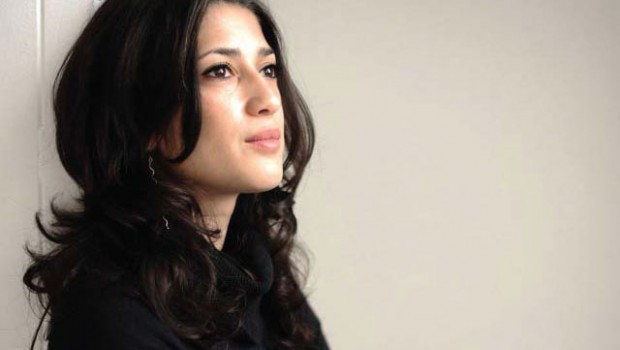
Fatima Bhutto, a member of Pakistan’s most prominent political dynasty, has written a personal account of the tumultuous events of the past decade. The World Affairs Council, one of Houston’s most prestigious citizen forums, invited her to be part of its 2010-2011´s program. Literal. Latin American Voices had the opportunity to talk to her.
* * *
José Antonio Simón: Your book Songs of Blood and Sword is a memoir of your life with your father as well as an attempt to provide a more objective view of all the events. What moved you to write a story that nowadays can be rather controversial?
Fatima Bhutto: Several things, but largely the fact that I thought it is important to break the cycle of silence in Pakistan. And for a country that has such a phenomenal history of violence, what seems to accompany it, is the silence. We’re not allowed to talk about it, so it keeps happening. Therefore, it was important for me to resist that, but also, it was one of the last promises I made to my father, that I would tell his story. It took me a long time to feel able to do it. I hope it’s a faithful account of the world he grew up in, and what happened.
JAS: The name Bhutto has come to be synonymous to Pakistan. The name’s fame partially stems from the many controversial deaths. It seems like a huge price you’ve paid to be close to power. How do you manage your own position, being part of such powerful family and all that entails?
FB: Power transformed this family. It destroyed this family. I suppose I reconcile that history by making sure we live differently now. In a certain sense, when it comes to dynasty, I simply don’t believe in it. I think you have to choose whether you’re going to perpetuate dynasty or democracy, because they don’t go together. One is exclusive and the other is inclusive. And I think most Pakistanis feel the same way too. It’s incredibly frustrating to have a hundred and eighty people subjected to the will of one family. So I hope that being able to talk about this is something that gets that conversation started in Pakistan, at least, because we’ve seen decades of dynasty and we’ve not seen anything productive or progressive come out of it.
JAS: In this new episode in the saga of the Bhutto dynasty, it seems the focus is directed at your aunt Benazir Bhutto. In Songs of Blood, you hold her responsible for everything that has gone wrong in the Bhutto dynasty. Would you consider that an audacious statement?
FB: Well, it’s peculiar because there is a Benazir who people watched in Pakistan and there was a Benazir who was watched by the world, and they were two very different women. The Benazir of Pakistan left us with a political legacy that was based on personality. Ultimately, it is a dynasty or political system which is based on photographs, on ghosts. And when you’re left with a country like that, where ideology, principle or merit is sidelined for cult of personality, there are several places where one can look at, and she is the largest, because she was a tremendous figure in the country. We are still living with her legacy now. Certainly, I think it’s audacious, but perhaps in different places, maybe it’s audacious here because that’s not the Benazir that people are familiar with. And in Pakistan it’s audacious, because if you’re part of a dynasty, people expect you to continue it. So you don’t do well by being the black sheep and saying “actually, this isn’t a very good idea”!
JAS: You departed form Pakistan just in time not to be interviewed by any local journalists. Have there been members of then present government that had tried to deny your accounts?
FB: (She laughs). Yes, well we launched the book in Karachi, and then, I went, on the book tour, and I had spoken to a few people, a political magazine, two or three actually, since the book came out. But this is a government in charge that was based on the blood of my family. It’s based on the blood of this dynasty, and they don’t take kindly to criticism, especially from someone who is actually a part of the family. I also spoke quite critically about the army. These are topics that are verboten; you are not allowed to speak of them in the country. I hope that people are able to read it on their own, and take their time with it. I heard Phillip Pullman speak recently in London, and he was asked about the controversy in his books, and he said, “Writing is a tyrannical exercise; I am in charge. And reading is democratic, I can’t influence how you read.” I hope that the process of reading in Pakistan will be democratic.
JAS: Have you thought of becoming a presidential candidate in the future?
FB: Oh no! I would have to be, not only reckless, but it would be dangerous for the country to continue that cycle. I’ve always said that my position remains firm outside of power politics, and parliamentary politics. I am political–all what I say and write is political–but I have a freedom to speak openly because I am not part of the system, and I wouldn’t trade that.
JAS: Your book also gives a vivid impression of the brutal and corrupt world of Pakistani power politics. Do you foresee some changes in the near future? How can Pakistan survive such a legacy of corruption when a huge part of its population is not necessarily aware of the country’s History?
FB: It’s a population that has been destroyed by corruption. We missed our millennium goals to eradicate polio. Not because we don’t have the know-how, we have a great medical community known the world over, but because the state couldn’t guarantee the electricity needed to refrigerate the vaccines. And that’s corruption. When you have the ability to produce and maintain and safeguard nuclear bombs, but you can’t give people the most basic facilities. Corruption is something that we live with on a daily basis, and these floods are tremendous proof of how deep it runs. Transparency International says that 70% of damn maintenance money given to Pakistan by the World Bank was siphoned off. Maybe in America corruption is something intangible where, you know it happens somewhere, but you don’t really know how because your roads are clean and your schools work. But for us, our schools don’t work. I think Pakistan is very aware of it, they just aren’t empowered enough to fight it.
JAS: It’s interesting you should say that, since I am from Mexico and we have the same problem, and it’s something that’s extremely hard to eradicate, how does one overcome that situation? Particularly the Pakistani people.
FB: I think transparency is very important. I don’t know how it works in Mexico, but a lot of money comes into Pakistan from foreign channels and there’s no accounting for it because the people can’t say “I’m sorry, where’s the receipt? Where is the money going?” The minute you empower people with a voice, they have the ability to come together, then they can take that power back, but they’re kept disempowered in Pakistan, and much the same way as in Mexico, the violence and the fear it creates is such a weapon used against the imagination, because it warns you about the consequences of breaking the rules. But there are amazingly brave people in both these countries who have broken the rules and have paid for it. I think there’s always hope that they will win one day.
Posted: April 23, 2012 at 6:33 pm