
The Super Natural: A New Vision of the Unexplained
C.M. Mayo

The Super Natural: A New Vision of the Unexplained, by Whitley Strieber and Jeffrey J. Kripal, Tarcher Penguin, 2016.
This book is a flying ax of apocalypse. But whoa, let’s first bring this identified flying thoughtform to Planet Earth: to Texas; Houston; Rice University; Department of Religion; and finally, the office of the J. Newton Rayzor Chair in Philosophy and Religious Thought, Jeffrey J. Kripal.
Professor Kripal, who describes his work as comparing “fantastic states of mind and energy and their symbolic expressions in human history, literature, religion, and art,” is one of two authors, alternating chapters, who have launched this catch-it-if-you-can metaphysical ax. The other is Whitley Strieber, a Texan internationally famous for his horror fiction and series of memoirs beginning with Communion: A True Story, the 1987 best-seller about his encounters with UFOs and entities he calls “the visitors.” Whether you indulge in Strieber’s shiver-worthy writings or not, you’ve no doubt seen the image of a “visitor” from the cover of Communion everywhere from the movies to cartoons: a bulbous rubber-like head with darkly liquid almond-shaped eyes.
If you’ve read this far and are tempted to stop, I urge you to take a breath—a bold breath. Should you still feel bristling hostility, as many educated readers do at the mere mention of such subjects as UFOs and “the visitors,” that’s normal. Soldier through the discomfort, however, and you may be able to open a door from the comfy cell of mechanistic materialism onto vast, if vertiginous vistas of reality itself—and not to the supernatural but, as Kripal and Strieber would have it, the super natural.
That door does not open with a key but with what Kripal terms a cut—as provided by Immanuel Kant, that most emminent of bewigged German philosophers. More about the “Kantian cut” in a moment.
Never mind the remarkable contents of The Super Natural, the fact that two such authors would write a book together is remarkable in the extreme. Strieber, while building a passionate following for Communion, his many other works and esoteric podcast, “Dreamland,” has also attracted widespread ridicule for his memoirs which go beyond retailing his perceptions of his abductions by “the visitors” to adventures, both in and out of body, with orbs, hair-raising magnetic fields, blue frog-faced trolls, and the dead. Nonetheless, Kripal, as one steeped in the literature of the world’s religions, identifies Strieber’s Communion as “a piece of modern erotic mystical literature,” and indeed, nothing less than a litmus test for his own academic field:
“[i]f we, as scholars of religion, cannot take this text seriously, if we cannot interpret it in some satisfying fashion, if we cannot make some sense of this man’s honest descriptions of his traumatic, transcendent experiences, then we have no business trying to understand his spiritual ancestors in the historical record. We either put up here, or we shut up there. I decided to put up.”
Now to the Kantian cut. It is to distinguish between the appearances of things and what may actually lie behind them. In making that cut, we recognize that while our physical senses provide us with essential survival-oriented information, in no way do they even begin to convey to our consciousness awareness the totality of reality. As Kripal writes, this cut “is a very reasonable and appropriate response to our actual situation in the cosmos.” Furthermore, “Once one makes such a cut, one can, in principle, take any religious experience or mythical world seriously and sympathetically without adopting any particular interpretation of it, much as one suspends disbelief to enjoy a good novel or watch a science-fiction movie.”
In other words, we don’t need to accept nor reject Strieber’s reports of UFOs and “the visitors”— yes, we can keep the lids on our coconuts while adopting the stance of radical empiricism in considering large-scale quantum phenomena! 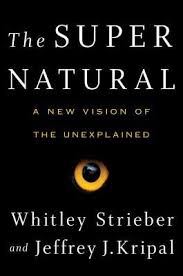
Put yet another way: if we can simply look at such experiences as Strieber’s, sit with them, consider them “seriously and sympathetically, without adopting any particular interpretation”—we can then, to quote Kripal again, “begin to study their patterns, histories, narrative structures, sexual dimensions, and philosophical implications.” The Kantian cut thus gives us the power to then spiral up to a broader, richer view. It is an astonishing power.
I know precisely what Kripal means— not that I have any stories about “the visitors”; my encounter was with a mystical text. Nearly a decade ago, in the Francisco I. Madero archive in Mexico’s National Palace, I happened upon his secret book, Manual espírita (Spiritist Manual). Given that Madero was the leader of Mexico’s 1910 Revolution— the first major Revolution of the 20th century and a crucible of modern Mexico— and that he served as President of Mexico from 1911 to 1913, it struck me like thunder that, after two decades of living in and writing about Mexico, I had not known that Madero was a Spiritist medium. I was entirely unfamiliar with his Manual espírita, which, as I soon learned, Madero began writing in 1909, finished the following year—the same year he launched the Revolution— then, in 1911, the year he assumed the presidency, he printed 5,000 copies under his pseudonym “Bhima.”
Manual espírita, or Spiritist Manual, is an evangelical work proclaiming that, in my words summarizing Madero’s:
“We are not our physical body; we are spirits, and as such we are immortal and we are destined, lifetime by lifetime, not by any ritual intermediated by clerics, but by freely chosen good works, to evolve into ever higher levels of consciousness and so return to God.”
An offshoot of American Spiritualism, Spiritism was codified by French educator Hippolyte Léon Denizard Rivail, aka Allan Kardec, and his disciples in the second half of the nineteenth century. Madero, scion of a wealthy family from Coahuila in northern Mexico, was a student in France in 1891 when he encountered Kardec’s magazine and books.
According to Spiritism, because we are spirits it follows that we can communicate with other spirits, embodied or not. Spiritism is a religion but also the most modern of modern science, Kardec argued; as a scientist might peer through a microscope to perceive the detail in a leaf, so a scientist could employ a medium to learn from the spirit world.
Both in France and on his return to Mexico, Madero met with a circle of fellow Spiritists to develop his psychic abilities, in particular, for receiving communications from the dead by means of automatic writing. In 1907, a militant spirit named “José” began to advise Madero on writing the book that would serve as his political platform: La sucessión presidencial en 1910 (The Presidential Succesion of 1910), a work well-known to scholars of the 1910 Revolution. Then, so we learn from Madero’s mediumnistic notebook, José informed Madero that he would write Manual espírita, a work “which will cause an even greater impression.”
By the time I began to leaf through Manual espírita in Madero’s archive nearly a century later, quite the opposite seemed to have been its destiny.
It turns out that there are, albeit astonishingly few, Mexican historians who have written in some depth and seriousness about Madero’s Spiritism: Manuel Guerra de Luna, Enrique Krauze, Alejandro Rosas Robles, and Yolia Tortolero Cervantes. Although, at the time I happened upon Manual espírita in the archive, it was nigh impossible to buy a copy, Alejandro Rosas Robles had included it in his 10 volume compilation, Obras completas de Francisco Ignacio Madero, published in 2000. I should also note the esteemed Mexican novelist, Ignacio Solares, whose Madero, el otro delved, and knowingly, into his esoteric philosophies. All that said, in Mexico, where Madero has the stature of an Abraham Lincoln, celebrated in every textbook of national history, and the Revolution he proclaimed in his Plan de San Luis Potosí commemorated every November 20th, Bhima’s Manual espírita lay murky leagues below the cultural radar, and the nature and historical and philosophical context of its contents were terra incognita to most historians of the Mexican Revolution. It had never been translated.
I was a translator—and one keenly aware of how little Mexican writing sees publication in English. And I knew enough to know that, whatever its contents, the fact that Francisco I. Madero had written this book gave it importance, for it would illuminate the character and personal and political philosophies of the leader of the 1910 Revolution. It bears repeating that Madero took the trouble to write it in the same year he declared and led that Revolution, and he published it in 1911, the year of his nation-wide campaign for his election to the presidency of the Republic. Whatever this book contained, it must have been exceedingly important to him.
From the first page of my self-appointed task, however, my instinct was to wince. Nervous laughter, eye-rolling… It was obvious to me that most educated readers, including most historians of Mexico, would regard Madero’s Spiritist Manual with puckerlips of disgust.
What had I taken on?
Madero was murdered in the coup d’etat of 1913. As I read deeper into that terrible episode, I was flummoxed to learn from U.S. Ambassador Henry Lane Wilson’s memoir that, after arresting President Madero, General Victoriano Huerta sent his first communication to the U.S. Legation, asking the ambassador, should he lock Madero in the lunatic asylum?
I soon realized that to merely translate this century-old book would be a disservice not only to its author, but to myself and to the reader—the latter, as were those archvillians of 1913, General Huerta and Ambassador Wilson, presumably as unlettered as I was on the history of metaphysical religion and subjects as various as the afterlife, angels, astral planes, automatic writing, bilocation, and the teachings of Lord Krishna in the Hindu wisdom book, the Bhagavad-Gita.
What Spiritist Manual needed was a book-length introduction, a framing context for English language readers who know little or nothing of Madero, and/or of Mexican history, and, most crucially, of the metaphysical philosophies Madero had embraced and espoused.
And so, beginning with Kardec, I began a marathon of reading. There was much to glean from the works of the abovementioned handful of Mexican historians; also, to my happy surprise, from recent scholarly works about nineteenth and twentieth century metaphysical religion, parapsychology, and occult traditions—serious considerations of what many historians still dismiss, as Dame Frances Yates, leading scholar of the esoteric traditions of the Renaissance, archly dismissed nineteenth and twentieth century Rosicrucians as “below the notice of the serious historian.” These works include Catherine Albanese’s A Republic of Mind & Spirit: A Cultural History of American Metaphysical Religion (Yale University Press); Joscelyn Godwin’s The Theosophical Enlightenment (State University of New York Press); John Warne Monroe’s Laboratories of Faith: Mesmerism, Spiritism and Occultism in Modern France (Cornell University Press); Janet Oppenheim’s The Other World: Spiritualism and Psychical Research in England, 1850-1914 (Cambridge University Press), and, neither last nor least, Jeffrey Kripal’s Authors of the Impossible: The Paranormal and the Sacred (University of Chicago Press).
In addition, I combed through Madero’s personal library, which is preserved in the Centro de Estudios de la Historia de México in Mexico City. As I could now appreciate, Madero had assembled a large and sophisticated collection of turn-of-the-last century European and Anglo-American esoterica, including two English translations and J. Roviralta Borrell’s Spanish translation of the Bhagavad-Gita, the latter heavily annotated in Madero’s own handwriting.
Thus: Metaphysical Odyssey into the Mexican Revolution: Francisco I. Madero and His Secret Book, Spiritist Manual. The odyssey I recount is not only Madero’s, but my own into that vast and vertiginous view made possible by my having made, and inviting the reader to make, the Kantian cut— although I did not use that term. I cracked open the door to greater understanding, not by embracing, nor by rejecting Madero’s philosophies and assertions, but by accepting—simply accepting— that what I understand to be reality and what it actually is are not necessarily the same thing because I, like any human being, with wondrous yet rangebound senses and brain, cannot comprehend the fullness and every last quarky detail of the cosmos. What we know is a nano-slice, if that. 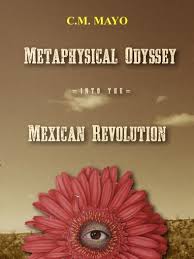
In other words, we don’t have to accept nor reject Madero’s ideas—yes, we can keep the lid on our coconuts while seriously considering a whole lot of super freaky stuff!
Although Madero’s Spiritist Manual is radically different in its content and tone from Strieber’s Communion, like that mystical text, if encountered with historical and philosophical context and with the power of the “Kantian cut,” considering it “seriously and sympathetically, without adopting any particular interpretation” can open up vistas. For one thing, Madero’s Spiritist Manual makes Mexico’s 1910 Revolution look glitteringly uncanny, like a prism ferried from the back of a closet to a window. Or, shall we say, to an open door.
To return to Strieber and Kripal’s The Super Natural, writes Kripal: “History is not what we think it is.”
Writes Strieber: “[T]his world is not what it seems, and we do not know what it is, only that we are in it… I am reporting perceptions, and what that means.”
Was Madero really communicating with spirits of the dead? Well, that’s one hypothesis.
Many people know Strieber as “that guy who wrote about being abducted by extraterrestrials.” In fact, Strieber reports his perceptions of his experiences, but as to what they actually are, he says, “I am a wanderer, lost in a forest of hypotheses.” Strieber also echoes Kripal in arguing that, “it is not necessary to believe in such things as flying saucers, aliens, ghosts, and other unexplained phenomena in order to study them.”
But to study such things without puckerlips, and all brain cells firing, one must make that Kantian cut—and one needs courage to persist, for that Kantian cut must be made again and again in the face of our inclination towards easy polarities, to either believe or, more commonly, reject, bristling with hostility or scornful laughter.
As Kripal puts it, one must “learn to live with paradox, to sit with the question.”
But again, this sitting in the gray zone of maybes, this repeated Kantian cutting—it becomes a kind of mowing—takes nerve, both intellectual and social. It can prove hellishly uncomfortable.
Elegantly written and engaging as it is, it takes nerve to read The Super Natural—not to mention Strieber’s Communion. However, in my experience of reading for my book about Madero’s book, it gets easier. So much ectoplasm, so many floating trumpets, fairies and tulpas, psychic surgery… ho hum! It seemed I could tackle anything, whether a purported download from the Akashic records of Jiddu Kirshnamurti’s incarnations wending back to 22,662 B.C. (C.W. Leadbeater’s Lives of Alcyone, inscribed by its Spanish translator to Mrs. Madero), Joan of Arc’s autobiography (as channelled by medium Léon Denis, one of Madero’s favorite authors) or, for instance, a modern parapsychologist’s story about a sociopathic psychic named Ted Owens and his hyperdimensional rain-making confreres “Twitter” and “Tweeter” (Jeffrey Mishlove’s The P.K. Man, which I picked up for late 20th century context).
Speaking of Jeffrey Mishlove’s The P.K. Man, I am not sure I could have appreciated Kripal and Strieber’s The Super Natural so much as I do without having read that first. On its face, like Strieber’s Communion, or Madero’s Spiritist Manual, The P.K. Man would no doubt strike most readers as outrageous, indigestible bizarrerie. Yet having read The P.K. Man twice now, I concur with Harvard University Medical School Professor John W. Mack, who writes in that book’s forward, “Mishlove’s powerful true story may greatly help to clear the way for new creative human visions and achievements.”
Mishlove concludes his story of mind over matter: “We must move toward honest, authentic integration of the depths within us and the facts before us.” He holds the flag high. Yet Mishlove confesses, it took him more than two decades to summon the courage to publish The P.K. Man.
I myself procrastinated mightily in translating and writing about Madero’s Spiritist Manual. And I had assumed that I was at the end of that years’-long road, with my book and the translation edited, formatted, and an index prepared, when in an antiquarian bookstore in Mexico City, I chanced upon Una ventana al mundo invisible (A Window onto the Invisible World). Published in 1960, this exceptionally rare book contains the detailed records of séances performed by ex-President Plutarco Elías Calles, other prominent Mexicans, and a medium named Luís Martínez, from 1940 to 1952 for the Instituto Mexicano de Investigaciones Síquicas (IMIS). Its dust jacket features a “spirit photograph” of “Master Amajur,” a 10th century astronomer who had much to say and many a rose petal to materialize in many a dark night’s séance. After dipping into those spooky accounts, I could not sleep, and my manuscript and galleys, which needed to be modified in light of that book, sat untouched on a shelf for more than a month.
The first sentence Kripal writes in his own first chapter of The Super Natural is, “I am afraid of this book.”
When we make the Kantian cut, we can consider stories that might seem not only ludicrous, but frightening—perchance beyond frightening. Beyond one’s world view by a galaxy.
For instance: As Strieber writes in The Super Natural, after publishing Communion, he started receiving letters from readers, “at first by the hundreds, then the thousands, then a great cataract of letters, easily ten thousand a month, from all over the world.” They too had seen the haunting face on the cover of Communion. Writes Strieber, “I was deeply moved, not to say shocked, to see that I had uncovered a human experience of vast size that was completely hidden.”
And for instance: that Kripal himself, while in Calcutta during the Kali Puja festivities, experienced an explosive out of- and in-body state that he believes resonanted with some of Strieber’s—and thousands of others who gave similar testimony. And: Kripal finds striking correspondences between American UFO abduction literature and—who’dathunk?—Indian Tantric traditions.
And, finally, for instance: As his library and voluminous correspondence attest, Francisco I. Madero did not come up with his ideas by his lonesome; Spiritist Manual is not evidence of schizophrenia, but a unique synthesis of what was in his time in the West the cutting edge of a well-established literature of Spiritist / Spiritualist, Buddhist, Catholic, Hindu, and occult philosophies.
But if, as Kripal and Strieber, Mishlove, and Madero all suggest, we seriously consider these stories of anomalous phenomena—communication with disembodied consciousnesses, out-of-body travel, psychokinesis, telepathy, “the visitors,” and so on and so forth, how do we live our lives with dignity while entertaining the notion that, say, someone, anyone, might read our thoughts, game the financial markets, or, say, impel a pilot, of a sudden, to crash his plane? And how do we avoid sinking into primitive credulities, viscious paranoias, and, ultimately, barbarities such as the burning alive of witches?
I think I mentioned, it can get uncomfortable.
Kripal writes, “many of the things that we are constantly told are impossible are in fact not only possible but also the whispered secrets of what we are, where we are, and why we are here.” But neither are Kripal and Strieber saying, believe this or believe that. On the contrary; Kripal says, make that cut. “Do not believe what you believe.”
But whatever you believe, or not, that is a story. And stories are what make us human. And being human— for that matter, being able to read and write books, and so catch and hurl packages of thought from across one axis of time and space to multiple others— is both super and natural. As Kripal and Strieber insist: super natural.
 C.M. Mayo is the author of Metaphysical Odyssey into the Mexican Revolution: Francisco I. Madero and His Secret Book, Spiritist Manual (Dancing Chiva, 2014), which won the National Indie Excellence Award for History, and is translated by Agustín Cadena as Odisea metafísica hacia la Revolución Mexicana: Francisco I. Madero y su libro secreto, Manual espírita (Literal Publishing, 2014). Mayo’s previous books include The Last Prince of the Mexican Empire (Unbridled Books), Miraculous Air: Journey of a Thousand Miles through Baja California, the Other Mexico (Milkweed Editions) and, as editor, Mexico: A Traveler’s Literary Companion (Whereabouts Press). www.cmmayo.com
© Literal Publishing. Queda prohibida la reproducción total o parcial de esta publicación. Toda forma de utilización no autorizada será perseguida con lo establecido en la ley federal del derecho de autor.
Posted: June 5, 2016 at 3:43 pm