

Potomac
Jorge F. Hernández

My soul has grown deep like the rivers.
LANGSTON HUGHES
Children know that rivers are stories. They are made of words and scenes, names, beginnings and endings, winding plots and hidden schemes, but adults teach children to know—and then memorize as facts—that rivers are no more than waters in plural that come from melting ice, sprouting from creeks and far-away fountains hidden in mountains or bordering hills. Waters that will, eventually, swim off to sea as rivers that form oceans and can be merged or confused with rain. And most children will become adults who have forgotten all that they once knew: that rivers are stories… No matter what adults may say.
Infants can see nouns float by their eyes by hearing the vowels and consonants or by imagining—beyond sight—the forms that nouns acquire. Then many infants see a river of words, identical in the passing forms of crystal clear waters that run amidst a landscape. I wonder how children that grow up far away from oceans depict those bodies of endless water and I suppose that the forms of words that are first imagined by any child in an island differ from the first innate explanations imagined by a mountain child. But all children know, although they forget with the passing of time, that rivers are stories…
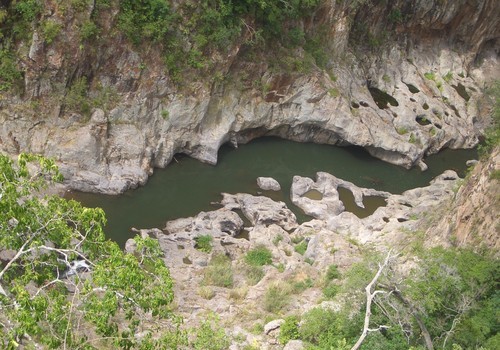
At least, that is what Ángel O’Reilly was thinking —and probably mumbling to himself—as he was following the Potomac river, flying strictly above it, as if it were a straight path to safety. No, O’Reilly is not a real angel, and if I’m writing here that his first name is Ángel it is due to his parent’s most honest desire: a Mexican couple that after many attempts, finally gets pregnant and—behold!—a miracle they did not hesitate in calling their Ángel.
But O’Reilly is probably a last name that nobody associates with such a Hispanic or Latin first name. And this, believe it or not, is the most verifiable part of this tale: Malcolm O’Reilly Sr. was an honest Irishman who moved to Mexico at the beginning of the twentieth century, worked for years on the now extinct Mexican railroads and left this world forever leaving behind a considerable roll-call of O’Reillys, probably partly Irish in some green specs throughout their veins, but defi- nitely tanned and dark skinned in their most Mexican varied beauty.
So here is Ángel O’Reilly following the course of the Potomac River from above, precisely from his window seat 24A on flight 1472 from America Air, (non-stop from Houston, Texas to Washington, D.C.). None of the other passengers, nor the lonely stewardess—and even less, the invisible pilot and co-pilot—mind, care or bother to imagine that Ángel is on his way to beginning a new life, or a new day that will dawn for him on that night. Nobody cares or even wonders if Ángel has a passport or a visa: once you enter the United States —once you awake in the American Dream—you can board flights or cross the country by bus, with almost no need to flash a passport… Without speaking English… Without even talking to anyone… Mumbling to yourself the invisible little rivers of your thoughts.
And so Ángel flies and follows the Potomac, not knowing the river’s name. He could have been hypnotized by the tiny white marble monuments, or the stretching canvas of shimmering lights, but he has concentrated on the course of the river as if he could remember what he knew as a child… what all children know and then forget as adults. Of course, I now know that the scene described in these paragraphs cannot be caught on film, for it is only a few seconds and possibly not more than four minutes before the plane on which this Mexican with an Irish name will land on the slim strip of an island in the middle of the Potomac river where somebody sometime ago decided to build an airport. And I suppose the story is getting boring and drifting nowhere, but my intention is not that of supreme fiction or profound literary essaying. I used to be a newspaperman and I’ve done some tricks in quick reporting, but ever since I retired I hadn’t felt the urge to put down in words the occasional stories that baffle me. My purpose in writing these paragraphs—or my obligation would be a more fitting word in this case— is to at least put down in ink, not even worried if it can turn into print—the otherwise anonymous adventure of one of the many million cases of humans exposed to pure magic.
Ángel O’Reilly is one of the twelve million workers in the United States of America that sacrifice them selves and families, their pasts and futures, for a job, a salary or a hazy dream. These are not paragraphs criticizing political errors or to lobby in favor of future laws or declare positions regarding Utopia or the Long Lost Heritage of Immigrants Past. These are paragraphs only intending to describe the lonely minutes that passed as a Mexican named Ángel O’Reilly contemplated the Potomac River from the window of a small jetliner. Although not necessary, let me specify that the small airplane was probably the last in the line of America Air’s long roster of huge aircrafts, and thus, the cheapest pair of wings for those in urgent need of flying into Washington, D. C.
Now here I must open a considerable paragraph, which should be read as if it were contained between parentheses: (it has become almost a routine that most domestic flights landing at the airport in Washington D. C.—at the now known as Ronald Reagan National Airport—tend to pass from the abysmal problem of landing safely bringing only to immediately ruin their arrival by informing them that their baggage did not come on the same plane with them. Of course, the bags will be found and—in the end—delivered as soon as possible, and I must underline that this paragraph between parentheses has no intention of squalling or bawling anybody out—but it does seem curious, if not a harmless mystery, that the majority of those cases in which passengers land in D. C. with no luggage are either travelers—of any nationality—that arrive in the Nation’s Capital on a connecting flight, having begun their adventure in any Mexican airport, or Mexican passengers (for that matter, any Hispanic passenger, be it by name or appearance) that—not having flown in to —or walked in to or swam into—the United States, is actually landing in the District of Columbia no matter his or her legal status, passport, visa, income, cash or credit). End of parentheses.
So here we see Ángel O’Reilly, for the brief seconds that turn into long minutes before landing, looking over the Potomac and remembering an innate definition probably hidden in the fog of his most early memory and most definitely shared by children of any creed, color, country and time. He looks out the window and recalls that rivers are made of stories. He mumbles to himself that there are adults who walk along the ridges of time as if they could remember an endless number of the stories that form a particular river.
So Ángel prolongs the seconds in his silence and recalls the story of a princess and a dragon, then the tale of a powerful locomotive that could drive through plains and mountains without following rails or maps, and he remembers stories that he had only heard as an infant, told by a woman he knows was his grandmother, not the invisible Irish mother of his father, but the most Mexican mother of his mother. And so, Ángel sees the Potomac and considers it a sign of fortune to recall these thoughts for he is on the verge of a new beginning, on the threshold of a promising horizon and he then on solid ground, encounters the astonishment, together with other angry passengers, that his only bag did not even fly to D. C. along with him on the same plane and that it is probably still in Houston or flying around the world somewhere, accumulating stories about other rivers, but he really does not care about it He walks out of the terminal building of National Airport, towards the Metro station, with only his backpack and other thoughts to mumble in silence.
What I feel as an obligation to put here in words is the fact nobody knows. Call it coincidence or serendipity what I witnessed without understanding until later. The day after Ángel O’Reilly arrived in Washington, D. C., a local radio host announced with certain a urgency the need to help in finding the notebooks of certain well-known and well-read who unfortunately and inexplicably left them in the back seat of a taxi. It was later announced on the same radio station that neither the author nor the complete fleet of D. C. Capitol cabs could either confirm or deny if said notebooks were lost or found, destroyed or vanished in any of those cars. The astonishing fog that surrounds these facts is that the famous author was on TV on the night after the news of his lost notebooks had been announced over the radio, and although he still looked distressed by the disappearance of his notebooks, he did emphasize his intention to re-write every single poem, short story, aphorism, quote or beginning of a novel that he could recall having written in the lost notebooks.
I can swear before a court of law, and can repeat loudly, may God be my witness, that at the precise moment I was watching the interview with the famous writer on TV, I was occupying my regular stool at the Old Time Diner on K street, where I have invented for myself a fixed routine since I retired in 1984 from the newspaper world, consisting mainly on my daily visit at the same time everyday—same number of cups of coffee, same sandwich, same commentaries and sometimes, even the same jokes. Although Nancy the waitress and Bob the regular cook have now decided not to support my story, it is my obligation to inform any reader of these paragraphs that during the whole afternoon—prior to the said interview on TV of the famous writer—I had been sharing or exchanging conversation with one Ángel O’Reilly, Mexican worker of Irish descent, who had come to the Old Time Diner in search of a job, any job, and that having received the clean and good-spirited suggestion (by none other than Bob the cook, and later corroborated by Nancy the waitress) that he could wait at the bar until José Gonzalez—a regular at the Diner, third generation hard-working baker from Honduras—in order to see if he could offer him an opportunity either in his bakery or in any one of the many businesses where Pepe (as we all called the Honduran baker at the Diner) could put in a good word for him.
Exactly—or, better said, and perhaps more honestly: around—two hours before Pepe made his entrance —as he did everyday with the daily bagels—I began a most vivid and interesting conversation with Ángel O’Reilly, a more or less fluid chat—part in Spanish, parts in English, and a lot of words in the Italian I used to practice while I was in the Army. Our conversation involved many names, stories, anecdotes and funny situations, beginning with the explanations and history of Angel’s first and last names, his most astonishing adventure in crossing the Border and his many spiced and pungent opinions regarding The Wall, the hideous façade that the worst possible Americans insist on regarding as if it were an inevitable fence between Mexico and us, dividing the Land of the Free from the Rest of the World (which reminds me of the explanations and pretexts I heard in Berlin, back in the sixties, when I was no more than a cub reporter assigned to write a thousand word chronicle that would be published as an impossible explanation for the German scar that cut the city in half). So there I was talking with an immigrant worker that had flown to Washington,D.C., landing at Ronald Reagan National Airport, perhaps not knowing that it had been precisely President Reagan’s phrase of “Tear down this wall, Mr. Gorbachev…” the first stepping stone for its demolition and, although I felt like doing so, I didn’t want to get into word play with Ángel and sprinkle our chat with some Kennedy spin-off, like say, “Ich bin Mexikaner” to get the solidarity rolling between us.
Getting back on track: well, there was Ángel talking in his Spanglish, and constantly emphasizing his hopes and will, and the only thing I know that Nancy the waitress and Bob the cook cannot avoid asserting is that the kid had a glow in his eyes, a real good sign of being gifted. And that is probably what Pepe saw in him also, for they only talked for what seemed three or four minutes, before both of them left the Diner, on route either directly to the bakery or to another establishment that I cannot precisely mention, because I simply did not, or even hear that. Of course now I know that Pepe has come back to the Diner, and denies even having seen me in the company of Ángel, and I thence consider most possible that either Nancy has put her mind on seriously driving me mad or it’s Bob and his long delayed intention of driving me away, at the cost of any reason or no-reason possible, from my routine schedule at my stool.
The thing is, I am—apparently—the only being in sound mind to confirm (with no publicity intentions whatsoever and no profit of any kind in mind) that, once Ángel took off in Pepe’s van, both laughing, and repeating what were apparently verses in Spanish that they both knew, I continued to dwell on my own thoughts, in my own silence at my stool, when I was practically hypnotized by the local radio host announcing at that precise moment the unsung turmoil and despair that any writer experiences because of lost notebooks or broken computer memories. I precisely remember (although I now know that he has denied it) that said radio host exclaimed (literally, and I mean exclaimed): “I’ll tell ya’folks and friends… when a writer… any writer… loses or misplaces his notebooks it’s not as if a sudden draught hit his brain… I know as a fact that it gets even worse: it’s more like a tidal wave of loose memories… or, better yet, a flood of stories drown his creativity, all fighting in his brain to remain afloat…”
Although this radio host has threatened to sue me and has denied even being on the air on the night of these events, I myself have underlined (and placed in bold letters) his phrase a flood of stories, due to the obvious connection between this metaphor and the initial paragraphs of my own writing… and—for better or for worse, be it true or false—and being anything you wish to read (for I need not care for the outsider’s opinion regarding the state of my mental health) not more than an hour after the radio host had launched the unsuccessful call (Calling all cabs!) with the intention of retrieving what had been already described as “a priceless treasure of the utmost valuable literature possible”, the well-known author himself was on the air… I heard him, and there is nobody in the world that can make me accept my recollection as delusion or delirium. He went on the air and stated that he was quite worried and saddened by the inexplicable error (if that were the case) of leaving on the back seat of a Capitol Cab in Washington, D. C. the notebooks that he himself considered contained some of the best prose he had ever written… and then, right before my eyes (or better said: my ears)—and I know Nancy and Bob heard it also—the well known author closed his plea declaring that he was willing to offer ten thousand dollars to the person who would retrieve and help him recuperate his notebooks… More or less, his closing message was as follows:
“Please… I’m begging you and I just hope somebody out there can hear me and help… those notebooks probably don’t mean a thing to anybody but to me… and to my readers… Please, just give them back to me and I can assure you that I will grant the reward I am promising… In the end, nobody can do anything with my stories… Nobody could understand the real way the jigsaw puzzles in my notebooks bind together… I’m pleading on behalf of my characters and their words… they don’t deserve to drown in oblivion, lost at sea…. I have in those notebooks the words and conversations of wonderful beings… the poem of a sailor’s widow and sketched the outline for a monologue in which a ghost warrior returns from death, only to witness his defeat in battle, once again… and I had written the story of an angel as well as the outline for a possible novel in which I wish to unravel many of my childhood memories… I know you’re listening… Please give me back my notebooks… these stories cannot be thrown down the toilet or set to sail off to sea as if they were a paper boat, playfully cast away by a child that has no idea or conscience of anything at all…
So there you have it. I could probably go the Library and find a book containing the history of the Potomac, the indigenous roots of its name and, who knows? I could discover that those waters are named after a story, an old Indian myth or something probably related to writers loosing their notebooks or characters in a novel suddenly lost in an distant ocean of paragraphs like castaways or a Mexican immigrant who lost his only bag at the airport walking into the night where his future will eventually dawn. Although all the other witnesses of my conclusion have decided to remain silent, I sincerely believe I owe it to myself, and to the brief conversation I sustained with Ángel O’Reilly, to close these pages as if they too were only leaves of ruled paper, folded and flung to the breeze, just to fly away. Or a sailing page at the tip of midnight to remind myself of what I have always known since my childhood—rivers are stories, no matter what adults may say.
Posted: April 11, 2012 at 6:56 pm